

Singaporean Investors · Thailand Property
Can Singaporeans Buy
Property in Thailand?
Singaporean investors have become one of Asia's most active intra-regional foreign buyer groups for Thai property. Short flight times, USD-pegged-adjacent SGD stability, mature private-banking infrastructure and an investor culture that already understands cross-border real estate make Thailand a natural diversification destination.
01 The Singaporeans Buying Property in Thailand Thesis
Why singaporeans buying property in thailand merits institutional attention.
- 01
Yes, Singaporeans Can Buy
Singaporean investors can legally own Thai condominiums on a freehold basis and access landed property through registered leasehold structures — the same framework available to most foreign nationals.
- 02
Same Statutory Framework
Thailand's Condominium Act and Land Code apply uniformly to all foreign nationals. There are no nationality-specific ownership restrictions.
- 03
SGD-Documented Capital
Funds remitted from Singapore in foreign currency generate FET documentation used to register ownership and repatriate proceeds.
- 04
Country-Specific Tax Discipline
The differences for Singaporeans sit in home-country tax reporting, FX management and visa pathway — not in ownership rights themselves.
Singaporeans Buying Property in Thailand · Market Signals
Maximum foreign-owned area per condominium building.
Registered on a Land Department title deed.
Standard leasehold term for land-held villas.
Singapore-sourced funds remitted via FET-documented transfer.
Section 1 · The Short Answer
The short answer.
The short answer.
Yes. Singaporeans can legally own property in Thailand under the same statutory framework that applies to most foreign nationals.
Singaporeans can:
- Own freehold condominium units in personal name
- Register long-term leasehold interests over land and villas
- Buy units within professionally managed resort developments
- Repatriate sale proceeds in the original foreign currency
Singaporeans generally cannot:
- Own land directly in personal name
- Use nominee Thai shareholder arrangements to circumvent land ownership rules
For the underlying framework, see our Can Foreigners Buy Property in Thailand hub guide and the Foreign Ownership Framework.
Section 2 · Why Thailand
Why Thailand attracts Singaporean investors.
Why Thailand attracts Singaporean investors.
For Singaporean investors, Thailand provides regional diversification outside of Singapore's high-ABSD residential market, attractive entry pricing for resort and lifestyle property, USD-equivalent foreign-freehold ownership and tourism-backed rental demand that is structurally different from Singapore's domestic-residential cycle.
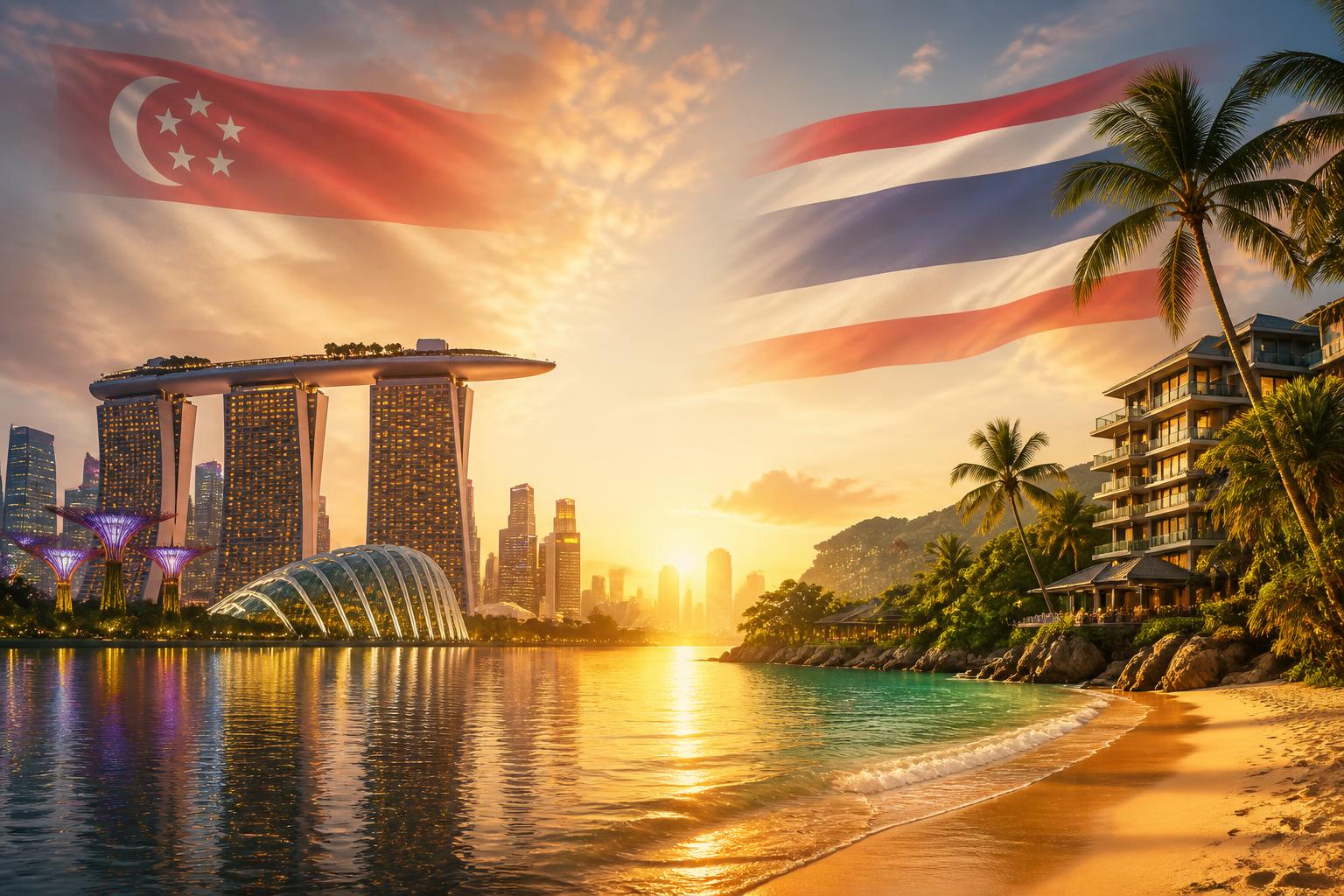
For the broader macro context, see our Thailand Property Market Intelligence report and the Phuket Intelligence Centre for sub-market analysis.
Section 3 · Ownership Structure
Condominium freehold and leasehold villas.
Condominium freehold and leasehold villas.
For most Singaporean buyers, freehold condominium ownership is the simplest and most institutionally protected structure. Under Thailand's Condominium Act, foreign nationals can own units outright provided the building's foreign ownership does not exceed 49% of total saleable area.
Land cannot be owned directly. Singaporeans typically access landed villas through registered leasehold structures — a 30-year lease registered at the Land Department, often with contractual renewal options, with the villa structure itself owned by the foreign investor where applicable.
Section 4 · Banking & Currency
Banking, FET and SGD/THB.
Banking, FET and SGD/THB.
Funds must arrive in Thailand in foreign currency through the Thai banking system, where the receiving bank issues a Foreign Exchange Transaction (FET) form. The FET is required at the Land Department to register ownership and again at exit to repatriate sale proceeds in the original currency.
SGD/THB is among the most stable cross rates for Thai property investors, given the Monetary Authority of Singapore's managed-float framework. FX volatility is generally lower than EUR/THB or GBP/THB, which simplifies FET-documented remittance and repatriation for Singaporean investors.
Section 5 · Singaporean Tax Considerations
Understanding Singaporean tax obligations.
Understanding Singaporean tax obligations.
Buying Thai property does not extinguish home-country tax obligations. Singaporeans remain subject to Singapore's reporting and taxation rules on worldwide assets and income, subject to applicable tax treaties.
Depending on individual circumstances, Singaporean investors may need to consider:
- Singapore territorial-tax system — foreign-source income is generally not taxed unless received in Singapore in certain forms.
- Singapore does not impose tax on capital gains, but Thai-side capital gains taxation still applies on disposal.
- Estate planning under Singapore and Thai succession rules.
- Application of Singapore–Thailand Double Taxation Agreement to rental income.
- ABSD on Singapore residential property is unaffected by foreign property holdings, but high-net-worth structuring should be coordinated.
Professional advice from both Thai and Singaporean tax specialists is strongly recommended before any remittance. This article is educational only and does not constitute legal or tax advice.
Section 6 · Phuket Focus
Why Phuket attracts Singaporean capital.
Why Phuket attracts Singaporean capital.
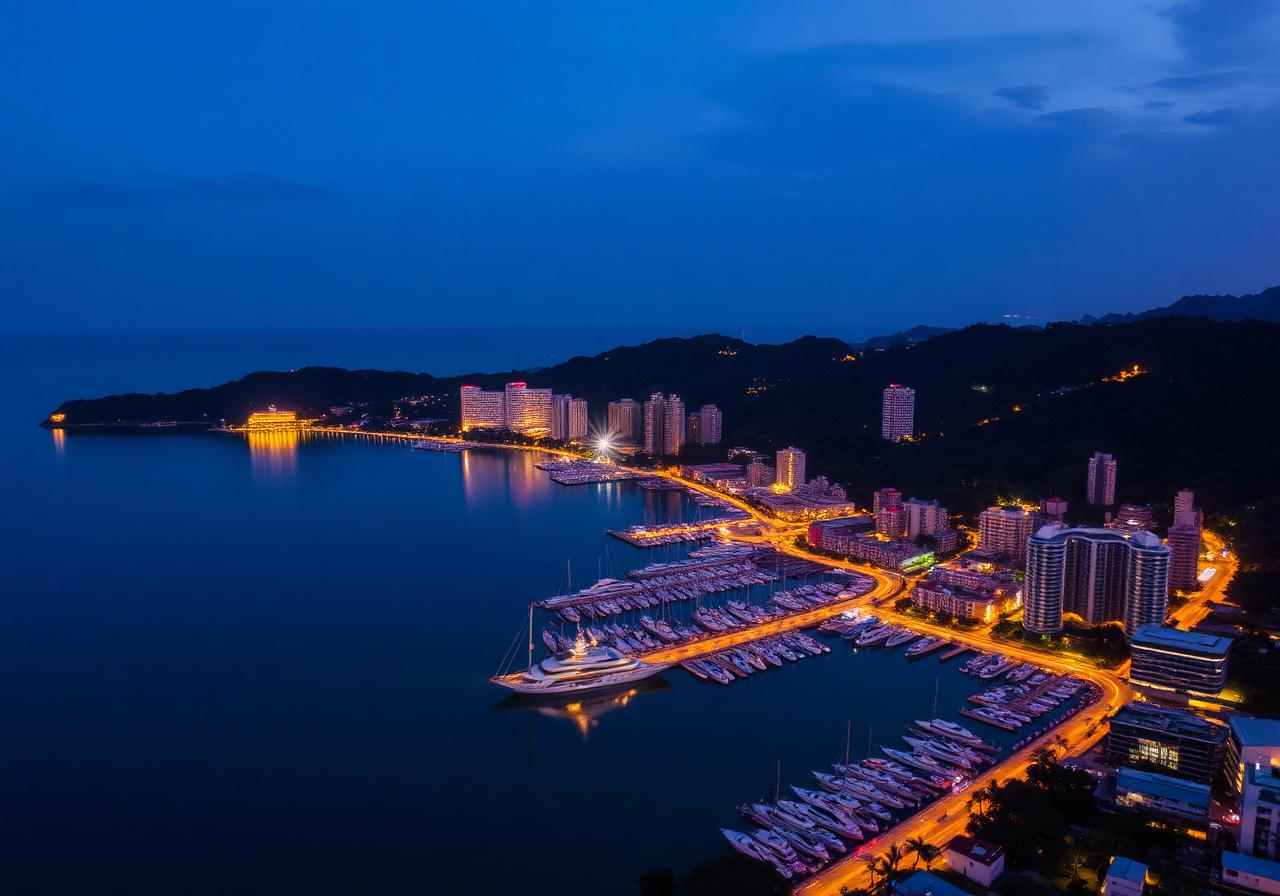
Among Thailand's investment destinations, Phuket has consistently emerged as the strongest tourism-backed property market. International airport connectivity, global tourism demand, limited beachfront land supply and expanding luxury hospitality infrastructure all support the case for professionally managed resort condominiums.
Many Singaporeans focus on hotel-managed resort properties for hotel-style management, rental-pool participation and passive ownership. For mechanics and operator considerations, see Cash Flow Property Investment Strategies and Hotel Managed Property Investment.
Section 7 · Investment Scenario
10-year investment scenario.
The scenario below illustrates a $300,000 USD allocation by a Singaporean investor into a professionally managed Phuket resort condominium across Conservative, Base Case and Strong outcomes over a 10-year hold.
10 Year Investment Scenario
Investment Scenario.
Investment Amount
$300,000 USD
Investment Term
10 Years
Scenario Focus
Base Case
Annual Returns
| Metric | Conservative | Base Case | Strong |
|---|---|---|---|
| Annual Net Rental Return | 7% | 8.5% | 10% |
| Annual Capital Growth | 6% | 9% | 12% |
| Combined Annual Return | 13% | 17.5% | 22% |
10 Year Outcome
| Metric | Conservative | Base Case | Strong |
|---|---|---|---|
| Initial Investment | $300,000 | $300,000 | $300,000 |
| Rental Income Generated | $210,000 | $255,000 | $300,000 |
| Capital Growth Generated | $237,000 | $410,000 | $621,000 |
| Total Wealth Created | $747,000 | $965,000 | $1,221,000 |
| Total ROI | 149% | 222% | 307% |
Average Annual Performance
| Metric | Conservative | Base Case | Strong |
|---|---|---|---|
| Average Annual Income | 7% | 8.5% | 10% |
| Average Annual Capital Gain | 6% | 9% | 12% |
| Average Annual Combined Return | 13% | 17.5% | 22% |
Illustrative projections only. Not guarantees of future performance. Actual returns vary by property, operator, market conditions and holding period.
Conclusion
Conclusion.
Conclusion.
For Singaporeans, Thailand combines lifestyle, tourism-backed income potential and long-term capital growth in one of Asia's most resilient property markets. The legal framework is well-defined and the route to entry is well-documented.
Singaporeans who do well use the structure as designed: freehold condominium ownership where available, registered leasehold for land-held villas, FET-documented inbound capital and coordinated Singaporean and Thai tax counsel.
Start with the Can Foreigners Buy Property in Thailand hub for the broader cross-nationality context.
Investor Questions
Singaporeans Buying Property in Thailand, frequently asked questions.
Q01Can Singaporeans legally buy property in Thailand?
Yes. Singaporeans can legally own property in Thailand under the same Condominium Act and Land Code rules that apply to most foreign nationals. Singaporean investors can own freehold condominium units in their own personal name (subject to the 49% foreign quota) and register long-term leasehold interests over land and villas. They cannot directly own Thai land in personal name.
Q02How do Singaporeans transfer funds to Thailand to buy property?
Funds are remitted from Singapore or another jurisdiction into Thailand in foreign currency (typically SGD or USD) through the banking system. The receiving Thai bank issues a Foreign Exchange Transaction (FET) form, which is required to register ownership at the Land Department and to repatriate sale proceeds in the original currency.
Q03Do Singaporean tax rules still apply when buying Thai property?
Yes. Singaporeans remain subject to their home-country tax and reporting obligations. Thai rental income and capital gains may need to be reported under Singapore's rules, and any double-taxation treaty between Singapore and Thailand can affect the final liability. Coordinated Thai and Singaporean tax advice is essential before remittance.
Q04Does buying property in Thailand grant Singaporeans a visa?
No. Property ownership in Thailand does not automatically grant residency or a visa. Singaporeans should evaluate the Destination Thailand Visa (DTV), retirement visa, Long-Term Resident visa or Elite visa as parallel decisions to property ownership.
Q05Why are Singaporeans investing in Thai property?
Singaporean investors face high ABSD and stamp duties on incremental Singapore residential property. Thai foreign-freehold condominiums and registered leasehold villas in Phuket and Bangkok provide regional diversification, lower entry prices and tourism-backed rental demand that is structurally uncorrelated with Singapore's domestic residential cycle.
Reader Q&A
Investor Questions & Answers
Ask a question about Singaporeans Buying Property in Thailand. Approved questions are published below with Core Investments’ response.
Loading questions…
Ask a question
Questions are reviewed before publication. Your email is never shown publicly.
Sources & References
Where this research draws its data (4)
Sources & References
Where this research draws its data (4)
Core Investments cites only published institutional sources. Figures referenced on this page are drawn from, or cross-checked against, the institutions listed below. For our editorial standards and source-vetting process, see our research methodology.
- [1]
Bank of Thailand
Monetary Policy Report · 2024
https://www.bot.or.th/en/our-roles/monetary-policy/MPC-publication.html → - [2]
- [3]
- [4]
Knight Frank
The Wealth Report (Branded Residences & Prime International Residential Index) · 2024
https://www.knightfrank.com/wealthreport →
Sources last reviewed 2026-06-14
Disclosures
Important information (2)
Disclosures
Important information (2)
Legal ownership disclaimer
Property ownership structures, regulations and legal frameworks may change over time. Investors should obtain independent legal advice regarding ownership structures, taxation, residency implications and regulatory compliance before proceeding with any transaction.
General disclaimer
Core Investments provides investment education, market intelligence, research and transaction-support services. Information published on this website is general in nature and does not constitute financial, investment, legal, tax or accounting advice, or personal recommendations. Investors should seek independent professional advice appropriate to their individual circumstances before making any investment decision. Past performance is not indicative of future results.
Share this research
Direct Access
Speak with Frank about singaporeans buying property in thailand.
Request a confidential briefing for Singaporean investors on Thai condominium freehold, villa leasehold, FET banking, SGD/THB management and coordinated Singapore–Thai tax considerations.
- Frank Satar
- Chief Founder & Research Director
- Australia
- +61 494 651 747
- Thailand / WhatsApp
- +66 65 551 3269
© Core Investments Research | Frank Satar
Research produced by Core Investments. Reproduction or redistribution without written permission is prohibited.