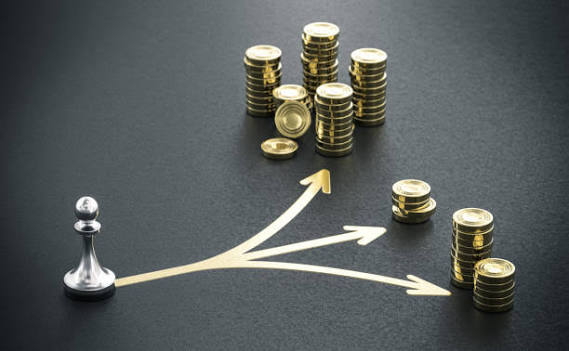

Investor Psychology · Behavioural Finance · Decision Paralysis
Why Investors Freeze at the Finish Line:
Understanding the Psychology of Investment Inaction.
You've done the research. Compared the locations. Analysed the numbers. Everything points to one conclusion: this looks like a good investment. And yet — you hesitate. You pause. You wait. Every day, investors reach the edge of a decision and stop. Not because they lack opportunity, but because something deeper is holding them back. The answer is rarely financial. It is psychological.
01 The Why Investors Freeze at the Finish Line Thesis
Why why investors freeze at the finish line merits institutional attention.
- 01
Hesitation Is Psychological
Most investment delays are driven by psychology, not lack of opportunity, information or capital.
- 02
Regret Outweighs Loss
Fear of being wrong often outweighs fear of missing out — and explains years of investor inaction.
- 03
Waiting Has A Price
Inaction is not neutral. Lost yield, rising prices and disappearing inventory are the hidden cost of delay.
- 04
Confidence Follows Action
Confidence rarely arrives before the decision — it appears after the decision has been made.
Why Investors Freeze at the Finish Line · Market Signals
Most investors hesitate for months or years between research and action.
Beyond a threshold, additional information increases hesitation rather than confidence.
Fear of regret is often a stronger emotional driver than fear of financial loss.
Waiting carries lost rental income, lost compounding and lost market exposure.
Summary
Key takeaways.
Key takeaways.
- Most investment delays are driven by psychology, not lack of opportunity.
- More information can actually increase hesitation.
- Fear of being wrong often outweighs fear of missing out.
- Even highly intelligent investors experience decision paralysis.
- Waiting carries hidden costs many overlook.
- Successful investors rely on frameworks, not emotions.
- Confidence rarely comes before action — it follows it.
Section 1 · The Myth
The myth of “I need more information”.
The myth of “I need more information”.
"I just need to do a bit more research."
It sounds responsible. It sounds logical. It feels productive.
But here is the truth: at a certain point, more information does not improve your decision — it delays it.
Research becomes a comfort zone. A safe space where no real risk exists. Because the moment you decide, you become accountable. And that is where hesitation begins.
Section 2 · The Comfort of Delay
The comfort of delay.
The comfort of delay.
Waiting feels harmless. Even smart. But delay is not neutral. It is a decision — a quiet one, an invisible one, but a decision nonetheless.
We tell ourselves:
- "I'll wait for more certainty."
- "I'll wait for prices to drop."
- "I'll wait until next quarter."
- "I'll wait until I feel more confident."
But here is the catch: certainty never arrives. The future does not become clearer with time — it simply becomes different.
Section 3 · Intelligence and Hesitation
Why smart people often delay the most.
Why smart people often delay the most.
Here is something surprising: the more intelligent the investor, the more likely they are to hesitate.
Engineers. Doctors. Lawyers. Executives. Highly analytical minds.
Why? Because they see everything. Every variable. Every risk. Every possible outcome. And instead of clarity, they experience overload.
More knowledge does not always simplify decisions. Sometimes, it complicates them.
Section 4 · Fear of Being Wrong
Fear of making a mistake.
Fear of making a mistake.
Most investors are not afraid of investing. They are afraid of being wrong. That subtle difference changes everything.
Common fears include:
- Buying too early
- Paying too much
- Choosing the wrong location
- Missing a better deal
- Facing criticism from others
So instead of risking regret, they delay. Ironically, that delay often creates a bigger regret later.
Section 5 · The Cost of Waiting
The cost of waiting.
The cost of waiting.
Here is what many investors overlook: waiting has a price. And it is rarely calculated.
While you wait:
- Prices may rise
- Rental income is lost
- Opportunities disappear
- Market conditions shift
- Inventory tightens
Doing nothing is not risk-free. It is simply a different kind of risk.

Section 6 · Analysis Paralysis
Analysis paralysis and the perfection trap.
Analysis paralysis and the perfection trap.
It starts simple. One property. Then five. Then ten. Then fifty. Each option adds complexity. Each comparison adds pressure. Eventually, the brain says: "too much" — and shuts down.
The search for the perfect deal becomes the reason no deal is made.
Perfect location. Perfect timing. Perfect price. Perfect certainty. It sounds ideal — but it does not exist. Every investment has trade-offs. Every opportunity has imperfections.
Wealth is not built on perfection. It is built on consistent, informed decisions over time.
Section 7 · Three Investor Types
The three types of delaying investors.
The three types of delaying investors.
The Information Collector. Always learning. Always researching. Rarely acting.
The Market Timer. Waiting for the "perfect moment." Often watching it pass by.
The Fearful Optimiser. Trying to eliminate all risk. Eventually realising that is impossible.
Each believes they are being cautious. In reality, they are standing still.
Section 8 · What Successful Investors Do
What successful investors do differently.
What successful investors do differently.
They do not wait for certainty. They move with clarity.
- They accept uncertainty. It is part of the process.
- They focus on probability. They look for strong odds, not guarantees.
- They use frameworks. Structured decision-making systems replace emotion.
- They think long term. Success is measured in years, not weeks.
- They accept imperfection. They act on good opportunities, not perfect ones.
Section 9 · Phuket Example
A Phuket property investment example.
A Phuket property investment example.
Two investors. Same opportunity. Different outcomes.
Investor A researches for six months and invests. Investor B researches for three years, waiting for certainty.
Investor A gains: market exposure, rental income, real-world experience, potential capital growth.
Investor B gains: more information, more opinions, more hesitation.
The difference is not intelligence. It is action.
For broader context, see our Thailand Property Market Intelligence, Phuket Property Investment, Cash Flow Property Investment Strategies, Retirement Property Investment Guide and Global ROI Comparison research.
Section 10 · The Wealth Formula
The wealth creation formula.
The wealth creation formula.
Wealth does not happen by accident. It follows a pattern:
Knowledge → Decision → Action → Ownership → Time.
Most investors master the first step. Many never reach the second. And without decisions, nothing else happens.
Conclusion
Conclusion.
Conclusion.
The biggest barrier to property investing is not opportunity. It is hesitation.
The investors who build wealth are not always the smartest. They are the ones who learn to act, despite uncertainty. Because uncertainty never disappears. Markets never become perfectly predictable. Risk never reaches zero.
At some point, every investor faces a choice: wait for certainty, or move forward with evidence. History is clear about which path builds wealth.
Core Investments insight: most investors believe their greatest risk is making a mistake. In reality, their greatest risk is standing still. While you wait, time moves, markets move, opportunities move — and wealth tends to follow those who decide before certainty arrives.
Investor Questions
Why Investors Freeze at the Finish Line, frequently asked questions.
Q01Why do investors freeze at the final step of a property decision?
Most investors freeze not from a lack of information but from a fear of being wrong. At the moment of decision, accountability becomes real — and the comfort of further research feels safer than the visibility of action.
Q02Does more research always lead to better property decisions?
Beyond a certain point, more information does not improve a decision — it delays it. Research becomes a comfort zone where no real risk exists, and decision quality often deteriorates as options and opinions accumulate.
Q03Why do highly intelligent investors often hesitate more?
Highly analytical minds see every variable, every risk and every possible outcome. Instead of producing clarity, this often produces overload. More knowledge does not always simplify decisions — sometimes it complicates them.
Q04What is the real cost of waiting to invest in property?
While investors wait, prices may rise, rental income is lost, opportunities disappear and inventory tightens. Doing nothing is not risk-free — it is simply a different kind of risk, and over a long horizon it is often the most expensive one.
Reader Q&A
Investor Questions & Answers
Ask a question about Why Investors Freeze at the Finish Line. Approved questions are published below with Core Investments’ response.
Loading questions…
Ask a question
Questions are reviewed before publication. Your email is never shown publicly.
Sources & References
Where this research draws its data (4)
Sources & References
Where this research draws its data (4)
Core Investments cites only published institutional sources. Figures referenced on this page are drawn from, or cross-checked against, the institutions listed below. For our editorial standards and source-vetting process, see our research methodology.
- [1]
Tourism Authority of Thailand (TAT) / Ministry of Tourism & Sports
International Tourist Arrivals to Thailand · 2024
https://www.mots.go.th/ → - [2]
World Travel & Tourism Council (WTTC)
Economic Impact Reports, Thailand · 2024
https://researchhub.wttc.org/ → - [3]
- [4]
JLL Hotels & Hospitality
Hotel Investment Outlook. Asia Pacific (Annual) · 2024
https://www.jll.com/en/insights/research →
Sources last reviewed 2026-06-14
Share this research
Direct Access
Speak with Frank about why investors freeze at the finish line.
Request a confidential briefing on overcoming property decision paralysis — covering decision frameworks, probability thinking, operator selection and long-term cashflow modelling for Thailand and Phuket investors.
- Frank Satar
- Chief Founder & Research Director
- Australia
- +61 494 651 747
- Thailand / WhatsApp
- +66 65 551 3269
© Core Investments Research | Frank Satar
Research produced by Core Investments. Reproduction or redistribution without written permission is prohibited.