
Asia Property Comparison · 2026
Best places to invest in Asia.
Phuket, Bangkok, Bali, KL & Ho Chi Minh — compared.
A side-by-side comparison of Asia's five most-traded international property markets for foreign investors in 2026. Yield, capital growth, ownership structures, liquidity, lifestyle and investor fit — all benchmarked against the Phuket and Bangkok pillars.
01 The Best Places to Invest in Asia Thesis
Why best places to invest in asia merits institutional attention.
- 01
Asia Is Not One Market
Phuket, Bangkok, Bali, KL and HCMC are structurally different: ownership rules, yield profiles, capital-growth drivers and liquidity all diverge.
- 02
Thailand Anchors the Region
Phuket and Bangkok combine full foreign ownership pathways, deep professional infrastructure and the most active foreign-buyer transaction flow in Southeast Asia.
- 03
Yield vs Growth Trade-Off
Resort markets (Phuket, Bali) lead on yield. Capital markets (Bangkok) lead on prime-CBD growth. The blend is the strategy.
- 04
Ownership Discipline
Foreign freehold is available in Thailand and Malaysia. Bali and Vietnam are leasehold structures with different implications for exit and resale.
Best Places to Invest in Asia · Market Signals
Phuket, Bangkok, Bali, Kuala Lumpur, Ho Chi Minh City.
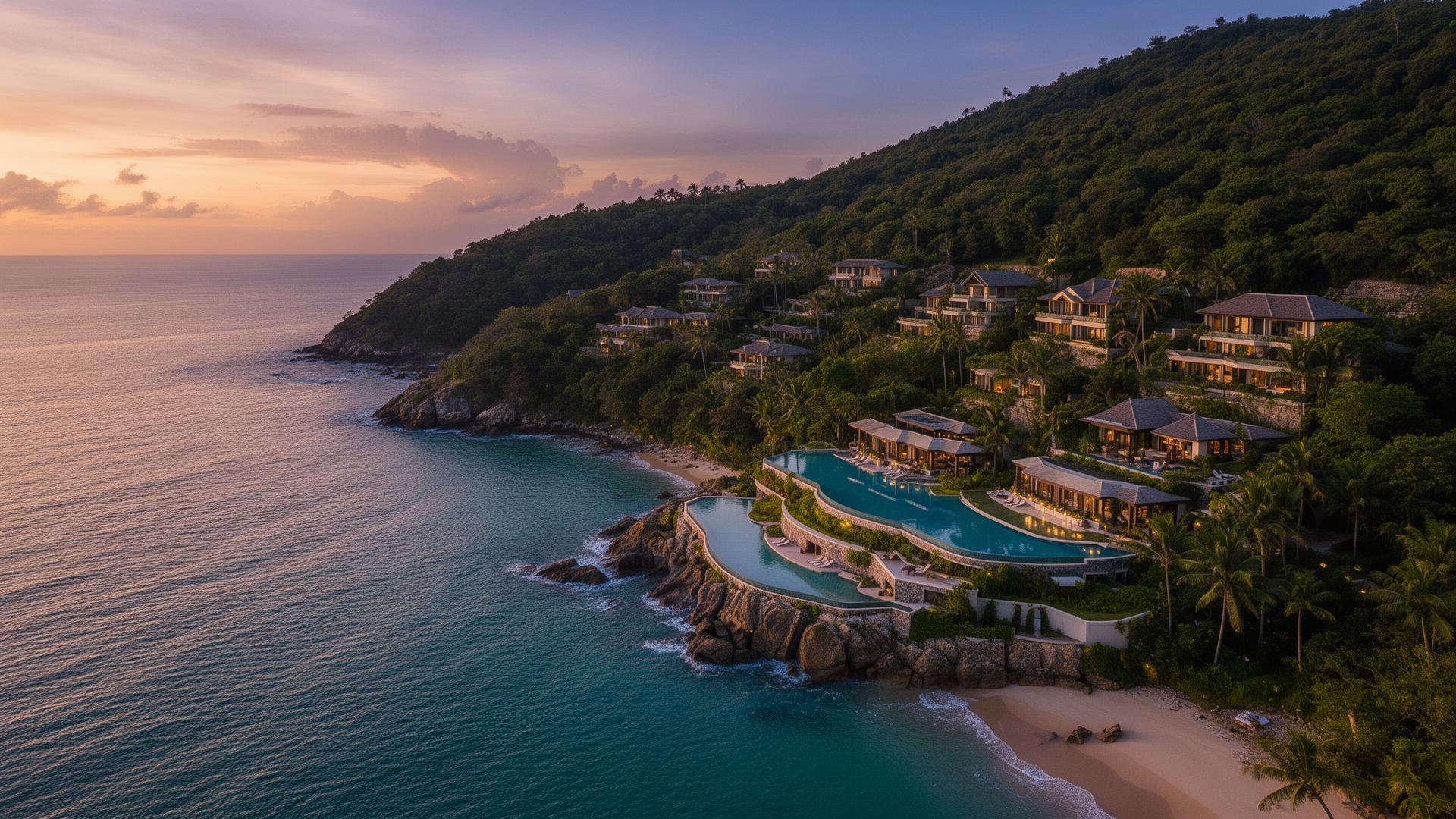
Hotel-managed resort villas in Phuket lead the comparison set.
Per project for condominiums under Thailand's Condominium Act.
Foreign ownership is leasehold only — different exit dynamics.
Section 1 · Framework
How to compare Asian property markets.
How to compare Asian property markets.
Investors comparing Asian markets typically run five tests: net yield (after operator fees, taxes and CapEx reserves), capital growth (structural drivers — scarcity, urbanisation, brand), ownership (freehold availability and foreign-buyer quotas), liquidity (resale market depth) and lifestyle fit (the investor's own usage pattern).
This article ranks each market across all five tests. For a deeper resort-specific comparison, see Phuket vs Bali vs Dubai; for the global yield benchmark, see Global ROI Comparison.
Section 2 · Market Comparison
Side-by-side market comparison.
Side-by-side market comparison.
The summary table below benchmarks Phuket, Bangkok, Bali, Kuala Lumpur and Ho Chi Minh City across the five tests.
Phuket, Thailand
Branded resort cluster with structural scarcity, deep tourism demand and the most-developed hotel-managed villa market in Asia.
- Yield:
- 6–10% net (hotel-managed); 5–7% (long-stay villa).
- Capital growth:
- Strong long-cycle appreciation in scarcity submarkets (Bang Tao, Kamala, Layan, Millionaires Mile).
- Ownership:
- Freehold condo (foreign quota) + leasehold villa structures.
- Best for:
- Cashflow + capital growth blend; lifestyle investors; branded residence buyers.
Bangkok, Thailand
Mature ASEAN capital with the deepest condominium market in the region, expanding MRT network and rising branded residential supply.
- Yield:
- 4–6% gross typical for prime CBD condos.
- Capital growth:
- Steady prime-CBD appreciation; outsized growth in new MRT corridors.
- Ownership:
- Freehold condo (foreign quota); leasehold for landed.
- Best for:
- Capital growth, urban professionals, long-stay rental income.
Bali, Indonesia
Iconic lifestyle market with strong tourism, but foreign ownership constrained to Hak Pakai or leasehold structures.
- Yield:
- Variable; strong villa rental yields possible in Canggu, Uluwatu.
- Capital growth:
- Cyclical; correlated with tourism and visa policy.
- Ownership:
- Leasehold or Hak Pakai; no freehold for foreigners.
- Best for:
- Lifestyle investors comfortable with structural ownership constraints.
Kuala Lumpur, Malaysia
Affordable Southeast Asian capital with full foreign freehold and the MM2H long-stay programme.
- Yield:
- 3–5% gross typical; soft demand from oversupply in some segments.
- Capital growth:
- Modest; capital growth historically muted versus regional peers.
- Ownership:
- Foreign freehold above price thresholds; MM2H pathway.
- Best for:
- Long-stay residency, value buyers, MM2H participants.
Ho Chi Minh City, Vietnam
Emerging-market growth story with rapid urbanisation, rising middle class and tight foreign-buyer quotas.
- Yield:
- 4–6% gross typical; volatile depending on project and operator.
- Capital growth:
- High-beta — strong upside potential with elevated execution risk.
- Ownership:
- 50-year renewable leasehold for foreigners; 30% project cap.
- Best for:
- Higher risk-tolerance growth investors with long horizons.
Section 3 · Ownership Structures
Foreign ownership across Asia.
Foreign ownership across Asia.
Ownership structure is the largest single legal variable across these markets:
- Thailand: Condominium freehold within a 49% foreign quota per project; villa via leasehold or Thai-majority company structure. Detailed in the foreign ownership framework and foreigner quota guide.
- Malaysia: Foreign freehold permitted above state-level price thresholds; MM2H pathway for long-stay.
- Indonesia (Bali): Foreigners cannot hold freehold (Hak Milik). Hak Pakai or leasehold structures only.
- Vietnam: 50-year renewable leasehold for foreigners; capped at 30% of units per project.
Section 4 · Yield vs Growth
Yield, growth & total return.
Resort markets (Phuket, Bali) generate the highest cash yields driven by tourism. Capital markets (Bangkok, KL) generate steadier, lower yields offset by capital appreciation in prime corridors. Emerging markets (HCMC) offer higher upside with elevated execution risk.
For yield underwriting discipline, see the net yield underwriting method. For combining yield and capital growth into a single underwriting view, see the total return component model.
Section 5 · Thailand's Position
Why Thailand anchors most Asian portfolios.
Why Thailand anchors most Asian portfolios.
Across the five-market comparison, Thailand combines the broadest legal infrastructure for foreign buyers (freehold condos + clear leasehold villa structures), the deepest professional advisor ecosystem, and the most actively traded resort and CBD inventory.
Most international portfolios anchor on Phuket for resort yield and lifestyle, and Bangkok for urban capital growth — then add a second market for diversification.
See the Thailand Property Investment Guide for the full country pillar.
Investor Questions
Best Places to Invest in Asia, frequently asked questions.
Q01Which Asian property market offers the best blend of yield and growth?
Phuket has the broadest combination of net yield (6–10% on hotel-managed villas), structural capital growth from beachfront scarcity, and full leasehold/freehold legal infrastructure. Bangkok offers stronger pure-capital-growth exposure for prime CBD condominiums.
Q02Where can foreign investors actually own freehold property in Asia?
Thailand and Malaysia permit foreign freehold ownership of condominiums (Thailand within a 49% project quota; Malaysia above price thresholds). Bali (Indonesia) and Ho Chi Minh (Vietnam) are leasehold-only for foreigners.
Q03Which Asian market has the strongest tourism-backed rental demand?
Phuket and Bali lead on resort tourism rental demand. Phuket's hotel-managed villa segment is the most institutionally developed in Southeast Asia, with operator-led occupancy frequently in the 70–90% range across prime submarkets.
Q04How does political and currency risk compare across these markets?
Thailand and Malaysia operate broadly stable currencies and mature foreign-ownership frameworks. Vietnam carries higher policy and execution risk; Bali's market is sensitive to Indonesian visa and ownership policy changes. Diversification across two or more markets is a common institutional hedge.
Q05Where should a first-time international investor start in Asia?
Most first-time international investors start with Phuket (resort cashflow + lifestyle) or Bangkok (urban capital growth). Both offer full legal ownership structures, deep professional advisor networks, transparent transaction costs and active resale liquidity.
Reader Q&A
Investor Questions & Answers
Ask a question about Best Places to Invest in Asia. Approved questions are published below with Core Investments’ response.
Loading questions…
Ask a question
Questions are reviewed before publication. Your email is never shown publicly.
Sources & References
Where this research draws its data (5)
Sources & References
Where this research draws its data (5)
Core Investments cites only published institutional sources. Figures referenced on this page are drawn from, or cross-checked against, the institutions listed below. For our editorial standards and source-vetting process, see our research methodology.
- [1]
JLL Hotels & Hospitality
Hotel Investment Outlook. Asia Pacific (Annual) · 2024
https://www.jll.com/en/insights/research → - [2]
- [3]
Knight Frank
The Wealth Report (Branded Residences & Prime International Residential Index) · 2024
https://www.knightfrank.com/wealthreport → - [4]
Savills
Asia Pacific Investment Quarterly & Thailand Spotlight · 2024
https://www.savills.com/research/ → - [5]
International Monetary Fund (IMF)
World Economic Outlook · 2024
https://www.imf.org/en/Publications/WEO →
Sources last reviewed 2026-06-14
Frameworks Applied
Proprietary methodology applied on this page
- Framework™
Core Capital Growth Framework™
The six structural drivers of long-term capital appreciation: infrastructure, scarcity, tourism demand, supply absorption, brand premium and accessibility.
- Framework™
Core Demand-First Framework™
Evaluates tourism demand, aviation connectivity, hospitality performance and infrastructure investment before selecting any individual property.
- Framework™
Core Market Selection Framework™
Sequenced country, city, submarket and asset selection methodology reconciled to investor risk profile and return objectives.
Share this research
Direct Access
Speak with Frank about best places to invest in asia.
Request a confidential Asia property comparison briefing — Phuket, Bangkok, Bali, KL and HCMC benchmarked on yield, growth, ownership and liquidity against your investor mandate.
- Frank Satar
- Chief Founder & Research Director
- Australia
- +61 494 651 747
- Thailand / WhatsApp
- +66 65 551 3269
© Core Investments Research | Frank Satar
Research produced by Core Investments. Reproduction or redistribution without written permission is prohibited.