

Thailand · Investment Intelligence
Thailand Property
Investment Intelligence
Every occupied hotel room in Phuket begins with a flight booking. Every flight booking creates accommodation demand. Every increase in accommodation demand influences occupancy, rental income and ultimately property values. Understanding that chain is the foundation of intelligent Thailand property investment, and the starting point for this guide.

Research Map
Thailand›Investment Framework›Thailand Property Investment Guide12 min read · Updated June 2026
Open MapClose Map
Research Map
Thailand›Investment Framework›Thailand Property Investment Guide12 min read · Updated June 2026
Thailand›Investment Framework›Thailand Property Investment Guide
Before We Begin
If you are new to Thailand property, start here.
This guide is for international investors who have decided Thailand is on their shortlist and now need to understand how the country actually works as a property market. It does not assume any prior knowledge of Thai ownership law, tax, currency, operator structures or local geography. By the end of it you will have a defensible view of whether Thailand fits your mandate, and which of its three institutional markets to research next.
Everything below is built around a single principle. Demand decides everything, structure protects everything. Get the demand picture right and you avoid buying into a weak market. Get the ownership and currency structure right and you protect what you have built. The rest is execution.
You can read it cover to cover, or use it as a reference. Either way, the sections build on each other in a deliberate order.
The Story
Every hotel room in Phuket starts with a flight.
Imagine the chain. A traveller in London books a flight to Phuket. The flight increases airport throughput. Airport throughput converts into hotel demand. Hotel demand converts into occupancy. Occupancy converts into rental income. Rental income, compounded over time, converts into the resale value of the apartment you are thinking about buying.
That chain is what makes Thailand investable. It is also why a brochure showing a beautiful villa does not, by itself, tell you whether the villa is a good investment. The villa is the last link in the chain; everything that decides whether it earns money sits several links upstream.
This guide walks you up the chain, from tourism demand and currency dynamics to ownership structures and operator quality, then back down to the asset itself. By the time you reach the building, you will know exactly what you are looking at.
The Simple Answer
Thailand property investment in 300 words.
Thailand is one of the world's largest inbound tourism economies. International arrivals run in the tens of millions per year and travel and tourism contributes a double-digit share of GDP. That demand base, more than anything else, is what makes Thai property investable as an asset class rather than a holiday-home decision.
Foreign investors can own Thai property in two clean ways. Freehold inside a condominium, up to the building's 49% foreign quota, gives outright title in your own name. Long-term leasehold (typically 30 years, sometimes renewable) covers villas and landed assets where freehold is restricted. Both routes are well-defined; both require independent Thai legal counsel at the point of purchase.
Three institutional markets matter for international capital: Phuket (tourism-led resort), Pattaya (beachfront yield plus EEC industrial demand) and Bangkok (urban, foreign-quota condominium). Realistic net yields on well-underwritten cash-flow stock sit in the mid-single digits. Hotel-managed assets carry higher gross yields offset by operator fees, FF&E reserves and marketing costs.
Currency is part of the return. International investors hold a Thai Baht asset and earn Baht-denominated income. Translated returns swing with the THB rate, and repatriation is governed by the Bank of Thailand's Foreign Exchange Transaction framework.
The investors who do well in Thailand pick the right market for their mandate, use the right ownership structure for their objective, and underwrite net income rather than gross. The rest of this guide is the evidence behind each of those statements.
Why This Guide Matters
Most international investors enter Thailand the wrong way around.
The default path is: see a project, fall for the renderings, then research the country. That path produces most of the regret we see. The country-first path, demand, ownership, currency, market, then asset, produces almost none of it.
This guide is the country-first path written down. It is deliberately neutral on which Thai market is best, because the honest answer depends on you. It is deliberately strict on the structural questions, because the structural questions are the same for every investor and the answers protect you irrespective of which market you choose.
How To Use This Guide
Read it in this order.
Step 1. Read "Why Thailand" below to anchor the demand picture.
Step 2. Work through "Ownership Framework" and "Strategy Framework" to understand the legal and strategic options available to foreign buyers.
Step 3. Use "Market Coverage" to see how Phuket, Pattaya and Bangkok compare side-by-side.
Step 4. Read the risks section honestly. If any of them are deal-breakers for you, stop here.
Step 5. Cross-reference with the Thailand Property Market Intelligence hub for the research and ranking layer.
What You Will Learn
By the end of this guide you will know.
Whether Thailand fits your investor mandate at all. Which of the three institutional markets best matches your objective. How foreign ownership actually works, and which structure to use for which asset type. How net yield differs from gross yield, and what realistic net yields look like by strategy. How currency exposure changes the realised return on a Thai Baht asset. The principal risks worth underwriting explicitly, and how to mitigate them. Where to go next in the site for market-level research and underwriting tools.
Why Thailand
The structural case behind the headlines.
International investors looking at Thailand usually arrive via the headlines, record arrival numbers, a falling Baht, a new airport runway, a flagship branded residence. The headlines are useful, but the structural case sits underneath them.
Thailand is one of the largest inbound tourism markets in the world. The Tourism Authority of Thailand and the Ministry of Tourism & Sports publish monthly arrival data showing tens of millions of international visitors a year, with source-country mix steadily diversifying beyond traditional regional source markets. The WTTC's Thailand Economic Impact Report shows travel and tourism contributing a double-digit share of GDP, and supporting employment well beyond the hospitality industry itself.
For investors, what matters is not any single year's arrival figure but the depth and durability of that demand base. It is the reason hotel operators, branded residence platforms and long-stay letting businesses can support the underwriting on an investment-grade asset.
Ownership Framework
How foreigners actually own Thai real estate.
Foreign ownership of Thai property is governed primarily by the Condominium Act and the Land Code. Foreigners may take freehold title to condominium units within the building's 49% foreign quota, and may hold long-leasehold interests (typically 30 years, renewable) on villas and landed assets. Branded residences and hotel-managed schemes are most often delivered under the freehold condominium framework so that international buyers can hold direct title.
Capital inflows used to purchase a unit are evidenced by the Foreign Exchange Transaction (FET) form issued by the remitting Thai bank, under the regulatory framework published by the Bank of Thailand, and this evidence is used at the point of repatriation when the asset is eventually sold. Investors should engage independent Thai legal counsel to verify quota status, title, and building documentation before completion.
Thailand In Frame
The capital that powers the thesis.
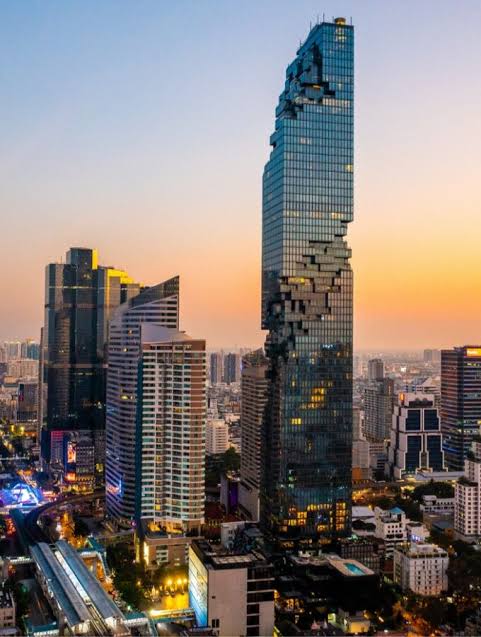
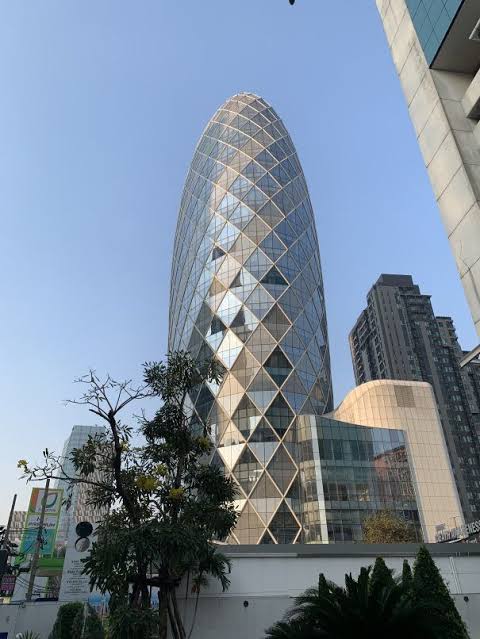
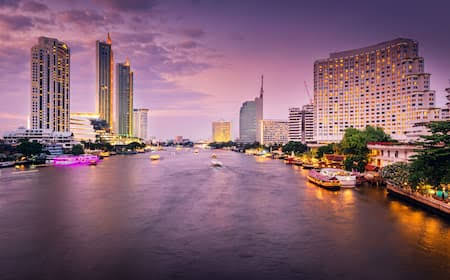
Bangkok is the engine room behind Thailand's institutional property thesis, deep capital markets, an international flight network, and a skyline that signals where global money has already arrived. The visuals below anchor the macro case: tower-grade architecture, riverfront capital, and a tourism base that runs 24 hours.






Strategy Framework
Four strategies, four investor profiles.
Most international investors fall into one of four strategy buckets: cash flow property investment, resort property investment, hotel-managed property investment and retirement property investment. The strategy a particular investor should adopt depends on holding period, currency base, target yield and the role the asset is meant to play within a wider portfolio.
A cash-flow investor is mostly buying income; a resort investor is buying a position in a tourism-led growth story; a hotel-managed investor is buying operating leverage to a brand; a retirement investor is buying a long-term use case with a partial yield offset. The same building can be the right answer for one of these mandates and the wrong answer for another.
Market Coverage
Phuket, Pattaya and Bangkok, three theses.
Phuket property investment is driven by international leisure tourism, limited coastal land and a deep pipeline of branded resort residences tracked by CBRE, JLL and Knight Frank.
Pattaya property investment benefits from year-round occupancy, motorway connectivity to Bangkok and the U-Tapao airport and Eastern Economic Corridor pipeline promoted by the Thailand Board of Investment.
Bangkok property investment is supported by corporate, medical and long-stay demand inside Southeast Asia's deepest urban real estate market, with supply and rental dynamics tracked in CBRE's Thailand MarketView.
The three markets are not interchangeable. A capital-growth thesis that works in Bangkok may not work in Phuket; an occupancy thesis that works in Pattaya may not work in Bangkok. The point of covering them in parallel is to let investors compare on the same basis.
Risks
What would make this thesis weaker.
The honest answer is: a sustained collapse in international arrivals, a material adverse change in the foreign-ownership framework, a structural shift in the Bank of Thailand policy rate, or a supply shock in a specific sub-market that compresses operator economics. Each of these has produced multi-quarter dislocations in the past and could do so again.
Property is also illiquid. An asset that cannot be sold to a credible next buyer in year ten is an expensive consumption decision dressed as an investment. Our investment risk disclosure sets the full risk framework out plainly; our research methodology describes how we test for it.
Investor Takeaway
What to do with this.
Thailand property investment is best approached as one asset class within a diversified portfolio, sized to a Baht-currency exposure the investor is comfortable holding through a cycle, underwritten on net yield rather than gross headlines, and chosen with reference to a credible exit buyer ten years out. Used that way, the asset class has a defensible institutional role. Used otherwise, it does not.
01 The Thailand Property Investment Thesis
Why thailand property investment merits institutional attention.
- 01
A Tourism Economy at Scale
Thailand consistently ranks among the world's most-visited destinations. The Tourism Authority of Thailand reports tens of millions of international arrivals annually, and the WTTC's Thailand Economic Impact Report shows travel and tourism accounting for a double-digit share of national GDP, a base of demand that supports tourism-backed real estate across cycles.
- 02
Infrastructure That Expands Catchment
Continued investment in airports, motorways, rail and marina infrastructure, tracked by the Thailand Board of Investment and reflected in CBRE and JLL market commentary, expands the realistic catchment of every viable property market in the country.
- 03
Institutional Operating Platforms
International hotel brands and professional letting platforms, analysed in JLL's Asia Pacific Hotel Investment Outlook, turn Thai real estate into income-producing investment stock rather than holiday homes, by aggregating distribution and standardising operations.
- 04
A Defined Foreign Ownership Framework
Clear legal structures, Condominium Act freehold within the 49% foreign quota and long-leasehold interests on landed assets, give international investors a recognised entry point. The Bank of Thailand publishes the foreign-exchange framework governing inbound capital and repatriation.
Thailand Property Investment · Market Signals
Source: Tourism Authority of Thailand / Ministry of Tourism & Sports, 2024.
Source: WTTC, Thailand Economic Impact Report, 2024.
Condominium Act freehold quota; leasehold structures; FET-based repatriation under Bank of Thailand rules.
Phuket, Pattaya and Bangkok, each evaluated under the same four-lens framework.
Investor Questions
Thailand Property Investment, frequently asked questions.
Q01Why is Thailand a credible market for international property investment?
Thailand is one of the world's largest inbound tourism economies. The World Travel & Tourism Council and the Tourism Authority of Thailand both report that travel and tourism account for a double-digit share of national GDP, and the country sustains tens of millions of international arrivals each year. That demand base supports tourism-backed property investment across resort and urban markets, particularly when paired with professional operating platforms.
Q02Can foreigners own property in Thailand?
Foreigners may hold freehold title to condominium units within the building's 49% foreign quota under the Condominium Act, and long-leasehold interests (typically 30 years, renewable) on villas and landed assets. Branded residences and hotel-managed schemes are most commonly delivered under the freehold condominium framework. Quota status and title must be verified at the point of purchase by independent Thai legal counsel.
Q03Which Thai markets does Core Investments cover?
Three institutional markets: Phuket, Pattaya and Bangkok. Each is evaluated through the same framework, demand drivers, supply quality, operating platform and exit liquidity, so investors can compare the markets on the same basis rather than on marketing material.
Q04What property investment strategies suit Thailand?
Four strategies typically fit international investor mandates: cash flow property investment, resort property investment, hotel-managed property investment and retirement property investment. The right fit depends on holding period, currency base, target yield and the role the asset is intended to play within a wider portfolio.
Q05What yields can investors realistically target in Thailand?
Net rental yields on well-underwritten cash-flow stock typically sit in the mid-single digits, with hotel-managed and resort assets producing higher gross yields offset by operating costs, FF&E reserves and marketing fees. Realised performance varies materially by project, operator, micro-location and cycle, and gross yield headlines should always be reduced to net before comparison. See our research methodology for how we model this.
Q06How does currency exposure affect a Thailand property investment?
International investors hold a Thai Baht asset and earn Baht-denominated rental income. Translated returns are exposed to the THB exchange rate against the home currency and to Bank of Thailand monetary policy. The Bank of Thailand publishes the regulatory framework for inbound and outbound foreign-exchange transactions, including the Foreign Exchange Transaction (FET) evidence used at repatriation.
Reader Q&A
Investor Questions & Answers
Ask a question about Thailand Property Investment. Approved questions are published below with Core Investments’ response.
Loading questions…
Ask a question
Questions are reviewed before publication. Your email is never shown publicly.
Sources & References
Where this research draws its data (10)
Sources & References
Where this research draws its data (10)
Core Investments cites only published institutional sources. Figures referenced on this page are drawn from, or cross-checked against, the institutions listed below. For our editorial standards and source-vetting process, see our research methodology.
- [1]
Tourism Authority of Thailand (TAT) / Ministry of Tourism & Sports
International Tourist Arrivals to Thailand · 2024
https://www.mots.go.th/ → - [2]
World Travel & Tourism Council (WTTC)
Economic Impact Reports, Thailand · 2024
https://researchhub.wttc.org/ → - [3]
UN Tourism (UNWTO)
World Tourism Barometer · 2024
https://www.unwto.org/tourism-data/world-tourism-barometer → - [4]
Bank of Thailand
Monetary Policy Report · 2024
https://www.bot.or.th/en/our-roles/monetary-policy/MPC-publication.html → - [5]
- [6]
International Monetary Fund (IMF)
World Economic Outlook · 2024
https://www.imf.org/en/Publications/WEO → - [7]
- [8]
- [9]
JLL Hotels & Hospitality
Hotel Investment Outlook. Asia Pacific (Annual) · 2024
https://www.jll.com/en/insights/research → - [10]
Knight Frank
The Wealth Report (Branded Residences & Prime International Residential Index) · 2024
https://www.knightfrank.com/wealthreport →
Sources last reviewed 2026-06-29
Disclosures
Important information (1)
Disclosures
Important information (1)
General disclaimer
Core Investments provides investment education, market intelligence, research and transaction-support services. Information published on this website is general in nature and does not constitute financial, investment, legal, tax or accounting advice, or personal recommendations. Investors should seek independent professional advice appropriate to their individual circumstances before making any investment decision. Past performance is not indicative of future results.
From research to numbers
Translate the macro thesis into a numbers-based scenario.
Open the CalculatorIllustrative scenarios using calculator default assumptions. Outcomes vary with market conditions, operator performance and investor inputs.
Share this research
Direct Access
Speak with Frank about thailand property investment.
Request a confidential briefing on current thailand property investment opportunities, market intelligence and acquisition strategy.
- Frank Satar
- Chief Founder & Research Director
- Australia
- +61 494 651 747
- Thailand / WhatsApp
- +66 65 551 3269
© Core Investments Research | Frank Satar
Research produced by Core Investments. Reproduction or redistribution without written permission is prohibited.