
Pattaya · Submarket Guide · Rank 03
Jomtien.
Pattaya's rental engine.
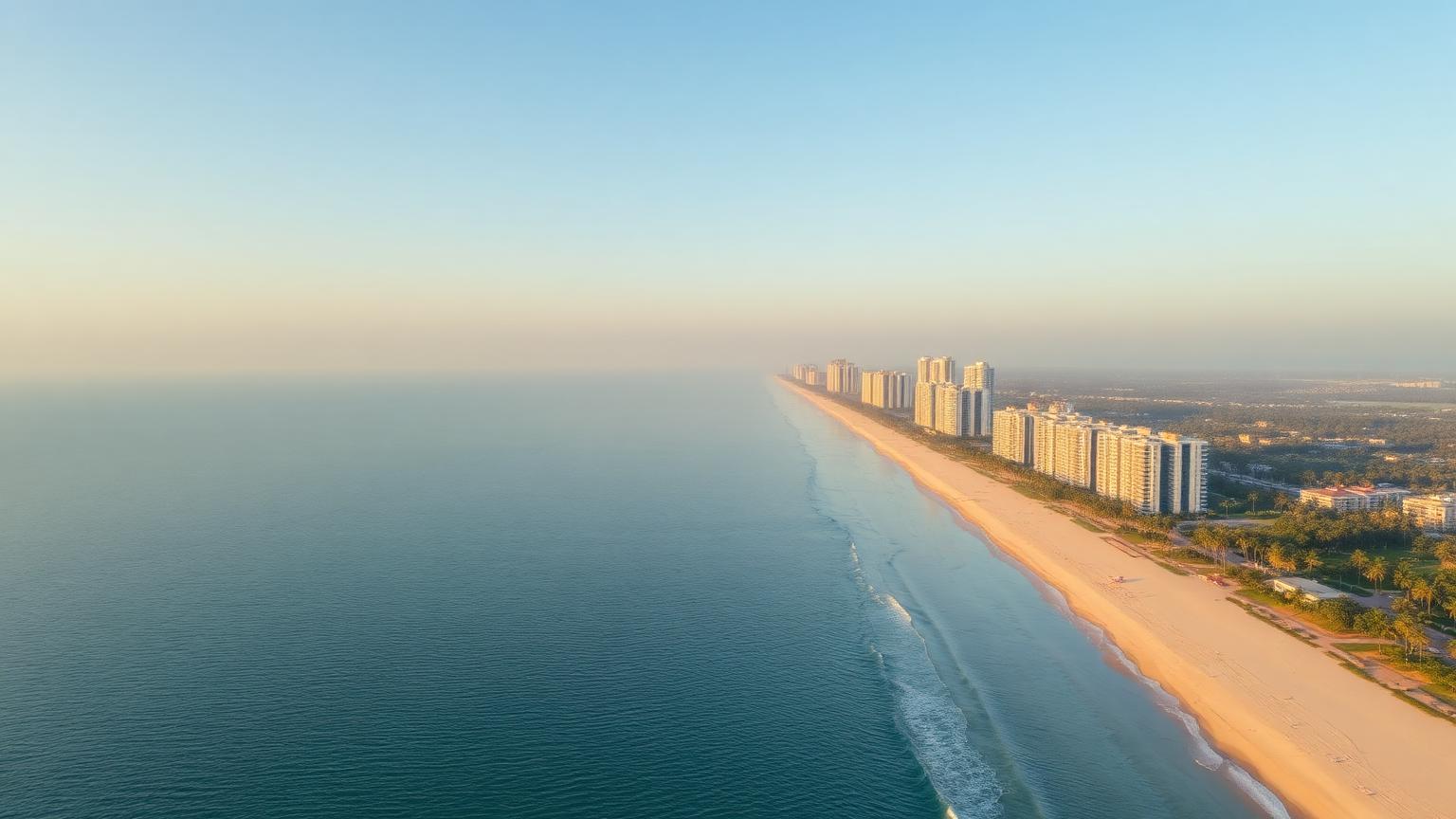
Jomtien is the volume rental engine of Pattaya. It carries the longest usable beach in the city, the deepest long-let foreign-tenant pool, and the broadest price ladder across the foreign-accessible spectrum, from sub-USD 100k entry tickets in older inland stock to beachfront new-build at the upper end of the cluster.

Research Map
Open MapClose Map
Research Map
Before We Begin
What this article is, and is not.
This is a focused guide to one Pattaya sub-market: Jomtien. It is not a Pattaya-wide market report. It is written for an investor evaluating whether Jomtien fits an income-led or balanced thesis on the Eastern Seaboard.
The Simple Answer
The short version, in plain English.
Jomtien is Pattaya's largest beachfront condominium market, with a deep stock of foreign-friendly inventory, mature rental management infrastructure and entry pricing materially below Wongamat or branded Central Pattaya. For investors with an income or balanced mandate, it offers some of the most efficient yield-on-cost in Thailand.
Why This Matters
Why it is worth your attention.
Jomtien's depth is also its risk. The market is large enough that unit-level due diligence - building quality, juristic person reputation, exposure to oversupply pockets - matters more than the headline sub-market view. Two units in the same building can carry materially different realised yields.
Submarket Overview
Why Jomtien anchors the Pattaya yield case.
Jomtien sits south of Central Pattaya, separated by the Pratumnak headland. The long Jomtien beach strip and Jomtien Second Road form the corridor's spine, with inland blocks extending eastwards and new-build pipeline concentrated south of Jomtien proper toward Na Jomtien and Bang Saray.
It is not the prestige address in Pattaya. Wongamat and Pratumnak hold that. But it is the most underwriteable yield position in the cluster and the most accessible entry ticket into foreign-freehold condominium ownership of any Thai prime resort cluster. For the majority of first-time foreign buyers in Pattaya, this is the corridor that anchors the underwriting comparison.
Investor Fit Snapshot
Jomtien at a glance, for decision-scanning.
- Typical Buyer
- International yield-focused investor, USD 90k–USD 300k ticket; long-let landlord.
- Primary Objective
- Long-let foreign-tenant income with accessible foreign-freehold entry.
- Cash Flow Potential
- Strong. Directional 4–6% net on long-let after operator fees, sinking fund and realistic vacancy.
- Capital Growth Potential
- Moderate. Beachfront and south-corridor outperform; inland 2014–2019 vintages drag the blended figure.
- Liquidity
- Deep. Highest absolute foreign-freehold condominium transaction volume in Pattaya.
- Risk Level
- Moderate. Main risks: Russian / CIS tenant concentration; inland supply overhang; Hotel Act enforcement on short-let.
- Suitable For
- Yield-focused investors, long-let landlords, first-time foreign-freehold buyers, EEC-resident professional buyers.
- Not Suitable For
- Capital-preservation buyers seeking lowest-reputation-risk address (use Wongamat); pure scarcity-thesis buyers (use Pratumnak).
Why Investors Choose Jomtien
Three structural reasons Jomtien dominates Pattaya rental flow.
Longest usable beach in Pattaya. The Jomtien beach strip runs continuously from the Pratumnak headland south toward Na Jomtien, the longest contiguous beachfront in the city and the spine of the long-let demand pool.
Deepest long-let foreign-tenant pool. Russian/CIS, European, ASEAN and retirement-visa tenants drive a 30+ day rental layer that is structurally deeper than anywhere else in the Pattaya cluster, with steadier occupancy through the year than tourism-dependent submarkets.
Broadest foreign-accessible price ladder. Sub-USD 100k inland entry to USD 300k+ beachfront new-build, all foreign-freehold quota where available, makes Jomtien the only Pattaya submarket that meaningfully serves the full international investor ticket range.
Rental Market Analysis
Three rental economics, one dominant layer.
Rental demand in Jomtien splits into three economics: (1) long-let foreign tenants (30+ days, Russian/CIS, European, ASEAN, retirees); (2) seasonal-residence owners with intermittent letting; and (3) short-let on suitable stock subject to Hotel Act / 30-day enforcement risk. The long-let layer is the structural one. It absorbs occupancy through the year with the deepest tenant pool in Pattaya.
Net yields after operator fees, sinking fund and realistic vacancy typically sit 1.5–2.5 points below headline gross. Russian / CIS tenant concentration is the largest single-market dependency in the cluster and the primary risk to the long-let yield case.
Capital Growth Potential
Selection within Jomtien drives realised growth.
Blended Jomtien growth is dragged by 2014–2019 mid-market vintages along Jomtien Second Road and inland blocks; this supply continues to clear slowly. The upper band, beachfront south of Jomtien and the new south-corridor pipeline, supports real per-sqm growth on selected product.
Asset selection within Jomtien matters more than within most Pattaya submarkets. Buyers who treat Jomtien as one market and underwrite the blended growth figure routinely buy the wrong asset in the wrong vintage. Beachfront new-build and south-corridor stock outperform; inland Second Road vintages underperform.
Infrastructure & Connectivity
Beach road, U-Tapao access, hospital catchment.
Jomtien connects to Central Pattaya via the dolphin roundabout corridor and to U-Tapao International Airport via Sukhumvit (~35 minutes). The long beach road has been upgraded but parking and access density during peak season constrain short-let logistics.
Healthcare via Bangkok Hospital Pattaya (~15 minutes). International school catchment via East Pattaya and Huay Yai. EEC corridor: Jomtien is the most accessible foreign-freehold condominium product for EEC-resident professional households across the Sattahip, Bang Saray and Laem Chabang catchments. U-Tapao Phase 2 and Bangkok–Rayong HSR are designated EEC projects; specific delivery dates remain SCENARIO, not basecase.
Investor Suitability
Who Jomtien fits, and who it does not.
Best fit: yield-focused investors under USD 200k entry; long-let landlords with a multi-cycle horizon; first-time foreign-freehold buyers prioritising accessible ticket size and a deep rental pool; EEC-resident professional households seeking foreign-freehold accessibility.
Weaker fit: capital-preservation buyers seeking the lowest-reputation-risk address (use Wongamat); pure scarcity-thesis buyers (use Pratumnak); pure EEC-thesis buyers seeking maximum asymmetry (use Bang Saray / Na Jomtien).
Risk Analysis
Five material risks to underwrite explicitly.
1. Russian / CIS tenant concentration. The largest single-market dependency in the cluster; a demand reversal would compress occupancy faster than in west-coast Phuket equivalents.
2. Inland and Second Road supply overhang. 2014–2019 vintages continue to clear slowly and drag the blended growth figure.
3. Hotel Act / 30-day enforcement risk. Sub-30-day rentals are enforced inconsistently across political cycles. Short-let upside should be modelled net of enforcement risk.
4. Currency translation risk. Foreign-currency investors carry THB translation risk on both rental income and exit proceeds.
5. Climate / coastal exposure. A long flat beach strip with limited topographic protection carries coastal-exposure risk over the underwriting horizon.
2035 Outlook
Base, growth and risk cases for the next decade.
Base case: Jomtien remains the volume rental engine; blended capital growth is muted by inland overhang while beachfront and south-corridor pipeline outperform.
Growth case: EEC plus south-corridor maturation deepens the long-let demand pool; mid-market overhang clears faster than expected.
Risk case: Russian / CIS demand reversal combined with continued mid-market delivery produces a multi-year overhang in inland stock.
No casino impact is built into this outlook. South Pattaya / Bali Hai is the more frequently cited host zone in Entertainment Complex promotional material; direct Jomtien uplift is modest under any plausible scenario.
How To Underwrite
From submarket selection to scenario modelling.
Treat Jomtien as one corridor with three substrategies: long-let income on accessible inland stock, hybrid lifestyle on mid-market beach-adjacent product, and capital-preservation-plus-income on beachfront new-build and the south-corridor pipeline. Each carries a different yield ceiling, holding period and resale profile.
Model conservative, base and growth scenarios in the Total Return Calculator using the operator's actual fee structure rather than headline gross yield, and stress-test the exit on holding periods of five, eight and ten years. Stress-test the Russian / CIS tenant concentration explicitly.
What This Means For You
Your practical next step.
If your mandate prioritises income, Jomtien belongs on your shortlist. The next step is to compare specific buildings, juristic-person quality and rental-management operators, not just sub-market price-per-square-metre averages.
01 The Jomtien Property Investment Thesis
Why jomtien property investment merits institutional attention.
- 01
Deepest Rental Pool
Jomtien holds the deepest long-let foreign-tenant pool in the Pattaya cluster. Russian/CIS, European, ASEAN and retirement-visa tenants absorb occupancy through the year.
- 02
Most Accessible Entry
Sub-USD 100k entry tickets in older inland stock make Jomtien the most accessible foreign-freehold condominium product of any Thai prime resort cluster.
- 03
Broadest Price Ladder
From entry-level inland blocks to beachfront new-build at USD 2,800–4,500 per sqm, Jomtien spans the full foreign-accessible price spectrum in one corridor.
- 04
EEC-Adjacent Demand
Sattahip, Bang Saray and Laem Chabang catchments provide a steady professional long-let layer that is supportive rather than tourism-cyclical.
Jomtien Property Investment · Market Signals
Investment-grade A- on the submarket matrix.
Most accessible foreign-freehold condominium in Thai prime clusters.
Long-let dominant; net typically 1.5–2.5 points below.
Deepest long-let foreign-tenant pool city-wide.
Investor Questions
Jomtien Property Investment, frequently asked questions.
Q01Why is Jomtien Pattaya's deepest rental engine?
Jomtien holds the longest usable beach in Pattaya, the deepest long-let foreign-tenant pool city-wide, and the broadest price ladder across the foreign-accessible spectrum. It is the default yield position in Pattaya and the default foreign-freehold entry ticket.
Q02What is a realistic net yield on a Jomtien condo?
Directional 4–6% net on long-let stock after operator fees, sinking fund, common-area charges and realistic vacancy. Headline gross of 7–9% is rarely the realised number. Net yields typically sit 1.5–2.5 points below headline gross.
Q03What investor profile typically buys in Jomtien?
Three profiles dominate: yield-focused investors under USD 200k entry; long-let landlords with multi-cycle horizon; and first-time foreign-freehold buyers prioritising accessible ticket size and a deep rental pool. Pure capital-preservation buyers tend to look at Wongamat or Pratumnak instead.
Q04Is short-let viable in Jomtien?
On suitable units yes, but the Hotel Act creates regulatory risk on sub-30-day rentals enforced inconsistently across political cycles. Long-let economics dominate the underwriting and short-let upside should be modelled net of enforcement risk.
Q05How exposed is Jomtien to Russian / CIS rental demand?
Materially. Russian / CIS tenants are the largest single source-market dependency in the cluster; a demand reversal would compress occupancy faster than in west-coast Phuket equivalents. This concentration is the primary risk to the long-let yield case.
Q06Should I buy beachfront or inland Jomtien?
Selection drives realised outcome. Beachfront and new-build south-corridor stock support the upper growth band; inland 2014–2019 vintages along Jomtien Second Road carry the mid-market overhang and clear more slowly. Asset selection within Jomtien matters more than within most Pattaya submarkets.
Q07What ticket size does Jomtien typically require?
Entry foreign-freehold condominium tickets begin in the sub-USD 100k range for older inland stock and run to USD 300k+ for beachfront new-build. Indicative prime band sits around USD 2,800–4,500 per sqm; second-row materially lower.
Reader Q&A
Investor Questions & Answers
Ask a question about Jomtien Property Investment. Approved questions are published below with Core Investments’ response.
Loading questions…
Ask a question
Questions are reviewed before publication. Your email is never shown publicly.
Sources & References
Where this research draws its data (7)
Sources & References
Where this research draws its data (7)
Core Investments cites only published institutional sources. Figures referenced on this page are drawn from, or cross-checked against, the institutions listed below. For our editorial standards and source-vetting process, see our research methodology.
- [1]
Tourism Authority of Thailand (TAT) / Ministry of Tourism & Sports
International Tourist Arrivals to Thailand · 2024
https://www.mots.go.th/ → - [2]
- [3]
Savills
Asia Pacific Investment Quarterly & Thailand Spotlight · 2024
https://www.savills.com/research/ → - [4]
JLL Hotels & Hospitality
Hotel Investment Outlook. Asia Pacific (Annual) · 2024
https://www.jll.com/en/insights/research → - [5]
Knight Frank
The Wealth Report (Branded Residences & Prime International Residential Index) · 2024
https://www.knightfrank.com/wealthreport → - [6]
Bank of Thailand
Monetary Policy Report · 2024
https://www.bot.or.th/en/our-roles/monetary-policy/MPC-publication.html → - [7]
Sources last reviewed 2026-06-29
Disclosures
Important information (5)
Disclosures
Important information (5)
Capital appreciation disclaimer
Capital appreciation examples and growth projections are illustrative only and should not be interpreted as predictions or guarantees of future performance. Property values may rise or fall and are influenced by market conditions, supply, demand, economic factors, regulatory changes and investor sentiment.
Rental return disclaimer
Rental income examples, occupancy assumptions and yield illustrations are provided for educational purposes only. Actual rental performance may vary based on market conditions, occupancy levels, operator performance, seasonality, competition, economic conditions and other factors. Rental returns are not guaranteed unless expressly stated within a legally binding agreement.
Forecast disclaimer
Forecasts, projections and forward-looking statements are based on information available at the time of publication and involve assumptions that may not materialise. Future events may differ significantly from projected outcomes.
Case study disclaimer
Case studies are hypothetical or historical illustrations intended to demonstrate investment concepts and should not be relied upon as forecasts of future performance. Actual outcomes may differ materially.
General disclaimer
Core Investments provides investment education, market intelligence, research and transaction-support services. Information published on this website is general in nature and does not constitute financial, investment, legal, tax or accounting advice, or personal recommendations. Investors should seek independent professional advice appropriate to their individual circumstances before making any investment decision. Past performance is not indicative of future results.
From research to numbers
Model a Jomtien long-let yield scenario.
Compare conservative, base and growth assumptions for a Jomtien condominium, using realistic vacancy, sinking fund and operator fees rather than headline gross yield.
Model Jomtien ReturnsIllustrative scenarios using calculator default assumptions. Outcomes vary with market conditions, operator performance and investor inputs.
Share this research
Direct Access
Speak with Frank about jomtien property investment.
Request a confidential briefing on current jomtien property investment opportunities, market intelligence and acquisition strategy.
- Frank Satar
- Chief Founder & Research Director
- Australia
- +61 494 651 747
- Thailand / WhatsApp
- +66 65 551 3269
© Core Investments Research | Frank Satar
Research produced by Core Investments. Reproduction or redistribution without written permission is prohibited.