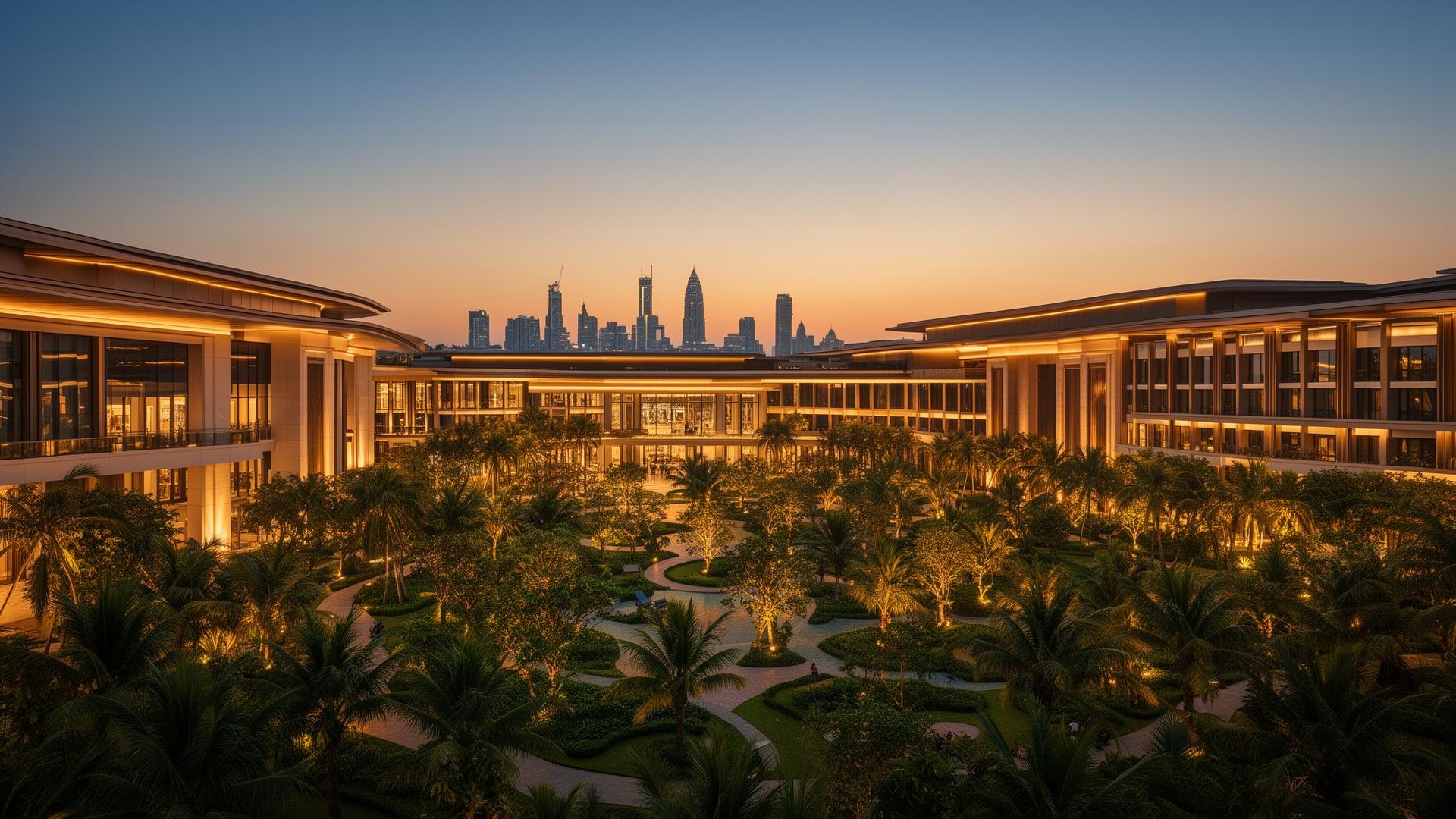

Thailand · Policy Intelligence
Thailand Entertainment
Complex Policy Report
Thailand's proposed Entertainment Complex framework has emerged as one of the most closely watched policy initiatives affecting the country's tourism, hospitality and investment sectors. As of publication, Thailand has not implemented a completed framework, no licenses have been awarded and no operators have been formally approved. Core Investments evaluates the proposal through the Demand Intelligence Framework. Focusing on tourism demand, infrastructure investment and accommodation demand rather than gaming activity alone.

Research Map
Thailand›Thailand Macro Intelligence Centre›Thailand Entertainment Complex Policy Report12 min read · Updated June 2026
Open MapClose Map
Research Map
Thailand›Thailand Macro Intelligence Centre›Thailand Entertainment Complex Policy Report12 min read · Updated June 2026
Thailand›Thailand Macro Intelligence Centre›Thailand Entertainment Complex Policy Report
Up to Parent
Thailand Macro Intelligence CentreSame Parent
Before We Begin
Why this report exists.
Few topics generate more speculation in Thailand property circles than the proposed Entertainment Complex framework. Investors hear that casinos are coming, that Bangkok or Pattaya land prices will move, that early positioning will be rewarded. Almost none of that conversation begins with what the policy actually says and where it actually stands.
This report exists to separate proposed policy from enacted law, and to translate the difference into something useful for a real investment decision. As of publication, no licences have been issued, no operators have been approved, and the most recent draft bill was withdrawn from parliamentary consideration. That single fact reframes everything else.
You will not find advocacy here, in either direction. You will find a sober, evidence-led briefing on what is true, what is uncertain, and how a serious investor should treat the proposal while it remains a proposal.
The Story
The investor reading the wrong headline.
A Hong Kong family office sees a regional headline announcing that Thailand is about to legalise integrated resorts. Within a week, a broker pitches a Pattaya land parcel positioned as a future entertainment complex catchment. The pricing assumes a casino licence in walking distance.
The family office asks the obvious question. Has the law passed? The honest answer is no. There is no enacted framework. There are no awarded licences. There are no approved operators. The draft bill was withdrawn. Yet the land is already priced as if the opposite were true.
This is the gap this report is designed to close. Tourism demand, infrastructure investment and accommodation demand are real and measurable today. The entertainment complex is, for now, a scenario. Mistaking one for the other is how investors over-pay.
Executive Summary
The report in under 300 words.
Thailand has discussed an integrated entertainment complex framework for several years. The most recent legislative attempt progressed during 2025 and was subsequently withdrawn. As of publication there is no enacted framework, no awarded casino licences and no approved operator. Any investment thesis that depends on the framework being implemented is, by definition, a scenario rather than a fact.
That said, the discussion is meaningful. International experience shows that integrated resorts succeed or fail on tourism demand, MICE activity and accommodation revenue rather than on gaming alone. Thailand already possesses the tourism volume, aviation connectivity and hospitality infrastructure that successful integrated resorts elsewhere have required.
For investors, this leads to a single conclusion. The underlying drivers of Thailand property performance, tourism demand, infrastructure investment, accommodation demand and population growth, are intact regardless of whether an entertainment complex is ultimately built. Any future policy enactment would act as a supplementary catalyst, not a primary thesis.
If you are evaluating Bangkok, Pattaya or Phuket on the back of entertainment complex speculation, this report will likely change how you size the opportunity and how you price the risk.
Why This Report Matters
Policy speculation is already moving prices.
Vendors, brokers and marketing teams have begun pricing entertainment complex optionality into specific Thailand assets. Some of that pricing is rational. Much of it is not. Understanding the actual policy status protects you from paying today for an outcome that may or may not arrive, and that almost certainly will not arrive on the timeline the marketing implies.
This briefing matters because the difference between a policy that is proposed and a policy that is enacted is the difference between speculation and investment.
How To Read This Report
What is inside and how to use it.
The report opens with the current status of the entertainment complex framework and then evaluates it through the Demand Intelligence Framework. We examine tourism demand, infrastructure investment, accommodation demand and regional impact, and we then translate those findings into investor considerations.
Read it once for the policy picture. Return to the regional and accommodation sections when you are evaluating a specific Bangkok, Pattaya or Phuket asset that has been positioned, explicitly or implicitly, around future entertainment complex demand.
Key Findings
What the evidence shows.
- There is no enacted entertainment complex framework in Thailand as of publication.
- The 2025 draft bill was withdrawn from parliamentary consideration.
- No casino licences have been issued and no operators have been formally approved.
- International integrated resorts succeed on tourism, MICE and accommodation, not gaming alone.
- Thailand's existing tourism and hospitality fundamentals already underpin its property thesis.
- Any future entertainment complex would be a supplementary demand catalyst, not the primary driver.
What this means for you. Build your Thailand thesis on demand fundamentals that exist today. Treat entertainment complex outcomes as upside optionality, never as the base case.
Executive Summary
Proposed framework, evolving discussion, no enacted law.
Thailand's proposed Entertainment Complex framework has emerged as one of the most closely watched policy initiatives affecting the country's tourism, hospitality and investment sectors.
The proposal has attracted attention from international integrated resort operators, hospitality groups, tourism stakeholders, investors and property market participants. However, it is important to distinguish between proposed legislation, political discussion and enacted law.
As of the date of publication, Thailand has not implemented a completed entertainment complex regulatory framework. No casino licenses have been awarded, no integrated resort operators have been formally approved and no entertainment complex projects have commenced under an enacted legal structure.
For investors, the significance of the proposal extends beyond gaming activity. The more relevant considerations include potential impacts on tourism demand, visitor spending, infrastructure investment, employment creation, hospitality development and accommodation demand.
Core Investments evaluates the proposal through the Demand Intelligence Framework, which prioritises tourism demand, infrastructure development, rental demand, population growth and economic activity rather than focusing solely on gaming operations.
This report examines the current legislative status, publicly reported operator interest, international case studies and potential implications for Bangkok, Pattaya and Phuket should future entertainment complex legislation ultimately proceed.
Direct Access · Frank Satar
Considering Thailand property investment amid the entertainment complex policy?
Speak directly with Frank Satar regarding Thailand property investment opportunities, policy implications and market intelligence across Bangkok, Phuket and Pattaya.
Current Legal Status
Where the legislation stands today.
Thailand has spent several years evaluating potential legislation relating to integrated entertainment complexes.
Supporters of the proposal have argued that regulated entertainment complexes could strengthen tourism competitiveness, increase visitor spending, attract foreign investment and generate tax revenue. Opponents have raised concerns regarding social impacts, regulation, gambling participation and broader public policy considerations.
During 2025, draft legislation advanced through various stages of the government review process and attracted significant domestic and international attention.
However, political developments during 2025 resulted in increased uncertainty surrounding the proposal. The Entertainment Complex Bill was subsequently withdrawn from parliamentary consideration and did not proceed to enactment.
Current Status
- Thailand does not currently operate under an enacted entertainment complex framework.
- No casino licenses have been issued.
- No integrated resort operators have been approved.
- No entertainment complex developments have been authorised under a completed regulatory framework.
Any future entertainment complex legislation remains subject to political, legislative and regulatory processes.
Investors should distinguish carefully between proposed policy, legislative discussion and enacted law.
Timeline of Key Developments
From early discussion to legislative withdrawal.
2024
Public discussion surrounding entertainment complex legislation continued to expand.
Industry stakeholders, tourism groups and international integrated resort operators publicly discussed Thailand's long-term potential as a tourism and entertainment destination.
Several major international operators indicated interest in evaluating opportunities in Thailand should a legal framework eventually be established.
Early 2025
Government review of draft entertainment complex legislation continued. Public discussion intensified regarding:
- Tourism competitiveness
- Foreign investment attraction
- Economic development
- Regulatory safeguards
- Social considerations
The proposal attracted substantial domestic and international media coverage.
Mid 2025
Draft legislation advanced through government review processes and Cabinet approval was publicly reported.
The proposal moved closer to parliamentary consideration and generated increased attention from international integrated resort operators.
Investor interest increased as market participants began evaluating potential implications for tourism, hospitality and property sectors.
Second Half of 2025
Political developments introduced uncertainty regarding the proposal's future.
The Entertainment Complex Bill was subsequently withdrawn from parliamentary consideration.
The withdrawal paused legislative momentum and created uncertainty regarding future implementation timelines.
Current Position
Thailand does not currently have an enacted entertainment complex framework. No licenses have been awarded. No operators have been selected. No development approvals have been granted under a completed entertainment complex regulatory structure.
The situation should therefore be viewed as an evolving policy discussion rather than a completed legislative outcome.
Investors should distinguish between proposed policy, legislative progress and enacted law.
Publicly Reported Operator Interest
Market interest, not awarded projects.
Thailand's large tourism industry, established hospitality sector, international air connectivity and strong visitor volumes have attracted interest from several internationally recognised integrated resort operators.
Public reporting has referenced interest from operators including:
Las Vegas Sands
Las Vegas Sands has publicly discussed Thailand as a potentially attractive long-term market should a legal framework eventually be implemented.
The company's historical focus on large-scale integrated resorts, convention facilities, entertainment venues and tourism infrastructure aligns closely with the type of projects frequently discussed in connection with Thailand's entertainment complex proposal.
MGM Resorts International
MGM Resorts has also been identified in public reporting as a company monitoring developments in Thailand.
The group operates integrated resort destinations across multiple international markets and has experience developing tourism-focused entertainment infrastructure.
Galaxy Entertainment Group
Galaxy Entertainment has publicly expressed interest in evaluating Thailand should a future framework become available.
The company is among Asia's most established integrated resort operators and has significant experience in large-scale hospitality and entertainment developments.
Melco Resorts & Entertainment
Melco has been widely cited as a potential participant in any future Thailand integrated resort market.
Its experience in tourism, hospitality, entertainment and premium resort operations makes it one of several operators frequently referenced in industry discussions.
Genting Group
Genting has also been associated with discussions regarding Thailand's long-term entertainment complex potential.
The group's regional experience across hospitality, tourism and integrated resort operations positions it as another operator often mentioned in relation to future opportunities.
Important Clarification
Public expressions of interest should not be interpreted as approvals, licenses or project awards. At the time of publication:
- No operator has been awarded a casino license.
- No operator has secured development rights.
- No operator has received approval to construct an entertainment complex in Thailand.
- No formal licensing process has been completed.
Interest should therefore be viewed as market interest only, rather than evidence of future project approval.
For investors, the existence of operator interest demonstrates that Thailand is widely regarded as a significant tourism market. However, operator interest alone does not determine future legislative outcomes.
International Comparisons
What integrated resorts have delivered elsewhere.
Why International Comparisons Matter
When evaluating Thailand's proposed Entertainment Complex framework, investors should focus less on gaming activity and more on the broader economic and tourism impacts that integrated resort developments have historically generated in other jurisdictions.
International experience demonstrates that entertainment complexes can influence visitor spending, hotel demand, convention activity, infrastructure investment and surrounding real estate markets. However, outcomes vary significantly depending on regulation, location, tourism demand and broader economic conditions.
Singapore
Singapore is often considered the most relevant international case study.
The introduction of integrated resorts, including Marina Bay Sands and Resorts World Sentosa, transformed Singapore's tourism offering and strengthened its position as a global business, convention and leisure destination.
Key outcomes included:
- Increased international visitor spending
- Growth in convention and exhibition activity
- Expansion of luxury hospitality inventory
- Significant infrastructure investment
- Enhanced international visibility
Importantly, Singapore's success was not driven solely by gaming. The integrated resort model combined hotels, convention facilities, retail, entertainment, restaurants and tourism infrastructure.
For investors, the Singapore experience demonstrates how large-scale tourism infrastructure can create broader economic benefits beyond gaming operations themselves.
Macau
Macau developed into the world's largest gaming market and became heavily dependent on casino-related tourism.
The Macau experience illustrates both opportunities and risks.
Benefits included:
- Significant tourism growth
- Employment creation
- Infrastructure development
- Increased government revenues
Challenges included:
- Economic concentration
- Dependence on a single industry
- Exposure to regulatory and economic shocks
The Macau example highlights why diversification remains critical when evaluating entertainment-complex-led growth.
Manila
The Philippines developed Entertainment City as a cluster of integrated resort developments designed to strengthen tourism and international investment.
The area attracted substantial investment into:
- Hotels
- Convention facilities
- Retail infrastructure
- Tourism services
The Manila experience demonstrates how integrated resorts can become catalysts for broader urban redevelopment when combined with supporting infrastructure and tourism growth strategies.
South Korea
South Korea adopted a more selective approach to integrated resort development.
Projects were generally positioned around tourism growth, convention business and international visitation rather than domestic gaming demand.
The Korean experience highlights the importance of:
- International accessibility
- Airport infrastructure
- Tourism strategy
- Regulatory stability
Large-scale entertainment developments typically perform best when supported by strong tourism fundamentals rather than relying solely on gaming demand.
Core Investments Observation
Across all major international examples, the strongest long-term outcomes were associated with:
- Growing tourism demand
- Strong international air connectivity
- Significant infrastructure investment
- Convention and business tourism
- Hospitality expansion
- Urban regeneration
Gaming activity alone was rarely the primary driver of sustained economic success. The broader tourism ecosystem was the determining factor.
Tourism Implications
Tourism demand remains the core variable.
From a Core Investments perspective, the most important question is not whether casinos are introduced.
The critical question is whether an entertainment complex framework would materially increase tourism demand, visitor spending and length of stay.
Tourism demand remains the foundation of Thailand's hospitality and tourism-backed property sectors.
Potential Increase in Visitor Spending
Integrated resorts are typically designed to increase visitor expenditure rather than simply increase visitor numbers.
Entertainment complexes often combine:
- Hotels
- Retail
- Restaurants
- Convention facilities
- Entertainment venues
- Cultural attractions
As a result, successful integrated resort destinations often achieve higher average visitor spending per trip.
Convention and MICE Tourism
One of the most significant opportunities relates to the MICE sector:
- Meetings
- Incentives
- Conferences
- Exhibitions
Integrated resorts frequently include large-scale convention facilities capable of attracting international business events.
This category of tourism typically generates higher spending and longer stays than traditional leisure tourism.
Hospitality Demand
Should a future entertainment complex framework eventually proceed, hospitality demand could benefit through:
- Increased hotel occupancy
- Higher average daily rates
- Expanded luxury accommodation demand
- Growth in supporting tourism services
However, outcomes would remain dependent on tourism competitiveness, infrastructure delivery and overall economic conditions.
Core Investments Assessment
The potential tourism significance of entertainment complexes lies not in gaming activity itself. The more relevant consideration is whether such developments could strengthen Thailand's ability to attract:
- High-spending visitors
- International conferences
- Long-stay travellers
- Premium tourism segments
Those factors ultimately have a greater influence on hospitality performance, accommodation demand and property markets than gaming activity alone.
Bangkok Analysis
Established tourism and business ecosystem.
Bangkok remains Thailand's primary economic, financial and business centre.
Any future entertainment complex development located within or near Bangkok would likely be evaluated through the broader lens of tourism, business travel, convention activity and infrastructure investment rather than gaming activity alone.
Bangkok already possesses many of the characteristics associated with successful integrated resort destinations:
- International air connectivity
- Extensive hotel inventory
- Convention facilities
- Corporate headquarters
- Public transportation infrastructure
- High visitor volumes
As a result, any future entertainment complex development would likely complement an already established tourism and business ecosystem rather than create one from scratch.
Potential Implications for Property Markets
If future entertainment complex legislation were implemented and associated developments proceeded, potential areas of influence could include:
- Hotel demand
- Serviced apartment demand
- Premium condominium demand
- Convention-related accommodation
- Mixed-use development activity
However, Bangkok's property market is already influenced by a wide range of factors including employment growth, infrastructure investment, interest rates, housing supply and foreign investment activity.
Entertainment complexes should therefore be viewed as a potential supplementary demand catalyst rather than a primary market driver.
Core Investments Verdict
Verdict: Moderately Positive
Rationale: Bangkok already possesses strong tourism and business fundamentals. Future entertainment complex developments could strengthen certain hospitality and accommodation segments, but the city's long-term performance remains dependent on broader economic and infrastructure trends.
Pattaya Analysis
EEC investment and tourism orientation.
Pattaya's Existing Advantages
Pattaya occupies a unique position within Thailand's tourism landscape. The city benefits from:
- Proximity to Bangkok
- Eastern Economic Corridor (EEC) investment
- U-Tapao Airport development
- Established tourism infrastructure
- Relative affordability compared with Phuket
These factors already support long-term growth expectations independent of any entertainment complex framework.
Potential Implications
Should entertainment complex legislation eventually proceed, Pattaya is frequently discussed by market participants due to its tourism orientation and available development opportunities.
Potential impacts could include:
- Increased hotel demand
- Additional tourism investment
- Enhanced international visibility
- Expanded hospitality infrastructure
- Increased convention and event activity
However, no location decisions have been announced and investors should avoid assuming Pattaya would automatically benefit from future policy outcomes.
Core Investments Verdict
Verdict: Positive
Rationale: Pattaya combines affordability, tourism infrastructure, EEC investment and proximity to Bangkok. These characteristics position the city favourably regardless of entertainment complex outcomes, while any future tourism-related investment could provide additional support.
Phuket Analysis
International resort destination, established fundamentals.
Phuket's Position
Phuket remains Thailand's most internationally recognised resort destination. The island benefits from:
- International airport access
- Global tourism recognition
- Luxury hospitality infrastructure
- International schools
- Private healthcare
- Established expatriate communities
These factors already make Phuket one of Thailand's strongest tourism-driven property markets.
Potential Implications
If entertainment complex legislation eventually progressed and future developments influenced tourism demand nationally, Phuket could benefit indirectly through:
- Increased international awareness
- Growth in premium tourism segments
- Higher visitor spending
- Expansion of hospitality services
- Increased long-stay demand
Importantly, Phuket's investment thesis does not depend on entertainment complex development.
The island's long-term attractiveness is primarily supported by tourism demand, limited land supply and international lifestyle appeal.
Core Investments Verdict
Verdict: Positive
Rationale: Phuket's investment fundamentals are already strong. Any tourism benefits associated with future entertainment complex development would likely be incremental rather than transformational.
Property Market Implications
Demand, not headlines.
Property investors should avoid making decisions based solely on policy headlines.
The most important consideration remains whether future developments translate into measurable increases in:
- Visitor arrivals
- Visitor spending
- Length of stay
- Employment
- Population growth
- Rental demand
These variables ultimately determine long-term property performance.
Hospitality Assets
Hotels, serviced apartments and tourism-oriented accommodation would likely experience the most direct effects from any increase in tourism demand.
Historically, integrated resort developments have often generated stronger outcomes for hospitality assets than for traditional residential property.
Residential Property
Potential impacts on residential markets would likely occur indirectly through:
- Employment growth
- Migration
- Rental demand
- Business activity
Any effects would likely emerge gradually rather than immediately.
Land Values
Major infrastructure and tourism developments have historically influenced surrounding land values in many international markets.
However, land value outcomes depend on project location, planning approvals, infrastructure delivery and broader market conditions.
Without confirmed project locations, any discussion of specific land-value impacts remains speculative.
Core Investments Perspective
The strongest property markets are rarely created by a single project or policy initiative.
Long-term performance is usually driven by multiple converging factors including:
- Tourism demand
- Infrastructure investment
- Population growth
- Economic activity
- Rental demand
- Supply constraints
Entertainment complexes should therefore be viewed as one potential variable within a much larger investment framework.
Investment Tool
Test the numbers before the policy narrative hardens.
Use the Core Investments Total Return Calculator to model yield, capital growth and total return under transparent assumptions.
Facts, Assumptions and Scenarios
Separate what is known from what is assumed.
Facts
- Thailand has considered entertainment complex legislation.
- Draft legislation progressed through parts of the government process during 2025.
- The proposal was later withdrawn from parliamentary consideration.
- No entertainment complex licenses have been issued.
- No operators have been approved.
- No projects have been authorised under an enacted framework.
Assumptions
- Future governments may revisit the proposal.
- International operators remain interested in the Thai market.
- Tourism remains a strategic sector for Thailand's economy.
- Large-scale tourism infrastructure may continue to attract policy attention.
Scenarios
Scenario 1. No Further Progress. The proposal remains inactive and no entertainment complex framework is implemented.
Scenario 2. Modified Framework. Future governments introduce revised legislation with different regulatory requirements.
Scenario 3. Full Implementation. A future government successfully implements a comprehensive entertainment complex framework and licensing process.
Unknowns
Several important variables remain unknown:
- Future political direction
- Legislative timing
- Regulatory structure
- Project locations
- Licensing criteria
- Operator participation
- Project scale
Investors should recognise these uncertainties when evaluating potential future outcomes.
Core Investments Conclusion
Status today, not anticipated outcomes.
Thailand's proposed Entertainment Complex framework remains one of the country's most significant tourism and investment policy discussions.
However, the proposal should be evaluated based on its current status rather than anticipated outcomes.
At present:
- No enacted framework exists.
- No licenses have been awarded.
- No projects have been approved.
The investment relevance of the proposal lies not in gaming activity itself but in the potential implications for tourism demand, infrastructure investment, hospitality growth and accommodation demand should future legislation eventually proceed.
From a Core Investments perspective, the key variables remain unchanged:
- Tourism demand.
- Infrastructure investment.
- Population growth.
- Rental demand.
- Economic activity.
Investors should continue focusing on these fundamental drivers while monitoring future policy developments through credible and publicly verifiable sources.
As with all major policy proposals, facts should be distinguished from assumptions, and assumptions should be distinguished from future scenarios.
Core Investments Assessment. Market Verdict
The Entertainment Complex proposal remains an evolving policy discussion rather than an enacted framework. As a result, Core Investments evaluates potential implications through tourism demand, infrastructure investment and accommodation demand rather than gaming activity.
Bangkok. Moderately Positive. Bangkok already benefits from strong tourism demand, international connectivity, business travel and convention activity. Future entertainment complex developments could strengthen selected hospitality and accommodation segments, but long-term performance will continue to depend primarily on economic growth, infrastructure investment and urban development.
Pattaya. Positive. Pattaya combines tourism infrastructure, affordability, Eastern Economic Corridor investment and proximity to Bangkok. These characteristics support long-term growth regardless of entertainment complex outcomes, while future tourism-related investment could provide additional support.
Phuket. Positive. Phuket's investment fundamentals are already supported by international tourism, limited land supply, luxury hospitality infrastructure and global lifestyle appeal. Any tourism benefits associated with future entertainment complex development would likely be incremental rather than transformational.
Important Disclaimer: These verdicts represent current analytical assessments only and should not be interpreted as investment recommendations, financial advice or guarantees of future performance.
Frequently Asked Questions
Common questions on the entertainment complex proposal.
Has Thailand legalized casinos?
No. Thailand does not currently operate under an enacted entertainment complex framework and casino gaming has not been legalized under a completed regulatory structure.
Has the Entertainment Complex Bill passed?
No. Draft legislation progressed through parts of the government process during 2025 but was subsequently withdrawn from parliamentary consideration.
Have any casino licenses been awarded?
No. No licenses have been issued and no operators have been formally approved.
Which international operators have expressed interest?
Public reporting has referenced interest from several international integrated resort operators, including Las Vegas Sands, MGM Resorts, Galaxy Entertainment, Melco Resorts & Entertainment and Genting. Expressions of interest should not be interpreted as approvals or awarded projects.
Could Bangkok benefit from future entertainment complexes?
Potentially. Bangkok could benefit through convention activity, hospitality demand, tourism spending and supporting accommodation demand. Outcomes would depend on project location, scale and broader economic conditions.
Could Pattaya benefit?
Potentially. Pattaya's tourism infrastructure, EEC investment and proximity to Bangkok may position it favourably should future tourism-related developments proceed.
Could Phuket benefit?
Potentially. Phuket could benefit indirectly through increased tourism awareness, premium visitor segments and hospitality demand. However, Phuket's long-term investment thesis does not depend on entertainment complex development.
Will property prices rise if casinos are approved?
Not necessarily. Property markets are influenced by tourism demand, infrastructure investment, employment growth, housing supply, financing conditions and broader economic activity. Investors should avoid assuming automatic price increases.
What are the biggest risks?
Key risks include political uncertainty, legislative delays, regulatory changes, tourism volatility, infrastructure execution risks and broader economic conditions.
What should investors monitor?
Investors should monitor tourism arrivals, visitor spending, infrastructure investment, legislative developments, accommodation demand and broader economic indicators rather than relying on a single policy proposal.
01 The Thailand Entertainment Complex Policy Thesis
Why thailand entertainment complex policy merits institutional attention.
- 01
Proposed framework, not enacted law.
Draft entertainment complex legislation progressed during 2025 but was subsequently withdrawn from parliamentary consideration. No licenses have been issued and no operators have been approved.
- 02
Tourism demand is the real variable.
Integrated resorts internationally have driven outcomes through visitor spending, MICE activity and hospitality demand. Not gaming alone. Tourism demand remains the foundation of Thailand's hospitality and tourism-backed property sectors.
- 03
Regional impact would be uneven.
Bangkok, Pattaya and Phuket already possess strong tourism fundamentals. Any future entertainment complex development would act as a supplementary demand catalyst rather than a primary market driver.
- 04
Separate facts from scenarios.
Investors should distinguish proposed policy, legislative progress and enacted law. And continue focusing on tourism demand, infrastructure investment, population growth and rental demand as the durable drivers of property performance.
Thailand Entertainment Complex Policy · Market Signals
Thailand does not currently operate under an enacted entertainment complex regulatory framework as of the publication date.
No casino licenses have been awarded and no operators have been formally approved.
The Entertainment Complex Bill was withdrawn from parliamentary consideration in the second half of 2025.
No entertainment complex developments have been authorised under a completed regulatory framework.
Reader Q&A
Investor Questions & Answers
Ask a question about Thailand Entertainment Complex Policy. Approved questions are published below with Core Investments’ response.
Loading questions…
Ask a question
Questions are reviewed before publication. Your email is never shown publicly.
Sources & References
Where this research draws its data (6)
Sources & References
Where this research draws its data (6)
Core Investments cites only published institutional sources. Figures referenced on this page are drawn from, or cross-checked against, the institutions listed below. For our editorial standards and source-vetting process, see our research methodology.
- [1]
Tourism Authority of Thailand (TAT) / Ministry of Tourism & Sports
International Tourist Arrivals to Thailand · 2024
https://www.mots.go.th/ → - [2]
- [3]
World Travel & Tourism Council (WTTC)
Economic Impact Reports, Thailand · 2024
https://researchhub.wttc.org/ → - [4]
UN Tourism (UNWTO)
World Tourism Barometer · 2024
https://www.unwto.org/tourism-data/world-tourism-barometer → - [5]
International Monetary Fund (IMF)
World Economic Outlook · 2024
https://www.imf.org/en/Publications/WEO → - [6]
Eastern Economic Corridor Office (EECO)
EEC Investment & Infrastructure Progress Report · 2024
https://www.eeco.or.th/en →
Sources last reviewed 2026-06-18
Disclosures
Important information (1)
Disclosures
Important information (1)
General disclaimer
Core Investments provides investment education, market intelligence, research and transaction-support services. Information published on this website is general in nature and does not constitute financial, investment, legal, tax or accounting advice, or personal recommendations. Investors should seek independent professional advice appropriate to their individual circumstances before making any investment decision. Past performance is not indicative of future results.
From research to numbers
Model the investment impact of Thailand's entertainment complex policy.
Use the Core Investments Total Return Calculator to test assumptions around rental income, occupancy and holding period.
Open the CalculatorIllustrative scenarios using calculator default assumptions. Outcomes vary with market conditions, operator performance and investor inputs.
Share this research
Direct Access
Speak with Frank about thailand entertainment complex policy.
Request a confidential briefing on how Thailand's entertainment complex policy may affect your property investment strategy.
- Frank Satar
- Chief Founder & Research Director
- Australia
- +61 494 651 747
- Thailand / WhatsApp
- +66 65 551 3269
© Core Investments Research | Frank Satar
Research produced by Core Investments. Reproduction or redistribution without written permission is prohibited.