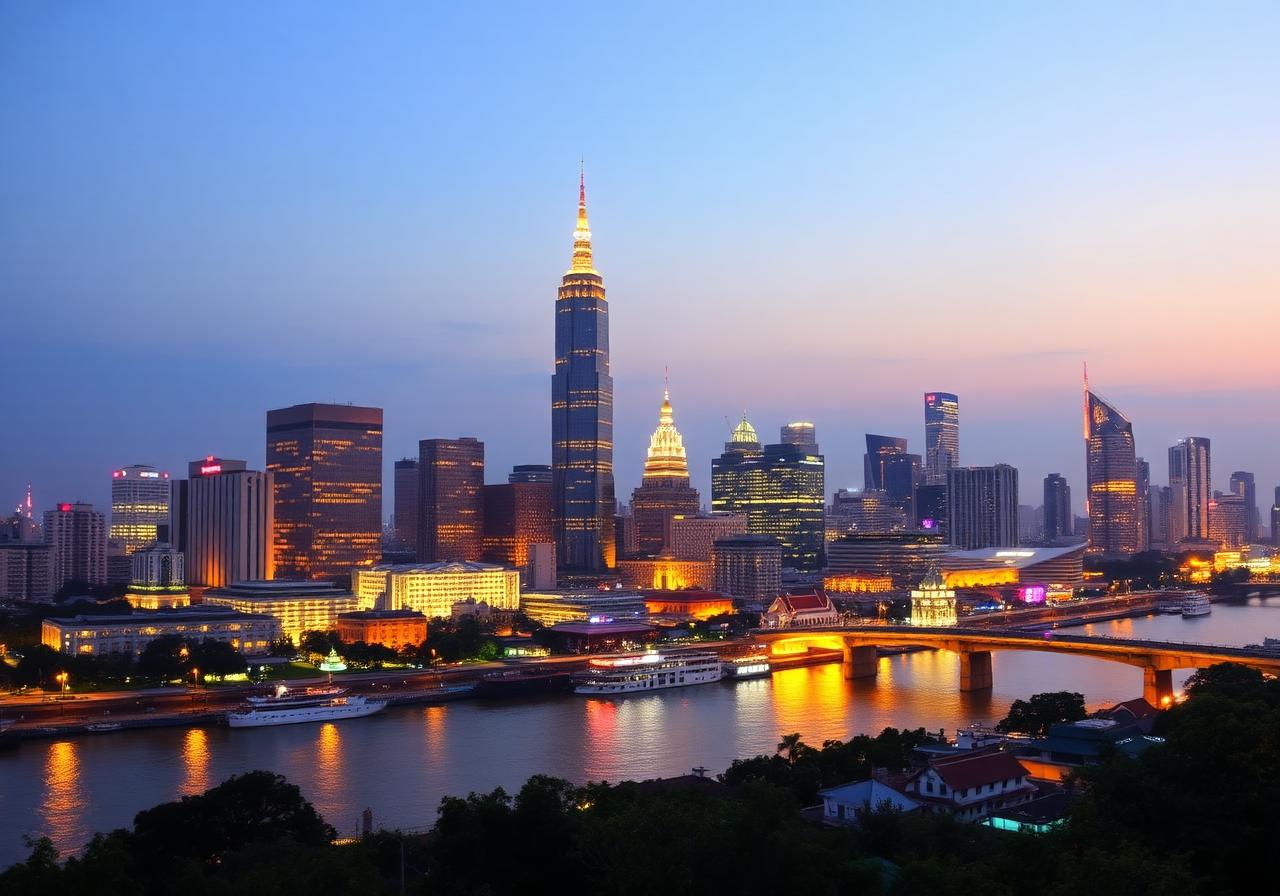

Bangkok · Market Outlook
Bangkok Property
Investment Outlook.
Bangkok is the largest, deepest and most institutionally referenced residential property market in Thailand. Underneath the headline city-wide statistics sits a market that rewards sub-market discipline: a handful of CBD-adjacent and transit-anchored corridors compound long-stay rental demand, branded supply and capital growth, while large parts of the city stall. This outlook is built for international investors who want to evaluate Bangkok against Phuket and Pattaya, not as a single number but as a structured, sub-market-by-sub-market thesis.

Research Map
Thailand›Investment Markets›Bangkok›Bangkok Outlook12 min read · Updated June 2026
Open MapClose Map
Research Map
Thailand›Investment Markets›Bangkok›Bangkok Outlook12 min read · Updated June 2026
Thailand›Investment Markets›Bangkok›Bangkok Outlook
Up to Parent
BangkokSame Parent
Executive Summary
Bangkok, credible - sub-market by sub-market.
Bangkok is the most institutionally referenced residential market in Thailand and the natural anchor of a diversified Thailand allocation. The city offers a depth of long-stay demand, branded supply and resale liquidity that resort markets do not - and it pairs well with Phuket and Pattaya as a complement rather than a substitute.
The condition is sub-market discipline. Bangkok rewards investors who select transit-anchored, expatriate-deep, internationally referenced buildings in a defined shortlist of corridors. Outside that shortlist, mass supply, weak transit access and shallow long-stay demand compress both yield and resale.
Key Takeaways
Five conclusions for Bangkok investors.
- 1. Bangkok is the urban long-stay and capital-growth anchor of a Thailand allocation.
- 2. Sub-market selection - Thonglor, Phrom Phong, Asoke, Sathorn, Riverside, Rama 9 - is decisive.
- 3. Mass-transit expansion is the single largest structural re-rating driver across the city.
- 4. Branded and serviced supply has materially deepened the internationally referenced stock.
- 5. Bangkok complements Phuket (resort) and Pattaya (income/EEC) - three different return profiles in one Thailand portfolio.
Long-Stay Demand
Why the rental engine works in CBD-adjacent corridors.
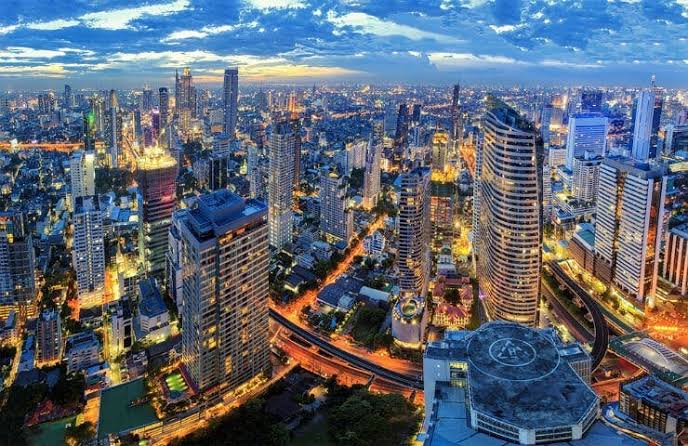
Bangkok's long-stay demand base - expatriate professionals, regional-HQ employees, international school families, retirees, medical and wellness long-stay - is structurally deeper and more diversified than any other Thai market. That depth concentrates in a defined set of CBD-adjacent and transit-anchored corridors: Thonglor and Phrom Phong (lifestyle, family expat), Asoke (corporate), Sathorn (CBD/embassy), Riverside (premium long-stay), and selectively Ari and Rama 9 (transit-led emerging).
Infrastructure
Mass-transit expansion is the re-rating story.
Bangkok's continued MRT and BTS expansion, Orange and Pink line build-out and connectivity into the Eastern Economic Corridor materially compresses travel times and widens catchment. Sub-markets historically considered secondary - Rama 9, the eastern corridor, parts of the Pink-line catchment - have re-rated as transit access matures. The investment implication is to weight transit access and station distance heavily in any building-level decision.
Branded Supply
An institutionally referenced building stock.
Branded condominium and serviced-residence supply in Bangkok has deepened materially over the past decade. The implication for international investors is a meaningfully larger pool of buildings that meet institutional diligence standards on operator, contract, brand and sinking fund. The Core Hotel-Managed Due Diligence Framework applies directly to these assets.
Yield Reality
Realised, not marketed, net yield.
Bangkok marketing routinely quotes gross yields. Realised net yields, after operator fees, sinking fund, common-area charges and realistic vacancy, typically settle in a 4–6% range in well-located CBD-adjacent branded and serviced stock. Mass-supply suburban buildings can fall materially below that range. Standardise on the Core Net Yield Underwriting Method.
Analysis & Interpretation
Where Bangkok sits in a Thailand portfolio.
Bangkok is the urban anchor. It pairs with Phuket (international resort, premium capital growth) and Pattaya (accessible income, EEC long-stay) to form a three-leg Thailand allocation covering three distinct return profiles. Bangkok contributes long-stay rental depth, branded resale liquidity and the city-level capital growth profile that resort markets cannot replicate.
Common Investor Mistakes
The Bangkok mistakes we see most often.
Mistake 1, Buying outside the credible sub-market shortlist. City-wide statistics conceal wide dispersion. Outside the shortlist, mass supply and weak demand compress both yield and resale.
Mistake 2, Ignoring station proximity and transit-line maturity. Station-walk distance and line-quality are decisive at the building level.
Mistake 3, Treating marketed gross yield as net yield. The gap is meaningful even in CBD-adjacent branded stock.
Mistake 4, Confusing 'expat-friendly' marketing with realised long-stay demand depth. Demand depth is sub-market specific and verifiable.
Opportunities
Where the structure is genuinely working.
Three structural opportunities: (1) transit-anchored re-rating in Rama 9 and the eastern corridor; (2) branded serviced-residence stock in Sathorn, Asoke and Riverside delivering institutionally underwritable net yield; (3) lifestyle-led family-expat demand depth in Thonglor and Phrom Phong supporting both rental and resale.
Risks
What can go wrong.
Supply risk in mass-market suburban corridors compresses yield and resale. Sub-market selection error is the single largest investor risk. FX risk on THB strength reduces realised USD income. Operator and contract risk in branded and serviced stock requires explicit diligence.
Suitable For · Not Suitable For
Investor fit at a glance.
Suitable for: investors seeking urban long-stay rental depth; portfolio diversifiers anchoring a Thailand allocation; investors looking for branded-condominium resale liquidity; capital-growth investors with a 5–10-year horizon in transit-anchored sub-markets.
Not suitable for: investors seeking primary resort exposure; investors unwilling to underwrite operator-validated net yield; investors targeting low-ticket suburban supply without sub-market discipline.
See our Investor Profiles for mandate mapping.
Investment Conclusion
Bangkok rewards the investors who select sub-markets carefully.
Bangkok is the urban anchor of a credible Thailand allocation for international investors who hold to a defined sub-market shortlist, underwrite realised net yield and weight transit-access heavily. Long-stay demand depth, branded supply maturity and transit-led re-rating combine to make Bangkok the institutional complement to Phuket and Pattaya in a three-leg Thailand portfolio.
Model your scenario in the Total Return Calculator and request a private briefing.
Executive Summary
Bangkok rewards patient investors positioned on transit-led growth corridors rather than headline CBD addresses.
- Best Opportunity
- CBD Residential Markets
- Best Investor Type
- Income Investors→ Mid-Market Rental Assets
- Risk Level
- Medium
What Most Investors Get Wrong
“Bangkok yields are weak so the city is uninvestable.”
The reality: Mid-market rental assets along mature BTS/MRT corridors quietly compound rental demand year after year. The yield story is in the catchment, not the postcode.
Key Takeaways
- 01
Bangkok remains Thailand's primary business hub.
- 02
Transit-oriented districts continue attracting demand.
- 03
Rental markets remain deep and liquid.
- 04
Capital growth remains infrastructure driven.
- 05
Long-term urbanisation supports demand.
At a Glance
- Best Opportunity
- CBD Residential Markets
- Highest Income Potential
- Mid-Market Rental Assets
- Highest Growth Potential
- Transit-Oriented Districts
- Risk Level
- Medium
- Outlook
- Positive
Investor Verdict
- If your objective is income
- Mid-Market Rental Assets
- If your objective is capital growth
- CBD Locations
- If your objective is balanced
- Transit Growth Corridors
Who This Report Is For
- Capital Growth Investors
- Long-Term Investors
- Portfolio Diversifiers
- International Buyers
What You'll Learn
In this report you'll learn:
- Which Bangkok districts offer the strongest rental yields.
- Which districts offer the strongest long-term capital growth.
- How transit infrastructure shapes demand and pricing.
- The major risks across CBD and emerging districts.
- Which investor profiles fit Bangkok's deep rental market.
01 The Bangkok Property Investment Thesis
Why bangkok property investment merits institutional attention.
- 01
Long-Stay Demand Anchors Income
A deep expatriate, regional-HQ and long-stay base supports realised serviced and branded-condominium yields across CBD-adjacent sub-markets.
- 02
Mass-Transit Compounds Growth
MRT and BTS expansion, Orange and Pink line build-out, re-rate transit-anchored sub-markets such as Rama 9 and the eastern corridor.
- 03
Branded Supply Re-Sets the Standard
Institutional-grade branded condominium and serviced-residence supply continues to deepen the internationally referenced building stock in CBD-adjacent corridors.
- 04
Sub-Market Selection Decides Outcomes
City-wide statistics conceal a wide dispersion. Realised yield and capital growth are decided sub-market by sub-market and building by building.
Case Study
Bangkok: CBD Investment
An illustrative 10-year ownership scenario for a USD 300,000 freehold condominium acquisition in Bangkok.
Investment Snapshot
| Investment | USD 300,000 |
|---|---|
| Holding Period | 10 Years |
| Ownership | Freehold Condominium |
Income Performance
6% PA
USD 180,000 cumulative rental income over 10 years.
Capital Growth Performance
6.5% PA
USD 263,000 capital appreciation over 10 years.
Combined Outcome
USD 443,000
Total wealth created from USD 300,000 invested capital.
Key Lessons
- • Demand drives occupancy.
- • Occupancy drives income.
- • Income supports long-term ownership.
- • Quality locations support capital growth.
Illustrative example only. Not a guarantee of future performance.
Bangkok Property Investment · Market Signals
Well-located branded and serviced condominiums in CBD-adjacent sub-markets.
Investable internationally referenced condominium ticket.
Thonglor, Phrom Phong, Asoke, Sathorn, Riverside, Rama 9.
MRT and BTS expansion compresses travel times and re-rates catchment.
Investor Questions
Bangkok Property Investment, frequently asked questions.
Q01Is Bangkok a credible international property investment market?
Yes. Bangkok is the largest, deepest and most institutionally referenced residential market in Thailand, with a structural long-stay demand base, established expatriate communities, mature serviced-residence stock and an expanding mass-transit network. Discipline is required because sub-market and building selection materially determine realised yield and resale liquidity.
Q02What net yield can a Bangkok condominium deliver?
Well-located branded and serviced condominiums in CBD-adjacent sub-markets can target indicative net yields in a 4% to 6% range after operator fees, sinking fund and realistic vacancy. Suburban-corridor and mass-supply buildings can fall materially below that range.
Q03Which Bangkok sub-markets are most credible for international investors?
Thonglor, Phrom Phong, Asoke, Sathorn, the Riverside corridor and selectively Ari and Rama 9. Each combines mass-transit access, expatriate or long-stay demand depth and a credible internationally referenced building stock.
Q04How does Bangkok compare to Phuket and Pattaya?
Bangkok is the urban long-stay and capital-growth anchor. Phuket is international resort exposure with stronger capital growth in premium sub-markets. Pattaya is income-led with EEC-backed long-stay demand. The three are complements, not substitutes, in a diversified Thailand allocation.
Q05What is the role of infrastructure in the Bangkok thesis?
Mass-transit expansion (MRT and BTS line extensions), Orange and Pink line build-out and connectivity into the Eastern Economic Corridor materially compress travel times, widen catchment and re-rate previously secondary sub-markets such as Rama 9 and the eastern corridor.
Reader Q&A
Investor Questions & Answers
Ask a question about Bangkok Property Investment. Approved questions are published below with Core Investments’ response.
Loading questions…
Ask a question
Questions are reviewed before publication. Your email is never shown publicly.
Sources & References
Where this research draws its data (5)
Sources & References
Where this research draws its data (5)
Core Investments cites only published institutional sources. Figures referenced on this page are drawn from, or cross-checked against, the institutions listed below. For our editorial standards and source-vetting process, see our research methodology.
- [1]
- [2]
- [3]
Tourism Authority of Thailand (TAT) / Ministry of Tourism & Sports
International Tourist Arrivals to Thailand · 2024
https://www.mots.go.th/ → - [4]
World Travel & Tourism Council (WTTC)
Economic Impact Reports, Thailand · 2024
https://researchhub.wttc.org/ → - [5]
Savills
Asia Pacific Investment Quarterly & Thailand Spotlight · 2024
https://www.savills.com/research/ →
Sources last reviewed 2026-06-29
Disclosures
Important information (4)
Disclosures
Important information (4)
Capital appreciation disclaimer
Capital appreciation examples and growth projections are illustrative only and should not be interpreted as predictions or guarantees of future performance. Property values may rise or fall and are influenced by market conditions, supply, demand, economic factors, regulatory changes and investor sentiment.
Rental return disclaimer
Rental income examples, occupancy assumptions and yield illustrations are provided for educational purposes only. Actual rental performance may vary based on market conditions, occupancy levels, operator performance, seasonality, competition, economic conditions and other factors. Rental returns are not guaranteed unless expressly stated within a legally binding agreement.
Forecast disclaimer
Forecasts, projections and forward-looking statements are based on information available at the time of publication and involve assumptions that may not materialise. Future events may differ significantly from projected outcomes.
General disclaimer
Core Investments provides investment education, market intelligence, research and transaction-support services. Information published on this website is general in nature and does not constitute financial, investment, legal, tax or accounting advice, or personal recommendations. Investors should seek independent professional advice appropriate to their individual circumstances before making any investment decision. Past performance is not indicative of future results.
Frameworks Applied
Proprietary methodology applied on this page
- Framework™
Core Capital Growth Framework™
The six structural drivers of long-term capital appreciation: infrastructure, scarcity, tourism demand, supply absorption, brand premium and accessibility.
- Framework™
Core Market Cycle Framework™
Repeatable methodology for locating a market within its investment cycle - recovery, expansion, peak, contraction - using supply, absorption, pricing and capital-flow signals.
- Framework™
Core Risk Assessment Framework™
Six-dimension institutional risk scoring across market, asset, operator, legal, liquidity and currency risk for Thailand property investment.
- Framework™
Core Submarket Pricing Tier Framework™
Classifies and compares submarkets across pricing, rental demand, capital growth, scarcity, infrastructure, liquidity and buyer demand into investable tiers.
From research to numbers
Model Bangkok long-stay yield and transit-led capital growth scenarios.
Open Bangkok ScenarioIllustrative scenarios using calculator default assumptions. Outcomes vary with market conditions, operator performance and investor inputs.
Share this research
Direct Access
Speak with Frank about bangkok property investment.
Request a confidential briefing on current bangkok property investment opportunities, market intelligence and acquisition strategy.
- Frank Satar
- Chief Founder & Research Director
- Australia
- +61 494 651 747
- Thailand / WhatsApp
- +66 65 551 3269
© Core Investments Research | Frank Satar
Research produced by Core Investments. Reproduction or redistribution without written permission is prohibited.