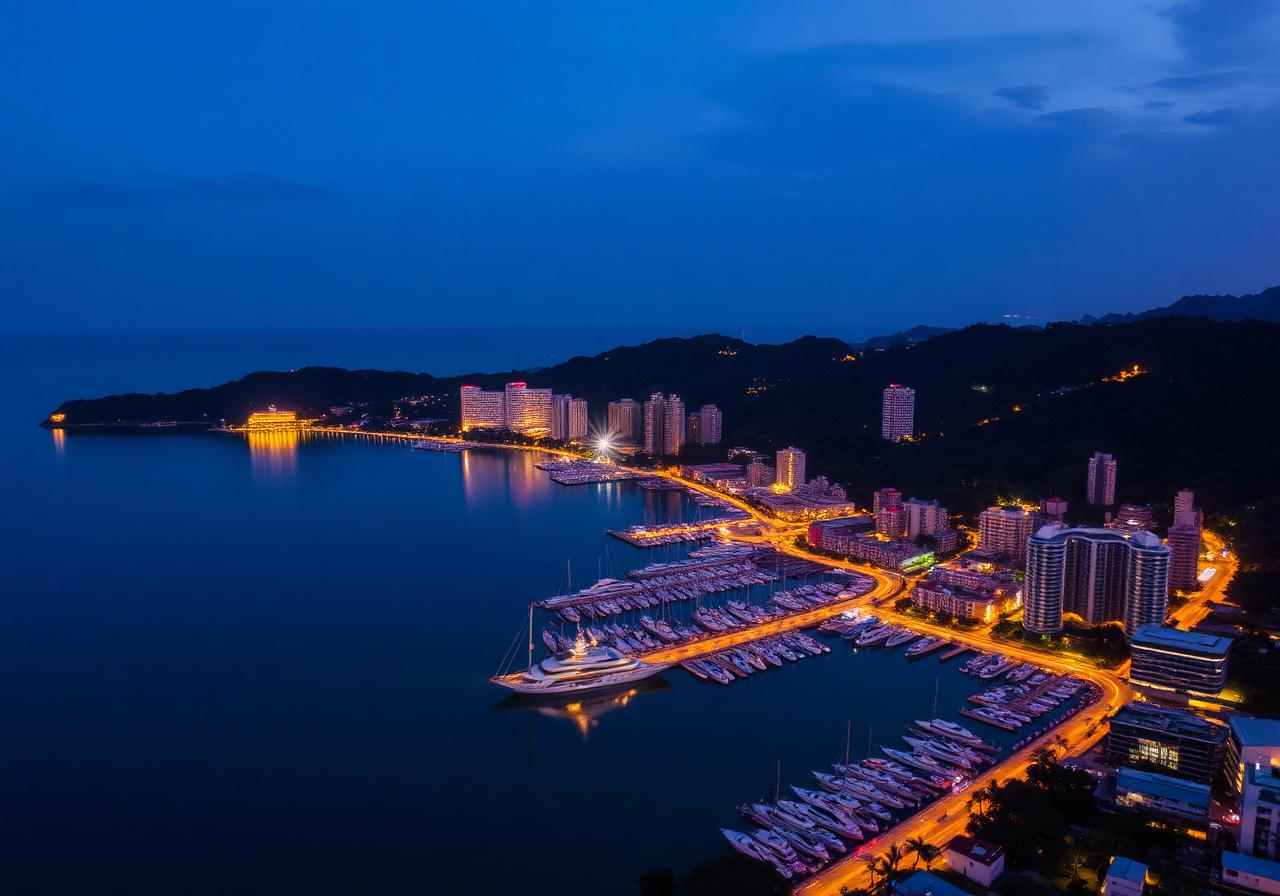

Phuket · Market Outlook 2026
Phuket Property
Investment Outlook.
This page is for investors thinking about buying property in Phuket and trying to work out whether it actually makes sense. By the end you will understand how the market is structured, which type of investor it suits, what realistic returns look like, and how to decide between submarkets without relying on a developer brochure.

Research Map
Thailand›Investment Markets›Phuket›Phuket Market Outlook13 min read · Updated June 2026
Open MapClose Map
Research Map
Thailand›Investment Markets›Phuket›Phuket Market Outlook13 min read · Updated June 2026
Thailand›Investment Markets›Phuket›Phuket Market Outlook
Before We Begin
If you are considering Phuket, read this first.
Phuket is not the easy decision developers make it sound. It is a layered market with very different submarkets, very different buyer pools and very different outcomes depending on what you choose. Before you look at a single project, you need three things clear in your head.
First, what are you actually buying for? Rental income, capital growth, lifestyle, retirement or a mix. The answer dictates where you should look. A property that is excellent for one objective is often mediocre for another.
Second, how long can you hold it? Phuket rewards holding through at least one full tourism cycle. If your horizon is under three years, you are not investing in property, you are speculating on price.
Third, who will manage it when you are not there? Phuket is a resort market. Almost everything depends on the operator behind the building. The operator is more important than the architecture.
Get those three answers right and the rest of this page will make sense. Get them wrong and no amount of research will save the investment.
The Story
Imagine you have just landed in Phuket.
You have $500,000 set aside for a property investment. You spend three days driving the island. Every developer you meet hands you a glossy brochure promising 8% guaranteed yields, beachfront views and a famous hotel brand on the door. Every agent says now is the best time to buy. Every taxi driver knows a friend who can show you something better.
By day four, you have seen fifteen projects. They all look impressive. They all sound plausible. And you realise the real problem is not finding property in Phuket, it is knowing which information you can actually trust.
That is the situation almost every serious investor walks into. The brochures are designed to convert tourists, not to inform investors. The frameworks, rankings and worked example on this page exist to give you a way to cut through that noise, and to ask the questions a developer would prefer you did not.
The Simple Answer
Phuket in 300 words.
Phuket works as an investment market for two reasons. International tourism creates year-round rental demand, and protected zoning on the west coast restricts how much beachfront land can ever be developed. That combination produces income today and scarcity-driven appreciation over time.
It is not a single market. The west coast (Bang Tao, Layan, Surin, Kamala) is where international capital concentrates, branded residences cluster and prices are highest. The south (Rawai, Nai Harn, Chalong) is where residents and long-stay tenants live, yields are higher and entry prices lower. The east coast and Mai Khao are early-stage and only suit investors with a long horizon.
A realistic, professionally managed resort apartment in the right submarket produces a 4–6% net yield and roughly doubles in total return over an eight-year hold under base-case assumptions. The biggest determinants of that outcome are the submarket you choose, the operator running the building and the ownership structure you buy under.
Most investors lose money in Phuket not because the market failed, but because they bought the wrong submarket for their objective, trusted a brochure yield, or chose an ownership structure that cost them on resale. The rest of this page is built to stop you doing any of those three things.
If you only read this section, that is the page. Everything below is the evidence.
The Research
How this outlook fits the wider Phuket evidence base.
The structural research behind Phuket, tourism arrivals, west-coast land supply, operator depth, infrastructure pipeline, the 2035 base / growth / casino / high-growth / risk scenarios and the comparative submarket rankings, all lives in the Phuket Intelligence Centre. If you want the evidence stack, that is where to read it.
This page sits one layer above. It takes the same evidence and turns it into a decision: given who you are and what you want, which submarket fits, what does a realistic worked example look like, what are the mistakes most likely to destroy your return, and where in the cycle are the current asymmetries. Read the Centre for the evidence. Read this page to act on it.
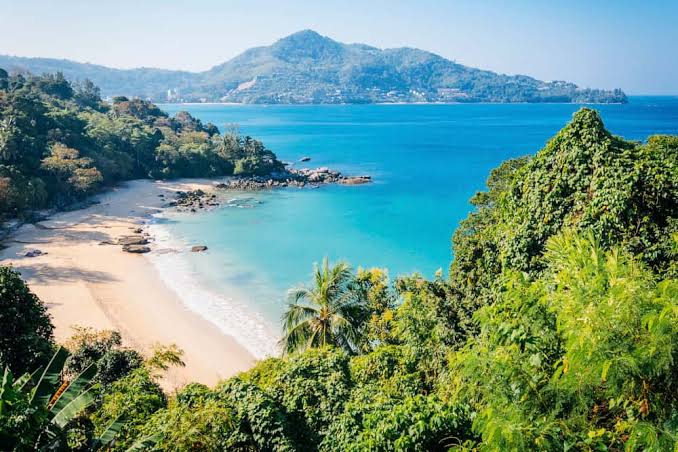
Investment Frameworks · Decision Matrix
Match what you want to the submarket that fits.
What does this actually mean for you? If you can answer one question, "what am I buying this property for?", this matrix tells you where in Phuket to look. It does not rank the submarkets; it routes you to the one that matches your objective, plus a sensible alternative if your first choice does not have suitable stock. The relative ranking of every submarket lives separately in the Phuket Rankings Table.
| Investor Objective | Primary Submarket | Alternative | Decision Rationale |
|---|---|---|---|
| Operator-managed income | Bang Tao | Patong | Deepest operator bench, branded pooled-rental programmes. |
| Capital preservation / prestige | Kamala | Millionaires Mile | Top-tier Capital Growth markets: hillside scarcity, branded depth and prestige positioning. |
| Operator-managed capital growth | Bang Tao / Laguna | Patong | #1 Capital Growth corridor; Patong supports the tourism-income leg of the same thesis. |
| Emerging opportunity / value entry | Nai Yang | Layan | #1 Emerging Opportunity (beachfront scarcity, airport infrastructure, lower entry pricing); Layan is the supporting capital-growth complement. |
| Long-stay rental yield | Rawai | Chalong | Resident tenant pool, hybrid lifestyle-plus-income. |
| Owner-occupier / retirement | Nai Harn | Rawai | Boutique scarcity, wellness-led, established resident community. |
| Fundamentals-led value | Chalong | Phuket Town | Connectivity hub, residential resale pool, lower entry ticket. |
| Long-horizon asymmetric exposure | Ao Po / East Coast | Mai Khao | Early-stage marina belt, satellite allocation only. |
Use the matrix to choose where to look. Use the Phuket Rankings Table to compare submarkets head-to-head with grade and confidence ratings.
Investment Frameworks · Quick Routing
Tell us what you want. We will tell you where to read next.
If you are still working out which objective fits you, the strip below is the fastest way through. Pick the goal that sounds most like you and follow the link. You can always come back and try a different one.
- Seeking income?Bang Tao / Laguna for year-round international rental demand; Patong for Phuket's largest tourism rental market.
- Seeking growth?Laguna / Bang Tao and Kamala for established capital growth; Nai Yang for the strongest emerging upside.
- Seeking retirement?Nai Harn for boutique lifestyle; Rawai for resident community.
- Seeking lifestyle?Nai Harn for beach scarcity; Bang Tao for full ecosystem.
- Seeking value?Chalong for fundamentals at lower entry; Rawai for value-plus-yield.
- Seeking prestige?Kamala & Millionaire's Mile for trophy positioning; Bang Tao for branded-residence prestige.
Submarket Guides Index
All Phuket micro-market briefs.
- · Bang Tao, Laguna & Cherng Talay. Institutional core, deepest operator presence.
- · Surin. Highest per-sqm prestige tier.
- · Kamala & Millionaire's Mile. Scarcity, prestige and capital preservation.
- · Patong. High traffic, income-led, lower prestige.
- · Kata · Karon. Lifestyle and value beach zones.
- · Rawai. Long-stay capital, hybrid lifestyle-plus-yield.
- · Nai Harn. Residential southern Phuket, wellness-led demand.
- · Chalong. Connectivity hub, year-round resident demand.
- · Ao Po & East Coast. Early-stage marina-led exposure, long horizon.
- · Mai Khao. Airport-corridor branded pockets.
- · Phuket Town. Urban/value entry.
Key Numbers · How submarket choice changes the answer
The same $500,000 produces very different outcomes.
In plain English. Two investors with the same $500,000 can end up with very different results depending on which submarket they choose. The market is not unfair; it is doing exactly what you would expect from any market with different submarkets serving different buyers.
A branded residence in Bang Tao typically compounds a steady 5–6% net yield with moderate price appreciation. A scarcity-tier property in Surin tends to produce a lower yield but stronger long-term capital growth. A managed apartment in Patong often produces the highest gross rental income but is harder to resell later. None of these is automatically better. They are different tools for different jobs, and the right one depends on what you are trying to achieve, which is why our investor profile mapping exists.
Once you know which one fits, model it against your own numbers in the Total Return Calculator, with your real ticket size, your real holding period and your real ownership structure.
Key Numbers · Worked Example
$150,000, eight years, three scenarios.
What this is showing you. Below is a real, calculator-generated example of what a $150,000 professionally managed Phuket resort apartment, held in foreign freehold for eight years from June 2026, would produce under three different sets of assumptions. Conservative is deliberately cautious. Base reflects current market behaviour. Aggressive assumes the cycle continues to favour Phuket. None of the numbers below are hardcoded; they come straight from the Core Investments Total Return Calculator™.
- Conservative · asset + cumulative income: $324,320 (rental $77,247 + capital gain $97,074)
- Base · asset + cumulative income: $403,203 (rental $106,708 + capital gain $146,495)
- Aggressive · asset + cumulative income: $496,883 (rental $138,213 + capital gain $208,670)
- Conservative · multiple on original capital: 2.16x · total return: 116.2%
- Base · multiple on original capital: 2.69x · total return: 168.8%
- Aggressive · multiple on original capital: 3.31x · total return: 231.3%
- Investment term: 8 years · Average Annual ROI (CAGR): 10.1% (Conservative) · 13.2% (Base) · 16.1% (Aggressive)
The plain-English read. In all three scenarios, more of your total return comes from the property going up in value than from rent. Rental income matters because it pays the bills while you hold, but the long-run number is driven by capital growth. That is why submarket selection matters so much, and why a slightly lower advertised yield in a stronger submarket can still produce a better outcome over eight years.
Case study disclaimer
Case studies are hypothetical or historical illustrations intended to demonstrate investment concepts and should not be relied upon as forecasts of future performance. Actual outcomes may differ materially.
Risks · Common Mistakes
The four ways investors usually lose money in Phuket.
Mistake 1. Treating Phuket as one market. Investors compare a branded Bang Tao residence to a non-branded Kata apartment as if they were the same thing. They are not. Submarket selection is the single most important decision after how much you are spending.
Mistake 2. Trusting the advertised yield. A "9% guaranteed" gross yield with a weak operator routinely arrives in your account as 3–4% net. Operator quality is what actually compounds over the hold. The brochure number does not.
Mistake 3. Picking the wrong ownership structure. Many villas default to a Thai company or a long lease. These can be perfectly appropriate, but they change how easily you can resell, refinance or pass the property to your family. Read the Foreign Ownership Framework before you sign anything.
Mistake 4. Confusing the place you want to holiday with the place that makes money. The location that is perfect for your two-week annual visit is almost never the location that produces the best return.
Where the Cycle Is Now
Three asymmetries currently worth paying attention to.
What does this actually mean for you? Markets do not move in a straight line. Right now there are three specific situations in Phuket where the odds are tilted in the buyer's favour, if you know what to look for.
One, the big global hotel operators are quietly cleaning house. Weaker third-party brands are being dropped. Owners in genuinely brand-anchored buildings are benefitting from a flight to quality.
Two, Layan and northern Kamala are graduating from "next-door to the luxury zone" into the luxury zone itself. Prices reflect that transition with a lag.
Three, well-structured payment plans on off-plan projects can stretch your capital meaningfully, provided you can underwrite the developer and have a clear plan for resale or assignment before handover. See Payment Plan Strategies for how to think about that.
Key Takeaways
- 01Oversupply risk is highly submarket-specific.
- 02Tourism seasonality shapes operational underwriting.
- 03Construction quality variance is the largest avoidable risk.
Why It Matters
Phuket risk is not market-wide - it is concentrated in specific submarkets, developers and product types.
Risks · Honest Framing
What can go wrong, and what to do about it.
In plain English. The real risks in Phuket are not exotic. They are the same risks as any resort property market: the operator underperforms, supply gets ahead of demand for a year or two, your home currency moves against the baht, regulations tighten, or the tourism cycle turns. The full risk inventory is documented in the Phuket Intelligence Centre · Risk Analysis.
None of these risks is a reason to avoid Phuket. They are reasons to underwrite at the submarket level, choose your operator carefully and stress-test the asset in conservative mode in the Total Return Calculator before signing. If the conservative scenario still makes sense, the investment is robust. If it only works in the aggressive scenario, you are buying hope, not property.
Risks · Investor Fit
Who Phuket suits, and who it does not.
Phuket suits you if you want a tangible asset in a recognised international market, you are comfortable with returns priced in US dollars and rents collected in baht, you have at least five to eight years to hold and you value having a professional operator running the property when you are not there.
Phuket is the wrong market for you if you need to be able to sell daily at a quoted price, you cannot tolerate any currency translation risk, you expect a guaranteed yield regardless of how the operator or market performs, or your horizon is under three years. There is nothing wrong with those preferences; they just point to a different asset class.
Detailed mandate mapping by investor type is in the Investor Profiles library.
What Should You Do Next?
Three logical reading paths from here.
Depending on where you are in your decision, three paths make sense from here.
If you want the underlying evidence, read the Phuket Intelligence Centre for tourism data, supply analysis, infrastructure pipeline and 2035 scenarios. That is the research stack this page is built on.
If you are choosing between submarkets, open the matching dossier: Bang Tao, Kamala, Surin, Rawai, Nai Harn or Chalong. Each one tells you who buys there, what they pay and what they get.
If you want to test your own numbers, go straight to the Total Return Calculator and run your own ticket size, holding period and ownership structure through the same engine that produced the worked example above.
Summary
The best Phuket decisions start with the market, not the property.
Phuket is still the most institutionally referenceable resort property market in Thailand. It has the deepest international operator presence in Asia outside Singapore and Hong Kong, and the most constrained premium-zone land supply of any beach market in the region. That combination produces a real, durable premium for the investors who buy thoughtfully.
The investors who do well here are not the ones with the biggest budgets. They are the ones who took the time to choose the right submarket for their objective, picked an operator they could verify and used an ownership structure that gave them options at resale. None of that is complicated. It just requires doing it in the right order.
The best investment decisions rarely begin with choosing a property. They begin with understanding the market. Model your own scenario in the Total Return Calculator, then request a private briefing on shortlisted opportunities when you are ready to act.
Executive Summary
Bang Tao / Laguna anchors Phuket on both income and growth; Nai Yang offers the strongest emerging upside relative to current entry prices.
- Best Opportunity
- Bang Tao / Laguna
- Best Investor Type
- Income Investors→ Bang Tao / Patong
- Risk Level
- Medium
What Most Investors Get Wrong
“Buy anywhere in Phuket and tourism will do the work.”
The reality: Yield, occupancy and capital growth diverge sharply between submarkets. Bang Tao / Laguna, Patong, Kamala and Nai Yang each serve a different investor profile.
Key Takeaways
- 01
Bang Tao / Laguna leads Phuket on both rental demand and capital growth.
- 02
Patong remains Phuket's largest tourism rental market.
- 03
Kamala continues to strengthen as a luxury rental and growth destination.
- 04
Nai Yang is Phuket's strongest emerging opportunity, anchored by airport expansion and beachfront scarcity.
- 05
Tourism growth and constrained premium land supply remain the primary demand drivers.
At a Glance
- Best Opportunity
- Bang Tao / Laguna
- Highest Rental Demand
- Bang Tao
- Highest Income Potential
- Bang Tao / Patong
- Highest Growth Potential
- Bang Tao / Kamala
- Best Emerging Opportunity
- Nai Yang
- Risk Level
- Medium
- Outlook
- Strong Positive
Investor Verdict
- If your objective is income
- Bang Tao / Patong
- If your objective is capital growth
- Bang Tao / Kamala
- If your objective is emerging opportunity
- Nai Yang
Who This Report Is For
- Cashflow Investors
- Lifestyle Investors
- International Buyers
- Retirement Investors
What You'll Learn
In this report you'll learn:
- Which Phuket submarkets generate the strongest rental income.
- Which Phuket submarkets offer the strongest capital growth.
- How tourism flows and infrastructure shape long-term demand.
- The major risks specific to resort real estate.
- Which investor profiles are best matched to each location.
01 The Phuket Property Investment Thesis
Why phuket property investment merits institutional attention.
- 01
Phuket is not one market
It is roughly ten different submarkets with different buyers, yields and price trajectories. The single most important decision is which one you buy in.
- 02
Returns come from two places
Rental income from tourism, and capital growth from constrained beachfront land. Most investors fixate on yield and underestimate appreciation.
- 03
Operator quality compounds
A strong hotel operator quietly adds 1–2% net yield every year for the entire hold. A weak one quietly removes it.
- 04
Ownership structure matters
Foreign freehold, leasehold and company-held structures behave very differently at resale, on inheritance and on financing.
Case Study
Phuket: Tourism-Backed Resort Investment
An illustrative 10-year ownership scenario for a USD 300,000 freehold condominium acquisition in Phuket.
Investment Snapshot
| Investment | USD 300,000 |
|---|---|
| Holding Period | 10 Years |
| Ownership | Freehold Condominium |
Income Performance
8.5% PA
USD 255,000 cumulative rental income over 10 years.
Capital Growth Performance
9% PA
USD 410,000 capital appreciation over 10 years.
Combined Outcome
USD 665,000
Total wealth created from USD 300,000 invested capital.
Key Lessons
- • Demand drives occupancy.
- • Occupancy drives income.
- • Income supports long-term ownership.
- • Quality locations support capital growth.
Illustrative example only. Not a guarantee of future performance.
Phuket Property Investment · Market Signals
After all costs on a professionally managed resort apartment.
Each with its own buyer, price band and demand profile.
Long enough to ride one tourism cycle and one resale window.
Conservative to aggressive on a $150k entry over the hold.
Investor Questions
Phuket Property Investment, frequently asked questions.
Q01If I buy in Phuket, how easy is it to sell later?
It depends almost entirely on what you buy and where. A branded, foreign-freehold apartment in Bang Tao, Layan or Surin tends to find a buyer in months, because international buyers already recognise those locations and operators. A company-owned villa in a quieter area can take a year or longer to sell. Before you buy, ask: who is the next buyer for this exact property, and how quickly do similar units actually change hands?
Q02Should I buy off-plan or a finished property?
Off-plan means paying in instalments while the project is built, usually over two to three years. It can stretch your capital further, but you carry construction, developer and market-timing risk until handover. A finished property gives you rental income immediately and lets you inspect what you are buying. Neither is universally better. If this is your first Thailand investment, a completed, operator-managed property is usually the lower-stress entry.
Q03Is Phuket safe for foreign investors right now?
Phuket is one of the most internationally referenceable property markets in Asia, with global hotel operators, foreign-freehold condominium structures and an established legal pathway for foreign ownership. The real risks are not political; they are choosing the wrong submarket, the wrong operator or the wrong ownership structure. Those risks are manageable with proper underwriting, which is what the rest of this page is built to support.
Q04What rental yield should I realistically expect?
After all costs, most professionally managed Phuket resort apartments produce a net yield in the 4–6% range. Anything advertised above that should be stress-tested against the operator's actual track record, not the brochure. Headline gross yields of 8–10% are common in marketing material; realised net yields at that level are not.
Reader Q&A
Investor Questions & Answers
Ask a question about Phuket Property Investment. Approved questions are published below with Core Investments’ response.
Loading questions…
Ask a question
Questions are reviewed before publication. Your email is never shown publicly.
Sources & References
Where this research draws its data (6)
Sources & References
Where this research draws its data (6)
Core Investments cites only published institutional sources. Figures referenced on this page are drawn from, or cross-checked against, the institutions listed below. For our editorial standards and source-vetting process, see our research methodology.
- [1]
Tourism Authority of Thailand (TAT) / Ministry of Tourism & Sports
International Tourist Arrivals to Thailand · 2024
https://www.mots.go.th/ → - [2]
World Travel & Tourism Council (WTTC)
Economic Impact Reports, Thailand · 2024
https://researchhub.wttc.org/ → - [3]
- [4]
JLL Hotels & Hospitality
Hotel Investment Outlook. Asia Pacific (Annual) · 2024
https://www.jll.com/en/insights/research → - [5]
Knight Frank
The Wealth Report (Branded Residences & Prime International Residential Index) · 2024
https://www.knightfrank.com/wealthreport → - [6]
Savills
Asia Pacific Investment Quarterly & Thailand Spotlight · 2024
https://www.savills.com/research/ →
Sources last reviewed 2026-06-29
Disclosures
Important information (5)
Disclosures
Important information (5)
Capital appreciation disclaimer
Capital appreciation examples and growth projections are illustrative only and should not be interpreted as predictions or guarantees of future performance. Property values may rise or fall and are influenced by market conditions, supply, demand, economic factors, regulatory changes and investor sentiment.
Rental return disclaimer
Rental income examples, occupancy assumptions and yield illustrations are provided for educational purposes only. Actual rental performance may vary based on market conditions, occupancy levels, operator performance, seasonality, competition, economic conditions and other factors. Rental returns are not guaranteed unless expressly stated within a legally binding agreement.
Forecast disclaimer
Forecasts, projections and forward-looking statements are based on information available at the time of publication and involve assumptions that may not materialise. Future events may differ significantly from projected outcomes.
Case study disclaimer
Case studies are hypothetical or historical illustrations intended to demonstrate investment concepts and should not be relied upon as forecasts of future performance. Actual outcomes may differ materially.
General disclaimer
Core Investments provides investment education, market intelligence, research and transaction-support services. Information published on this website is general in nature and does not constitute financial, investment, legal, tax or accounting advice, or personal recommendations. Investors should seek independent professional advice appropriate to their individual circumstances before making any investment decision. Past performance is not indicative of future results.
Frameworks Applied
Proprietary methodology applied on this page
- Framework™
Core Capital Growth Framework™
The six structural drivers of long-term capital appreciation: infrastructure, scarcity, tourism demand, supply absorption, brand premium and accessibility.
- Framework™
Core Market Cycle Framework™
Repeatable methodology for locating a market within its investment cycle - recovery, expansion, peak, contraction - using supply, absorption, pricing and capital-flow signals.
- Framework™
Core Property Due Diligence Framework™
The Core Investments six-pillar institutional checklist for evaluating Thai property projects: developer, structure, operator, location, contract and exit.
- Framework™
Core Risk Assessment Framework™
Six-dimension institutional risk scoring across market, asset, operator, legal, liquidity and currency risk for Thailand property investment.
- Framework™
Core Submarket Pricing Tier Framework™
Classifies and compares submarkets across pricing, rental demand, capital growth, scarcity, infrastructure, liquidity and buyer demand into investable tiers.
- Framework™
Core Tourism Demand Framework™
Translates international arrivals, occupancy, ADR, RevPAR, seasonality and long-stay demand into a defensible property demand thesis.
From research to numbers
Model Phuket returns at submarket-appropriate yields.
Model Phuket Market ReturnsIllustrative scenarios using calculator default assumptions. Outcomes vary with market conditions, operator performance and investor inputs.
Share this research
Direct Access
Speak with Frank about phuket property investment.
Request a confidential briefing on current phuket property investment opportunities, market intelligence and acquisition strategy.
- Frank Satar
- Chief Founder & Research Director
- Australia
- +61 494 651 747
- Thailand / WhatsApp
- +66 65 551 3269
© Core Investments Research | Frank Satar
Research produced by Core Investments. Reproduction or redistribution without written permission is prohibited.