
Pattaya · Property Investment
Pattaya Property
Investment.
This page is for investors thinking about buying property in Pattaya and trying to work out whether the city deserves the reputation, the casino headlines or the EEC story. By the end you will understand how Pattaya is actually structured, which type of investor each submarket suits, what realistic yields look like, and how to weigh the casino, the high-speed rail and the EEC against what is already true today.

Research Map
Thailand›Investment Markets›Pattaya12 min read · Updated June 2026
Open MapClose Map
Research Map
Thailand›Investment Markets›Pattaya12 min read · Updated June 2026
Thailand›Investment Markets›Pattaya
Up to Parent
Investment MarketsBefore We Begin
If you are considering Pattaya, read this first.
Pattaya is the most misunderstood property market in Thailand. The headlines you have read - the nightlife, the casino bill, the Russian demand, the EEC megaprojects - are all real, but none of them is the investment story. The investment story is much simpler, and much more useful.
First, Pattaya is not one place. It is ten neighbourhoods that happen to share a postcode. Wongamat is closer to a quiet beachfront suburb than to Walking Street. Bang Saray feels like a Mediterranean village. East Pattaya is a commuter belt for industrial professionals. Treat them as one market and you will buy the wrong one.
Second, Pattaya runs on two engines, not one. Tourism is the obvious one. The less obvious one - and the more durable one - is Bangkok. Pattaya is 90 minutes from Suvarnabhumi airport on a motorway. The EEC industrial corridor sits along the same coast. That second engine is why the city kept functioning during the pandemic when pure tourism markets stopped.
Third, ignore the casino for the purposes of buying. It may happen. It may not. If it does, certain submarkets benefit. If it does not, you still need the investment to work. Underwrite the property you can see, not the one in the press release.
Get those three things right and the rest of this page will make sense. Skip them and no amount of analysis will save you from buying the wrong unit on the wrong street.
The Story
Imagine you are sitting in a Bangkok hotel lobby on a Sunday evening.
You have $300,000 you would like to put into Thai property. Friends have told you Phuket is too expensive. Someone in your office mentioned that Pattaya 'is having a moment' because of the casino. You open your laptop. The first three results are developers selling beachfront condominiums in Jomtien with 8% guaranteed rental returns and a headline about U-Tapao airport. The fourth result is a forum thread warning you to stay away from Pattaya entirely.
Both pages cannot be right. And the honest answer is that neither of them is. The developer is selling a brochure. The forum is reacting to a Pattaya that does not really exist any more. The actual investable Pattaya - the one that institutional money is quietly accumulating in - sits somewhere in between, and it requires you to do the one thing most marketing pages will not let you do: look at each submarket separately, on its own evidence.
That is what this page is built for. By the time you finish reading, you will be able to walk into Pattaya, ignore the brochures, and know exactly which three neighbourhoods are worth a viewing and which seven are not - for you specifically, given what you want.
The Simple Answer
Pattaya in 300 words.
Pattaya is Thailand's second-largest investable property market after Bangkok, and the most accessible coastal market for foreign-freehold condominium ownership. Its investment case rests on four things: proximity to Bangkok and Suvarnabhumi airport, the Eastern Economic Corridor industrial economy, multi-source tourism (China, India, Russia, ASEAN, Europe) and the lowest foreign-accessible entry tickets of any major Thai resort cluster.
It is not a single market. Wongamat and Pratumnak are prime beachfront with the lowest underwriting risk. Jomtien is the deeper rental pool with higher yields and higher supply risk. Naklua is the boutique, family-oriented quiet alternative. East Pattaya and Huay Yai are EEC-driven long-let markets. Bang Saray and Na Jomtien are the early-stage south corridor with the longest horizons. Central Pattaya and the southern fringe carry the strongest reputational drag and the most caution.
A well-located, professionally managed condominium in the right submarket produces a 5–7% net yield and a roughly 1.8–2.5x total return over an eight-year hold under base-case assumptions. The biggest determinants are the submarket, the manager, the building's foreign-quota position and the entry price you negotiate on day one.
The casino, the high-speed rail and U-Tapao Phase 2 are real possibilities. Treat them as upside, not as basecase. If they deliver, certain submarkets re-rate; if they do not, your investment still has to work on present-day fundamentals. Most investors who lose money in Pattaya did not lose because the city failed; they lost because they bought the wrong submarket for their objective.
If you only read this section, that is the page. Everything below is the evidence.
01 · Executive Summary
What this Intelligence Centre concludes.
Pattaya is the second-deepest investable property market in Thailand after Bangkok and the most accessible coastal market for foreign-freehold condominium product. Its investment case rests on four structural factors: proximity to Bangkok and Suvarnabhumi (~140 km), the Eastern Economic Corridor (EEC) industrial economy, multi-source-market tourism (China, India, Russia, ASEAN, Europe), and the lowest foreign-accessible entry tickets in any Thai resort cluster.
The investor question is no longer "is Pattaya investable". The investor question is "which Pattaya submarket fits this objective, and at what risk?" This Intelligence Centre answers that question at the area level, with comparative rankings, scenario outlooks and underwriting disclosures designed to a Knight Frank / JLL / Savills institutional standard.
The Centre is complementary to, not a replacement for, the existing Pattaya Property Investment Analysis. This hub focuses on the area-by-area comparison layer and the EEC / entertainment-complex scenario framework.
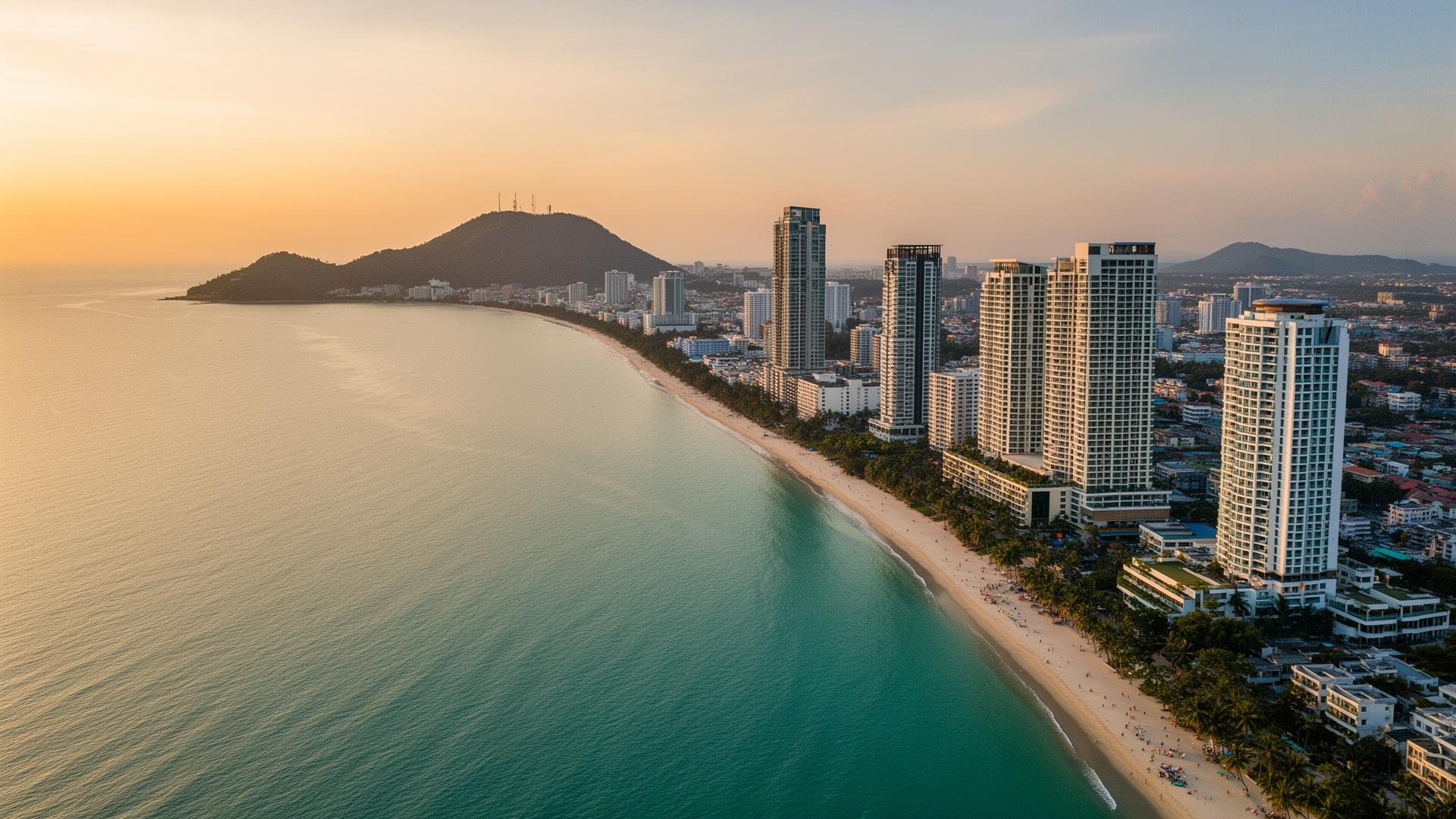
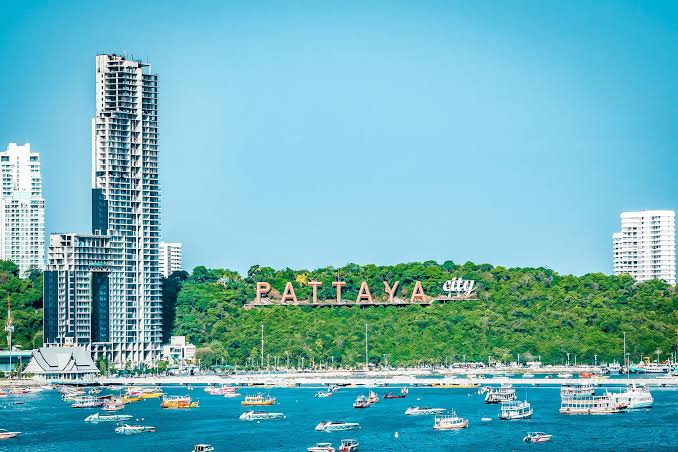
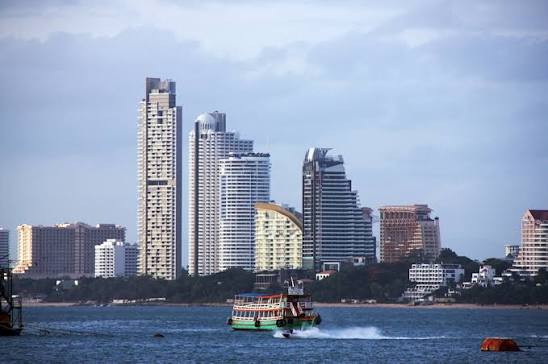
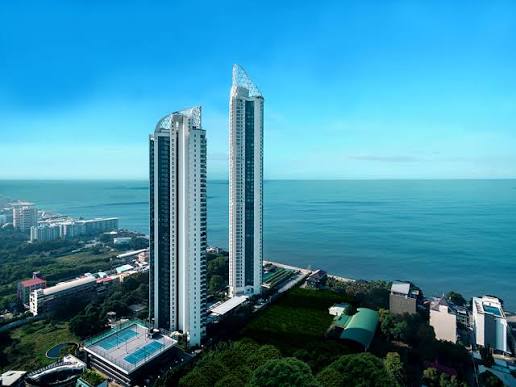
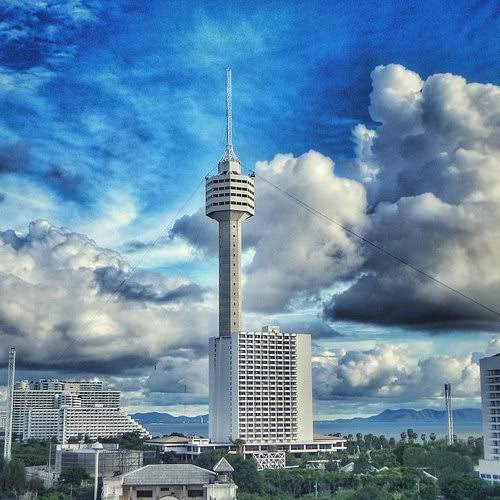
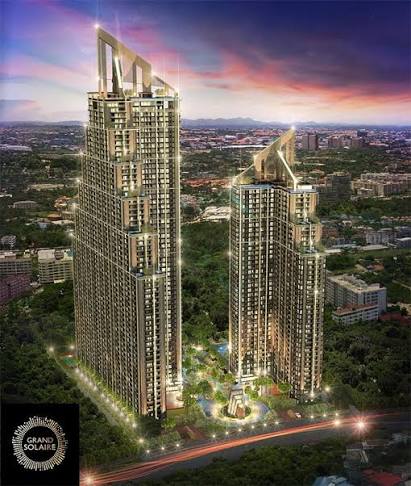
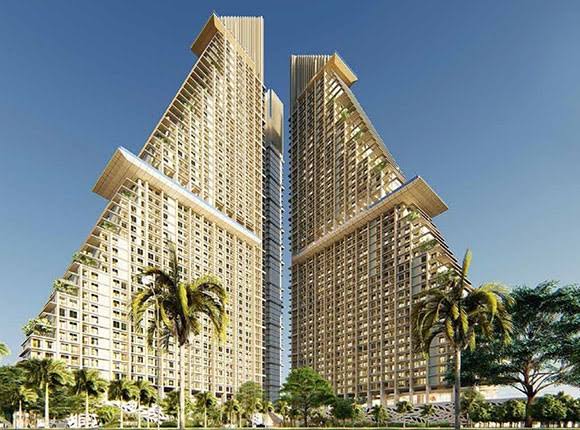
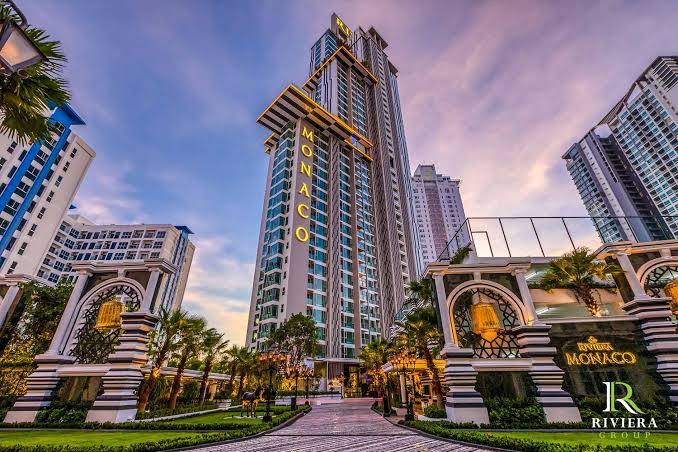
Pattaya In Frame
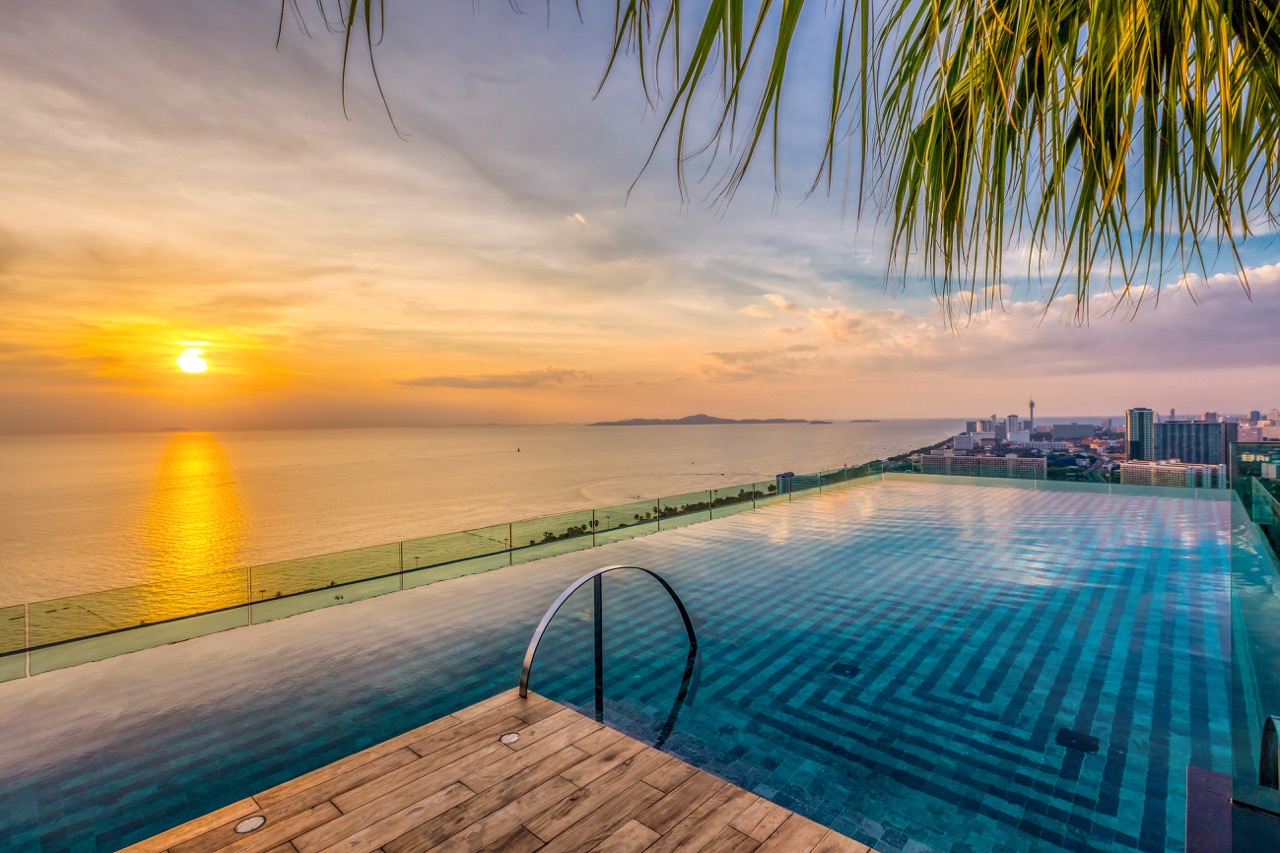
The bay, photographed at the hour decisions are made.
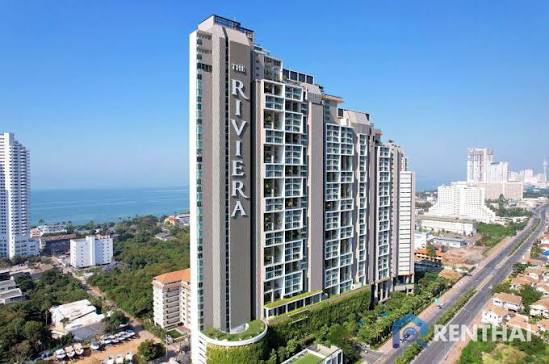
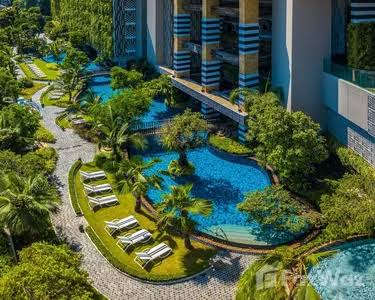
Ten images. One thesis: the most accessible coastal foreign-freehold market in Thailand, sitting one hour from Suvarnabhumi inside the Eastern Economic Corridor, with branded-residence and lifestyle product priced below every comparable Asian beach city.

02 · Pattaya At A Glance
Eight reference metrics, classified by evidence type.
Every metric is classified as FACT, ASSUMPTION or SCENARIO. Where peer-reviewed evidence does not exist, the figure is not asserted.
FACT
~1.2M
Pattaya metro population
Chonburi province registered population concentrated around Pattaya City and Banglamung district (Department of Provincial Administration, latest published).
FACT
Top-3
Thai destination by arrivals
Pattaya consistently ranks among the top three Thai destinations by international arrivals after Bangkok and Phuket (TAT / MoTS).
FACT
~140 km
Distance to Bangkok / Suvarnabhumi
Motorway connectivity via Route 7; 90–120 minutes by road in normal traffic conditions.
FACT
EEC
Eastern Economic Corridor zone
Pattaya, Sattahip and the U-Tapao airport are formally inside the EEC special-promotion zone (BOI / EECO).
ASSUMPTION
U-Tapao
International airport (UTP)
Second EEC international airport; phased expansion plans approved. Final delivery timeline is ASSUMPTION.
SCENARIO
HSR
Don Mueang–Suvarnabhumi–U-Tapao high-speed rail
Concession awarded; project has experienced repeated delays. Treat 2030 delivery as SCENARIO, not basecase.
FACT
0
Casino licences awarded
No Entertainment Complex licence has been awarded in Thailand as of June 2026. No site has been confirmed for Pattaya.
SCENARIO
TBD
Casino tourism uplift
No verified econometric study supports a published uplift figure. Treat all such numbers as SPECULATION until peer-reviewed.
02b · Pattaya Market Data Snapshot
Directional indicators across the institutional data set.
Conservative directional ranges drawn from published institutional and government sources. Where a precise figure is not independently verifiable, the range is labelled ESTIMATE. No figure on this strip is fabricated; unsupported metrics are omitted rather than guessed.
- International TourismThailand international arrivals recovered to ~35M in 2024 (MoTS / TAT, FACT). Pattaya remains a top-three Thai destination by arrivals; source-market mix includes China, India, Russia, ASEAN, Korea, Europe and increasingly the GCC. Direction: recovering and rebalancing post-2022.
- EEC Industrial ActivityThe Eastern Economic Corridor formally includes Chonburi, Rayong and Chachoengsao provinces (EECO, FACT). EEC BOI-promoted investment continues at meaningful volumes. Direction: positive but uneven across sub-sectors. Long-let rental demand into East Pattaya, Huay Yai and the EEC perimeter is the most direct property channel.
- U-Tapao Airport (UTP)U-Tapao is the second EEC international airport. Phased expansion to materially higher annual passenger capacity is approved (FACT). Final delivery timeline and total capacity are ASSUMPTION; historical Thai infrastructure delivery has typically slipped.
- High-Speed RailThe Don Mueang–Suvarnabhumi–U-Tapao high-speed rail concession has been awarded (FACT) and has experienced repeated delays (FACT). Commissioning within the underwriting window is SCENARIO, not basecase.
- Foreign Buyer MixPattaya foreign-buyer mix has rebalanced post-2022 with a structurally larger Russian / CIS share, alongside Chinese, European, Indian and ASEAN flows (broker reporting, ESTIMATE). Reversal of Russian / CIS flow is the largest single demand-side risk to mid-market rentals.
- Branded ResidencesSouth-corridor pipeline (Na Jomtien, Bang Saray) includes branded-residence projects (Banyan Tree Residences, Ramada Mira, Andromeda series). Pipeline absorption depends on south-corridor maturation, not on immediate demand depth.
- Hotel MarketPattaya hotel ADR and occupancy in 2024 sat above 2019 in prime beachfront stock (operator reporting, STR-tracked). Mid-market is more competitive than premium. Direction: ADR-led recovery rather than occupancy-led.
Key Takeaways
- 01Top-ranked submarkets cluster around EEC and infrastructure flows.
- 02Beachfront supply remains structurally constrained.
- 03Risk-adjusted picks differ sharply from headline yield picks.
Why It Matters
Pattaya's next decade is a story of asymmetric submarket outcomes. The ranking is the underwriting.
03 · Pattaya Investment Rankings
Ten submarkets, ranked comparatively.
The rankings below are relative positions across these ten Pattaya submarkets. They are not absolute return forecasts. Every grade carries a written rationale in the underlying data file and on each location page. Confidence reflects the strength of the underlying evidence base. No ranking assumes casino approval, casino construction or casino opening.
| # | Location | Overall | Rental | Growth | Risk | Confidence |
|---|---|---|---|---|---|---|
| 01 | Wongamat The institutional core of Pattaya. Best fit for capital-preservation investors and family end-users prioritising beachfront freehold with credible exit. | A | A- | A- | Low-Moderate | High |
| 02 | Pratumnak Scarcity-led premium tier. Best fit for capital-preservation buyers prioritising supply constraint and walkability to CBD without nightlife exposure. | A- | B+ | A- | Low-Moderate | High |
| 03 | Jomtien Volume rental engine of Pattaya. Best fit for yield-focused investors under USD 200k entry and long-let landlords with multi-cycle horizon. | A- | A- | B+ | Moderate | High |
| 04 | Central Pattaya High-yield, lower-prestige CBD. Best fit for active short-let operators with management infrastructure and short-to-medium holding horizons. | B | A- | B- | Moderate-High | Medium |
| 05 | Naklua Low-risk family residential market. Best fit for end-user retirees and long-let landlords prioritising stability over yield maximisation. | B+ | B+ | B+ | Low-Moderate | High |
| 06 | Na Jomtien Branded-pipeline allocation. Best fit for medium-term capital-growth investors comfortable with infrastructure-dependent thesis. | B+ | B | A- | Moderate | Medium |
| 07 | Bang Saray Infrastructure-thesis lifestyle allocation. Best fit for patient 5–10 year capital-growth buyers and lifestyle end-users. Not for income-now investors. | B | B- | B+ | Moderate | Medium |
| 08 | East Pattaya Family long-let villa market. Best fit for resident end-users and family-relocation landlords; not for foreign passive investors seeking liquidity. | B- | B | B- | Moderate | High |
| 09 | Huay Yai Golf-community villa belt. Best fit for lifestyle end-users and golfers; income investors should look elsewhere in the cluster. | B- | B- | B | Moderate | Medium |
| 10 | Sattahip Infrastructure-thesis-only allocation. Not investable today for foreign passive investors; included for EEC completeness, not as a portfolio recommendation. | C+ | C | B- | Moderate-High | Low |
Methodology: rankings combine rental-economics depth, capital-growth structural support, supply risk, operator-bench depth and resale liquidity. Future infrastructure is treated as optionality, not basecase. Source: Core Investments research, CBRE, Savills, JLL, Knight Frank, Colliers market reporting and AOT / TAT / EECO data.
Data Vintage
Rankings reflect data published through Q2 2026 including TAT / MoTS arrivals, AOT / UTP throughput, BOT Q2 2026 Monetary Policy Report, EECO investment statistics, and the most recent CBRE, Savills, JLL, Knight Frank and Colliers Thailand / APAC publications.
Confidence Disclaimer
Confidence ratings reflect the evidence base supporting each grade, not the certainty of future returns. Medium and Low confidence grades (Central Pattaya, Na Jomtien, Bang Saray, Huay Yai, Sattahip) reflect scenario-dependence on infrastructure or source-market durability.
How to Interpret
Read each grade alongside its written rationale on the corresponding location page. The ranking position is a relative signal across these ten submarkets; the rationale is the institutional content. Do not act on a rank position in isolation.
Mandatory Statement
Rankings are submarket rankings, not project rankings.
Two projects in the same submarket can deliver materially different outcomes. Underwriting must descend to project, operator and contract level.
04 · Pattaya Location Intelligence Map
Each submarket, with its dedicated intelligence brief.
Each card below routes to a dedicated location intelligence brief covering rental economics, capital-growth thesis, risk profile and investor fit.
Rank 01
AWongamat
The institutional core of Pattaya. Best fit for capital-preservation investors and family end-users prioritising beachfront freehold with credible exit.
Read intelligence
Rank 02
A-Pratumnak
Scarcity-led premium tier. Best fit for capital-preservation buyers prioritising supply constraint and walkability to CBD without nightlife exposure.
Read intelligence
Rank 03
A-Jomtien
Volume rental engine of Pattaya. Best fit for yield-focused investors under USD 200k entry and long-let landlords with multi-cycle horizon.
Read intelligence
Rank 04
BCentral Pattaya
High-yield, lower-prestige CBD. Best fit for active short-let operators with management infrastructure and short-to-medium holding horizons.
Read intelligence
Rank 05
B+Naklua
Low-risk family residential market. Best fit for end-user retirees and long-let landlords prioritising stability over yield maximisation.
Read intelligence
Rank 06
B+Na Jomtien
Branded-pipeline allocation. Best fit for medium-term capital-growth investors comfortable with infrastructure-dependent thesis.
Read intelligence
Rank 07
BBang Saray
Infrastructure-thesis lifestyle allocation. Best fit for patient 5–10 year capital-growth buyers and lifestyle end-users. Not for income-now investors.
Read intelligence
Rank 08
B-East Pattaya
Family long-let villa market. Best fit for resident end-users and family-relocation landlords; not for foreign passive investors seeking liquidity.
Read intelligence
Rank 09
B-Huay Yai
Golf-community villa belt. Best fit for lifestyle end-users and golfers; income investors should look elsewhere in the cluster.
Read intelligence
Rank 10
C+Sattahip
Infrastructure-thesis-only allocation. Not investable today for foreign passive investors; included for EEC completeness, not as a portfolio recommendation.
Read intelligence
04B · Pattaya Submarket Research
Long-form investment guides for each Pattaya submarket.
Beyond the location briefs above, the following long-form investment guides go deeper on rental underwriting, capital-growth drivers, supply pipeline and investor fit for each Pattaya submarket. Use these alongside the intelligence briefs to complete due diligence at the area level.
- Jomtien Property Investment GuideMid-market beachfront condo cluster with the deepest Russian / CIS exposure in Pattaya. Underwriting focus: rental cashflow durability through a CIS-demand reversal.
- Wongamat Property Investment GuidePrime northern-beach branded-residence corridor. Bangkok-commuter HNW demand, scarcity-driven capital growth, lower yield by design.
- Naklua Property Investment GuideQuieter northern submarket transitioning toward upper-mid residential. Supply discipline and proximity to Wongamat anchor the thesis.
- Pratumnak Property Investment GuideElevated central-peninsula enclave between Pattaya and Jomtien. Scarce land, established HNW occupier base, capital-growth-oriented thesis.
- Bang Saray Property Investment GuideEmerging southern-coast submarket with direct U-Tapao and HSR optionality. Highest scenario upside in the cluster, conditional on infrastructure delivery.
05 · Infrastructure Analysis
The infrastructure backbone that anchors the investment thesis.
- Bangkok Connectivity~140 km from Bangkok via Motorway 7; 90–120 minutes by road in normal conditions (FACT). Pattaya is the only Thai resort market with weekend-commuter demand from Bangkok HNW households. This is the single most under-priced structural driver of Wongamat and Pratumnak pricing.
- Suvarnabhumi Airport (BKK)Primary international gateway for Pattaya inbound visitors; ~120 km via motorway (FACT). Direct long-haul connectivity supports diversified source-market arrivals.
- U-Tapao Airport (UTP)Second EEC international airport, located in Sattahip. Phased expansion approved (FACT). Final capacity and delivery timeline are ASSUMPTION. Direct exposure: Sattahip, Bang Saray, Na Jomtien.
- High-Speed Rail (HSR)Don Mueang–Suvarnabhumi–U-Tapao HSR concession awarded; repeated delays in execution (FACT). Treat 2030 commissioning as SCENARIO, not basecase. Largest beneficiaries if delivered: Bang Saray, Na Jomtien, Sattahip, and the Central Pattaya terminus catchment.
- Motorway NetworkRoute 7 (Bangkok–Pattaya) and Route 36 corridor upgrades are ongoing (FACT). Incremental rather than transformational. Improves Bangkok-commuter demand and EEC labour mobility.
- HealthcareBangkok Hospital Pattaya, Pattaya Memorial Hospital and international-standard providers operate across the city (FACT). Supports retirement-driven and family-segment demand.
- International SchoolsRegents International School, International School of the Eastern Seaboard (ISE) and others operate in the East Pattaya / Huay Yai catchment (FACT). Underwrites family-segment long-let demand.
06 · EEC Analysis
Eastern Economic Corridor exposure, evidenced honestly.
The Eastern Economic Corridor (EEC) is the most important domestic-economic driver in the Pattaya cluster after tourism. It is a real, legally-established programme. Not a marketing narrative. But its property impact is concentrated and conditional.
- Legal StatusThe EEC was established under the Eastern Special Development Zone Act (2018), covering Chonburi, Rayong and Chachoengsao. The Eastern Economic Corridor Office (EECO) administers investment promotion and infrastructure coordination (FACT).
- Industrial BaseEEC industrial activity is concentrated in automotive, electronics, petrochemicals, robotics and biotech. BOI-promoted investment continues at meaningful volumes (FACT). Direct property channel: professional and family long-let demand in East Pattaya, Huay Yai and the EEC perimeter.
- U-Tapao & HSRU-Tapao Phase 2 expansion and the Don Mueang–U-Tapao HSR are the two flagship EEC transport projects. U-Tapao expansion is approved; HSR is awarded but repeatedly delayed (FACT). Treat scheduled delivery as SCENARIO.
- Property ChannelsEEC exposure flows to property through three channels: (1) industrial labour demand for affordable housing (lower-grade exposure to Pattaya residential); (2) professional / managerial long-let demand (East Pattaya, Huay Yai); (3) HSR-linked accessibility uplift (south corridor and Central Pattaya terminus catchment, scenario-dependent).
- Submarkets Most ExposedDirect exposure descending: Sattahip > Bang Saray > Huay Yai > East Pattaya > Na Jomtien. Coastal-tourism submarkets (Wongamat, Pratumnak, Jomtien, Naklua, Central Pattaya) have low-to-moderate indirect exposure.
- Ranking TreatmentEEC industrial activity (FACT) earns weight in the rankings of directly-exposed submarkets. U-Tapao Phase 2 and HSR (SCENARIO) do not earn basecase weight; they are flagged as optionality in the relevant location pages.
07 · Entertainment Complex Analysis
Entertainment Complex and casino impact, evidenced honestly.
"No Entertainment Complex licence has been awarded in Thailand. No site has been confirmed for Pattaya. No ranking on this hub assumes casino approval, casino construction or casino opening."
As of June 2026, no Thai government agency, Tourism Authority of Thailand (TAT), publicly released feasibility study, or independent econometric analysis has verified projections that Pattaya visitor arrivals will double as a direct result of a future entertainment complex.
Promotional claims to the contrary, including those circulated by developers and brokers, do not meet institutional evidence standards. The four-column disclosure below separates what is factually established from what is assumption, scenario and speculation.
FACTS
- The Thai government has, across multiple administrations, publicly discussed integrated-resort / entertainment-complex legislation including a casino component.
- A draft Entertainment Complex Bill has been considered at the Cabinet and parliamentary committee level in recent legislative cycles.
- Pattaya is consistently named in public commentary as a candidate host city. No site has been confirmed.
- No Entertainment Complex licence has been awarded in Thailand as of the publication date of this analysis.
- No casino has been licensed, constructed or opened in Pattaya.
ASSUMPTIONS
- If passed, the Entertainment Complex Bill would establish a licensing pathway managed by a dedicated authority and subject to AML, KYC and gaming-regulator oversight aligned with FATF expectations.
- A typical integrated-resort approval-to-opening timeline, based on comparable Asia-Pacific projects, falls in a 6–10 year window after legislation passes.
- Any Pattaya integrated resort would require materially upgraded supporting infrastructure (water, power, road capacity, sewage) before it could operate at design throughput.
SCENARIOS
- Earliest realistic opening window for a Pattaya integrated resort, if legislation passes promptly and licensing is unobstructed: 2031–2034.
- If sited intra-city, Central Pattaya is the largest beneficiary; Wongamat and Pratumnak benefit indirectly. If sited in the south corridor, Na Jomtien and Bang Saray are the primary beneficiaries.
- Tourism mix shifts toward higher-spend, longer-stay segments; mass-tourism corridors may face cannibalisation rather than uplift.
SPECULATION
- Claims that Pattaya arrivals will double as a direct casino consequence. Unsupported by evidence and presented as fact in promotional material.
- Claims of guaranteed multiples on capital values within specific zones. No econometric basis disclosed in such marketing.
- Claims of a defined opening date prior to the legislation passing and the licence being awarded. Not credible.
- Claims that a specific Pattaya site has been 'selected'. No such selection has been publicly confirmed.
Regulatory and AML risk. An entertainment-complex regime would impose significant compliance overhead on operators and on adjacent service businesses, including property managers and rental agents handling guest funds. Investor underwriting should assume increased KYC, AML and source-of-funds scrutiny rather than a frictionless tourism uplift.
Social risk. Domestic and Buddhist-establishment opposition to casino legalisation is non-trivial. Legislation could stall, be reversed, or be implemented with restrictions (e.g. foreign-passport-only entry to gaming floors) that materially change the demand thesis.
Ranking discipline. No ranking on this hub assumes casino approval, casino construction or casino opening. The Entertainment Complex Case is a scenario overlay, not a basecase input.
08 · Pattaya 2035 Outlook
Five scenarios, not one forecast.
Forecasting a ten-year horizon as a single number is an exercise in false precision. The outlook below frames five plausible trajectories with the drivers and risks that distinguish them. Each scenario should be underwritten on its own merits; portfolio decisions should be robust across at least the Base and Risk cases.
Base Case
Qualitative likelihood: Most likely
Tourism continues its post-2024 normalisation; Russian / CIS demand remains elevated but does not deepen materially; EEC industrial activity supports East Pattaya and Huay Yai long-let; no casino licence is awarded within the underwriting window. Capital growth tracks Thai inflation plus a modest scarcity premium in prime beachfront submarkets.
Drivers
- - Multi-source-market arrivals (China, India, Russia, ASEAN, Europe) continue normalising
- - EEC industrial corridor sustains professional long-let demand
- - Bangkok-commuter demand into Wongamat / Pratumnak holds
Risks
- - Mid-market condo oversupply in Jomtien and Central Pattaya
- - Russian / CIS demand reversal compresses Jomtien rentals
- - Hotel Act enforcement on sub-30-day rentals tightens
EEC Acceleration Case
Qualitative likelihood: Plausible
EEC industrial investment accelerates, U-Tapao expansion delivers Phase 2, and the high-speed rail commissions within the underwriting window. Professional and family long-let demand deepens in East Pattaya, Huay Yai, Na Jomtien and Bang Saray. South-corridor branded-residence pipeline absorbs faster than current pace.
Drivers
- - EEC investment promotion targets met
- - U-Tapao Phase 2 delivered
- - HSR commissioned and operational
Risks
- - Thai infrastructure delivery slippage is the historical norm, not the exception
- - Industrial-investment cycle is exposed to global manufacturing demand
Entertainment Complex Case
Qualitative likelihood: Uncertain. See Section 07
The Entertainment Complex Bill passes, a licence is awarded that names Pattaya as a host city, an operator is selected and construction completes within the 2031–2034 window. Tourism mix shifts toward higher-spend, longer-stay segments. Localised real-estate uplift is plausible within the catchment of the selected site. Island-wide doubling of arrivals is NOT supported by any verified evidence.
Drivers
- - Legislation passes and licensing framework finalised
- - Pattaya named as a host city
- - Operator selected and construction commences
- - Adjacent infrastructure (water, power, road) scales to design throughput
Risks
- - Legislation may stall or be reversed
- - Domestic and Buddhist-establishment opposition
- - Foreign-passport-only restrictions could change the demand thesis
- - Cannibalisation of existing tourism segments
Compound Growth Case
Qualitative likelihood: Possible but compounding
All EEC Acceleration drivers materialise AND the Entertainment Complex Case delivers in Pattaya. The city re-rates toward upper-tier ASEAN resort-and-business markets. Concentrated uplift in Wongamat, Pratumnak, Central Pattaya and the south-corridor branded-residence pipeline.
Drivers
- - Compounded delivery of EEC, U-Tapao, HSR and Entertainment Complex drivers
- - Sustained capital-account openness
Risks
- - Each compounding assumption multiplies execution risk
- - Supply response could cap the price re-rating
Risk Case
Qualitative likelihood: Material tail
A multi-year tourism or geopolitical shock combined with delivery of pipeline supply (especially in Jomtien and Central Pattaya) produces a multi-year price reset. Russian / CIS demand reverses materially. Prime branded inventory in Wongamat and Pratumnak holds better but is not immune.
Drivers
- - External demand shock (geopolitical, pandemic, climate, currency)
- - Russian / CIS source-market reversal
- - Supply pipeline completes regardless of demand
- - Tightened short-let regulation
Risks
- - Cycle recovery historically takes 24–48 months
- - Forced sellers in over-leveraged segments drive comparable-sale pressure
Scenarios are qualitative judgements based on currently available data and stated drivers. They are not econometric forecasts. Probabilities are descriptive, not quantitative.
Scenario Probability Matrix
Probability, potential impact and time horizon for the four submarket-altering scenarios most frequently raised in Pattaya investor due diligence. Bands are qualitative, evidence-weighted judgements. Not quantitative forecasts.
| Scenario | Probability | Potential Impact | Time Horizon | Most Affected Submarkets |
|---|---|---|---|---|
| Entertainment Complex (Pattaya host) | Low–Medium | High (catchment); Moderate (city-wide) | Long (2031–2034 earliest) | Site-dependent: Central Pattaya / Wongamat (intra-city) OR Na Jomtien / Bang Saray (south corridor). |
| U-Tapao Phase 2 + HSR | Medium | Moderate–High (south corridor); Moderate (city-wide) | Medium–Long | Sattahip, Bang Saray, Na Jomtien; secondary effects across cluster via accessibility. |
| EEC Industrial Acceleration | Medium | Moderate (long-let demand) | Medium | East Pattaya, Huay Yai, Sattahip; indirect benefit to Naklua and Bang Saray. |
| Russian / CIS Demand Reversal | Medium | Moderate-High (mid-market rentals) | Short–Medium | Jomtien (primary); Pratumnak, Naklua and Central Pattaya (secondary). |
Truth Mode: all four scenarios are conditional. None is presented as a forecast. Investors should underwrite assuming the Base Case in Section 08 and treat scenario uplift as optionality, not as base-case return.
08b · Investor Suitability Framework
Which Pattaya submarket fits which investor profile.
- Capital Preservation (International, 7–10y)Wongamat first, then Pratumnak, then Naklua. Beachfront freehold, supply constraint and low reputational drag align with the dominant institutional foreign-buyer profile.
- Yield-Focused (Mid-Market Foreign)Jomtien first, then Central Pattaya. Deepest rental pool city-wide; mature property-management ecosystem. Underwriting must price 30-day Hotel Act enforcement risk.
- Active Short-Let OperatorCentral Pattaya for occupancy depth; Jomtien for breadth. Requires on-the-ground management infrastructure and tolerance for reputational drag on resale.
- Branded-Residence / PipelineNa Jomtien for institutionally legible pipeline; Bang Saray for lifestyle-differentiated branded product. Both embed infrastructure optionality; underwriting horizon 5–10 years.
- Family / End-UserNaklua, Wongamat or East Pattaya. Low reputational drag, walkable amenity (Naklua, Wongamat) or villa-and-schools catchment (East Pattaya). Liquidity weaker in East Pattaya.
- Infrastructure-Thesis SpeculatorBang Saray, Sattahip. Highest beta to EEC / U-Tapao / HSR execution; corresponding execution-risk. Not for capital-preservation mandates.
- Not Suited to PattayaInvestors requiring a beachfront freehold profile equivalent to Bang Tao or Surin pricing depth, or trophy-tier institutional liquidity comparable to Bangkok prime, should benchmark Phuket and Bangkok before allocating to Pattaya.
08c · Yield Reality & Common Mistakes
Gross marketing versus net reality, and the mistakes that follow.
The Pattaya market routinely advertises gross yields of 8–10% per annum. Realised net yields after operator fees, sinking fund, common-area charges and realistic vacancy typically settle in a 5–7% range in well-located managed condominiums. Investors who accept the marketed gross figure as the realised net figure consistently underwrite the wrong asset. Operator-validated net underwriting in the Total Return Calculator is the corrective.
- Mistake 1 · Gross vs NetConfusing advertised gross yields with realised net yields. The single most common error in this market. Always model net of operator fees, sinking fund, common-area charges and realistic vacancy.
- Mistake 2 · Wrong SubmarketCentral Pattaya and edge-of-city corridors are not equivalent to Wongamat, Pratumnak, Naklua or Jomtien beachfront. Submarket selection is decisive.
- Mistake 3 · Legacy Reputation AnchoringUnderwriting against the legacy positioning misprices both demand resilience and resale liquidity in the credible submarkets.
- Mistake 4 · Capital-Growth ExpectationTreating Pattaya as a primary capital-growth play. The structural return profile is income-led; investors expecting Phuket-style premium-submarket appreciation typically disappoint.
Key Takeaways
- 01Entertainment Complex legislation remains the swing variable.
- 02Supply pipeline pressure is concentrated in specific corridors.
- 03FX and global rate cycles affect foreign-buyer flows.
Why It Matters
Pattaya offers higher potential upside than mature markets, but the risk distribution is wider and must be sized accordingly.
09 · Risk Analysis
The risks that matter to Pattaya underwriting.
- Russian / CIS Demand ConcentrationPattaya's mid-market rental demand is materially exposed to Russian / CIS flows post-2022. Reversal of these flows is the single largest demand-side risk to Jomtien, Pratumnak, Naklua and Na Jomtien rentals.
- Mid-Market Oversupply2014–2019 supply overhang remains visible in Jomtien Second Road and inland Central Pattaya stock. Net effect on prime beachfront inventory is smaller, but not zero.
- Reputational Drag (Central Pattaya)Walking Street nightlife reputation caps capital values city-wide and disproportionately in Central Pattaya. Rebrand thesis is real but unverified.
- Short-Let Regulatory RiskHotel Act enforcement on sub-30-day rentals varies by political cycle and by submarket. Central Pattaya and Jomtien rental underwriting based on uninterrupted short-let yields is exposed to enforcement risk.
- Infrastructure SlippageHSR and U-Tapao Phase 2 timelines have historically slipped. Ranking treatment treats both as SCENARIO. Investors underwriting Bang Saray, Na Jomtien or Sattahip should not assume on-time delivery.
- Currency ExposureTHB volatility against USD, EUR, GBP, RUB and AED can move investor-realised returns by 10–20% across a typical holding period. Currency strategy is non-optional for cross-border underwriting.
- Foreign Ownership Friction (Villa Belt)East Pattaya, Huay Yai and Bang Saray villa product cannot be held in foreign freehold. Long-leasehold or company structures carry distinct enforcement risk and reduce resale liquidity.
- Climate & Coastal RiskSea-level, storm-surge and flooding risk on coastal and inland-flood-prone parcels (selected Jomtien and East Pattaya sois) should be priced into long-horizon underwriting and insurance assumptions.
10 · Research Downloads
Institutional research, dispatched on request.
Four institutional reports are dispatched on request after a short qualification step. One open-access educational guide is available immediately, no registration required.
Gated research
Institutional · ~24 pagesPattaya 2035 Outlook
Scenario-based long-horizon outlook across base, EEC acceleration, entertainment-complex, compound-growth and risk cases. Drivers, risks and underwriting implications.
Gated research
Institutional · ~18 pagesPattaya Entertainment Complex Impact Report
Truth-mode assessment of Entertainment Complex legislative status, site-selection scenarios, approval pathway, construction timeline and regulatory, AML and social risks for Pattaya.
Gated research
Institutional · ~32 pagesPattaya Location Rankings Report
Full underwriting rationale behind the rankings of all ten Pattaya submarkets, including grade-by-grade reasoning, comparables and risk overlays.
Gated research
Institutional · ~28 pagesPattaya Investor Intelligence Report
Cross-cutting investor briefing: EEC industrial flows, U-Tapao trajectory, HSR status, foreign-buyer flows, currency, regulatory updates and structural risk monitors.
Open access
Open access · webPattaya Investor Guide
Open-access institutional primer covering ownership structures, submarket overview, EEC and entertainment-complex framing, rental and capital growth drivers, and key risks. No registration required.
Read Pattaya Investor Guide
11 · Named Institutional Sources
Published research the Intelligence Centre triangulates against.
The rankings, scenarios and evidence modules on this hub are triangulated against the following named institutional publications. Citation does not imply endorsement; figures are cross-checked across multiple sources before they are used in evidence modules.
- CBRE Thailand MarketViewQuarterly residential and hotel market view covering Pattaya transactions, prime pricing, foreign-buyer share and pipeline. cbre.co.th/insights.
- Knight Frank Thailand & Wealth ReportAnnual Wealth Report including Prime International Residential Index and Thailand residential market reports. knightfrank.com/wealthreport.
- Colliers ThailandThailand residential and hospitality market snapshots, including Pattaya-specific updates. colliers.com/en-th/research.
- JLL Hotels & Hospitality APACAnnual Hotel Investment Outlook and Asia Pacific hotel performance tracking, including Pattaya market commentary. jll.com/en/insights/research.
- Savills Asia Pacific ResearchAsia Pacific Investment Quarterly and Thailand Spotlight residential coverage. savills.com/research.
- C9 HotelworksSpecialist hospitality and branded-residence research with regular Pattaya coverage. c9hotelworks.com/research.html.
- STR / CoStar APACHotel performance benchmarking (ADR, occupancy, RevPAR) for Thailand operators including Pattaya. str.com/data-insights.
- Tourism Authority of Thailand & MoTSOfficial inbound arrivals and source-market mix data. mots.go.th.
- Airports of Thailand (AOT) & U-TapaoSuvarnabhumi and U-Tapao passenger throughput. corporate.airportthai.co.th.
- Eastern Economic Corridor Office (EECO)EEC investment statistics, infrastructure status and master-plan updates. eeco.or.th.
- Bank of ThailandMonetary Policy Report; THB exchange rate framework. bot.or.th.
- Thailand Board of Investment (BOI)BOI-promoted investment statistics; relevant to EEC industrial demand. boi.go.th.
Publication titles, dates and URLs are listed verbatim from publisher sites; consult the publisher for the latest edition. Where a precise figure is not independently verifiable across at least two of the above sources, the Intelligence Centre uses ranges, not point estimates.
11b · Research Limitations & Disclosures
What this Intelligence Centre does not claim.
- No MLS EquivalentPattaya lacks a single authoritative residential transaction registry. Broker datasets, developer disclosures and government registry inputs are triangulated; sampling bias toward disclosed and operator-managed inventory is acknowledged.
- Russian / CIS Demand OpacityRussian / CIS rental demand is not systematically tracked in published broker datasets; estimates rely on operator interviews and indirect indicators. Confidence in this segment is structurally Medium.
- Range, Not PointWhere a precise figure is not independently verifiable across at least two institutional sources, the Intelligence Centre uses ranges. Point estimates are reserved for officially-published government figures (TAT, AOT, BOT, EECO).
- Submarket, Not ProjectRankings are relative submarket rankings, not project rankings. Two projects in the same submarket can deliver materially different outcomes. Underwriting must descend to project, operator and contract level.
- No Casino AssumptionNo ranking on this hub assumes casino approval, casino construction or casino opening. Entertainment Complex impact projections that claim doubled arrivals are not supported by any verified evidence and are excluded from the rankings.
- Forward-Looking Limits2035 outlook is scenario-based, not predictive. Probabilities are descriptive, not quantitative. HSR and U-Tapao Phase 2 timelines are treated as SCENARIO.
- Commercial DisclosureCore Investments may have introductory relationships with developers and operators across the submarkets covered. The rankings framework is not adjusted for any such relationships; rankings are evidence-led, not commercial-led.
- Not Investment AdviceThis Intelligence Centre is a research instrument. It is not investment advice, not a solicitation, and not a substitute for independent legal, tax and financial counsel.
01b · Methodology & Data Framework
How these rankings are built, and how they should be read.
- Ranking MethodologySubmarkets are scored across five institutional vectors: rental-economics depth, capital-growth structural support, supply and pipeline risk, operator-bench depth, and resale liquidity. Each vector is weighted by evidence strength, not by narrative weight. Future infrastructure (Entertainment Complex, HSR, U-Tapao Phase 2) is treated as optionality, not basecase. Output is a relative ranking across the ten Pattaya submarkets only.
- Evidence HierarchyTier 1: published government / regulator data (TAT, MoTS, AOT, BOT, EECO, BOI). Tier 2: institutional broker research (CBRE, Savills, JLL, Knight Frank, Colliers). Tier 3: developer disclosures and public filings. Tier 4: field observation and operator interviews. Lower-tier inputs cannot override higher-tier inputs.
- Confidence FrameworkHigh = multiple Tier 1/2 sources converge. Medium = single Tier 1/2 source or convergent Tier 3 sources. Low = thesis-stage, limited published evidence. Confidence is disclosed per location and per scenario.
- Fact / Assumption / ScenarioFACT = independently verifiable, sourced. ASSUMPTION = reasoned input the underwriting depends on, explicitly labelled. SCENARIO = conditional outcome under stated drivers. SPECULATION = unsupported claim, called out and excluded from rankings.
- Data Refresh CadenceRolling review on publication of TAT / AOT monthly and quarterly data, BOT monetary releases, EECO and BOI investment statistics, and CBRE / Savills / JLL / Knight Frank / Colliers quarterly Thailand reports.
- Research LimitationsPattaya lacks a single authoritative residential transaction registry. Russian / CIS rental demand is not systematically tracked. Branded-residence pipeline data is developer-disclosed and not independently audited. Entertainment Complex impact projections circulating in promotional material are not used as evidence.
- How to InterpretRankings are decision aids, not investment advice. They are submarket rankings, not project rankings. Two projects in the same submarket can deliver materially different outcomes. Underwriting must descend to project, operator and contract level.
30 Second Verdict
Pattaya offers some of Thailand's lowest entry prices and strongest value opportunities, but carries higher supply risk than Phuket.
Conviction
SELECTIVE
Investment Thesis
- Lower entry prices.
- Infrastructure improvements supporting demand.
- Growing domestic and regional buyer base.
Best For
- Value Investors
- First-Time Thailand Investors
- Yield-Focused Investors
Pressure-test the pattaya property investment thesis against your numbers.
Run the NumbersExecutive Summary
Pattaya's EEC-driven infrastructure cycle is creating a multi-year window for both income and capital growth - Wongamat leads.
- Best Opportunity
- Wongamat
- Best Investor Type
- Income Investors→ Jomtien
- Risk Level
- Medium
What Most Investors Get Wrong
“Pattaya is a low-quality short-stay market.”
The reality: Wongamat and Pratumnak now anchor premium coastal demand, while EEC infrastructure has structurally re-rated the city's medium-term outlook.
Key Takeaways
- 01
Wongamat remains Pattaya's strongest premium market.
- 02
Jomtien continues to offer attractive income potential.
- 03
Infrastructure investment supports long-term growth.
- 04
EEC development remains a major catalyst.
- 05
Tourism recovery continues strengthening demand.
At a Glance
- Best Opportunity
- Wongamat
- Highest Income Potential
- Jomtien
- Highest Growth Potential
- Wongamat
- Risk Level
- Medium
- Outlook
- Positive
Investor Verdict
- If your objective is income
- Jomtien
- If your objective is capital growth
- Wongamat
- If your objective is balanced
- Pratumnak
Who This Report Is For
- Cashflow Investors
- Capital Growth Investors
- Retirement Investors
- International Investors
What You'll Learn
In this report you'll learn:
- Which Pattaya submarkets are positioned for EEC-driven growth.
- How a potential Entertainment Complex could reshape demand.
- Where rental income is strongest today.
- The major risks across legislative, supply and FX dimensions.
- Which investor profiles fit Pattaya's evolving cycle.
01 The Pattaya Property Investment Thesis
Why pattaya property investment merits institutional attention.
- 01
Pattaya is ten cities, not one
The Pattaya you have read about is two streets. The investable Pattaya is ten distinct submarkets with different buyers, yields and risks. The choice of submarket is the entire decision.
- 02
Two engines, not one
Pattaya runs on tourism and on Bangkok-commuter / EEC industrial demand. That dual engine is why the city is less exposed to a single shock than a pure resort market.
- 03
The casino is optionality, not basecase
No casino has been licensed, sited or built. Treat it as upside if it happens, not as a reason to overpay today. Your investment must stand without it.
- 04
Entry price advantage is real
Foreign-freehold prime Pattaya inventory trades at a material discount to comparable Phuket or Bangkok prime. That gap is the opportunity, and the resale buyer pool is the constraint.
Core Investments House View
Pattaya House View.
Core Investments believes Pattaya presents attractive value opportunities for investors seeking lower entry prices and improving infrastructure fundamentals. However, market selection remains critical due to varying supply dynamics across projects and locations.
Scenario Matrix
Pattaya five-year scenarios.
Four scenarios, not one forecast. Each row pairs the five-year outlook with the structural driver and counterweight risk. Use the matrix to underwrite across cases, not just the base.
Base Case
- 5-Year Outlook
- Moderate income and capital growth
- Key Driver
- Infrastructure improvements and domestic demand
- Key Risk
- Supply competition
Growth Case
- 5-Year Outlook
- Strong appreciation from current valuations
- Key Driver
- EEC development and tourism growth
- Key Risk
- Execution risk
High Growth Case
- 5-Year Outlook
- Exceptional returns
- Key Driver
- Major economic expansion in Eastern Corridor
- Key Risk
- Overheating
Downside Case
- 5-Year Outlook
- Flat performance
- Key Driver
- Weak tourism demand and oversupply
- Key Risk
- Rental competition
House View
Pattaya offers attractive value opportunities but requires greater project selection discipline than Phuket.
Key Takeaways
Pattaya in four points.
- 01
Lower Entry Prices
Pattaya remains one of Thailand's most accessible investment markets.
- 02
Infrastructure Supports Growth
Eastern Economic Corridor investment continues to improve regional fundamentals.
- 03
Value Opportunities Exist
Investors can access opportunities at lower price points than Phuket.
- 04
Project Selection Is Critical
Supply levels vary significantly across locations and developments.
Case Study
Pattaya: Tourism & Retirement Investment
An illustrative 10-year ownership scenario for a USD 300,000 freehold condominium acquisition in Pattaya.
Investment Snapshot
| Investment | USD 300,000 |
|---|---|
| Holding Period | 10 Years |
| Ownership | Freehold Condominium |
Income Performance
6.5% PA
USD 195,000 cumulative rental income over 10 years.
Capital Growth Performance
6.5% PA
USD 263,000 capital appreciation over 10 years.
Combined Outcome
USD 458,000
Total wealth created from USD 300,000 invested capital.
Key Lessons
- • Demand drives occupancy.
- • Occupancy drives income.
- • Income supports long-term ownership.
- • Quality locations support capital growth.
Illustrative example only. Not a guarantee of future performance.
Market Comparison
Phuket vs Bangkok vs Pattaya.
Qualitative cross-market comparison across Thailand's three primary investment markets. Use as a routing instrument, not as a substitute for the market-level pages.
- Best For
- Income, Capital Growth, Lifestyle, Family Offices
- Income Potential
- High
- Growth Potential
- High
- Liquidity
- Medium
- Entry Price
- Higher
- Risk Level
- Medium
- Best For
- Liquidity, Stability, Corporate Rentals
- Income Potential
- Moderate
- Growth Potential
- Moderate
- Liquidity
- High
- Entry Price
- Moderate
- Risk Level
- Moderate
- Best For
- Value, Yield, Lower Entry Cost
- Income Potential
- Moderate
- Growth Potential
- Moderate
- Liquidity
- Medium
- Entry Price
- Lower
- Risk Level
- Higher
Investor Interpretation
Phuket
Phuket remains the strongest all-round market for investors seeking a balance of rental income, capital appreciation and lifestyle utility. Bang Tao / Laguna anchors both the rental-demand and capital-growth rankings; Nai Yang offers the strongest emerging upside.
Bangkok
Bangkok remains Thailand's strongest market for liquidity, resale activity and corporate demand.
Pattaya
Pattaya remains attractive for investors seeking lower entry prices and value opportunities, but project selection becomes more important.
Core Investments House View
For most international investors, Phuket currently offers the strongest balance between income generation, long-term capital growth and lifestyle value, with Bang Tao / Laguna as the lead submarket and Nai Yang as the strongest emerging opportunity.
Pattaya Property Investment · Market Signals
Each with a different buyer, price band and demand engine.
After costs, on a well-located managed condominium.
Motorway access; 90–120 minutes door-to-door.
Modelled as upside, never as basecase assumption.
Investor Questions
Pattaya Property Investment, frequently asked questions.
Q01Pattaya has a reputation. Is it really a serious place to invest?
The reputation you have read about belongs mostly to two streets in Central Pattaya. The rest of the city is something very different: a coastal extension of Bangkok with a major international airport project (U-Tapao), an industrial economy along the Eastern Economic Corridor, and beachfront neighbourhoods like Wongamat and Pratumnak that look and behave like any other prime Asian resort district. Serious investors do not buy 'Pattaya'. They buy a specific submarket that matches their objective and avoid the ones that do not.
Q02Will the casino actually happen, and should I bet on it?
As of mid-2026 no casino licence has been awarded in Thailand, no site has been confirmed for Pattaya, and no operator has been selected. The Entertainment Complex Bill may pass, or it may not. You should not pay more for a property today on the assumption that it will. Treat the casino as optionality: if it happens, certain submarkets benefit; if it does not, your investment still has to stand on its own fundamentals. Anyone selling you a property because of the casino is asking you to underwrite a decision that has not been made yet.
Q03What rental yield should I realistically expect in Pattaya?
It depends entirely on what you buy and where. A well-located condominium in Pratumnak, Wongamat or Jomtien with a competent management company tends to produce a 5–7% net yield after costs, slightly above Phuket because entry prices are lower. Mid-market towers in Central Pattaya can show higher headline numbers but face oversupply and shorter average tenancies. Long-let to EEC professionals in East Pattaya or Huay Yai is more stable but with lower upside.
Q04Pattaya or Phuket, which one is better for me?
Phuket if you want premium tourism yield, branded operators and the highest international resale liquidity. Pattaya if you want a lower entry ticket, exposure to Bangkok commuter and EEC industrial demand, and a market that does not depend on a single tourism cycle. Many serious investors hold both. They are not substitutes; they balance each other.
Q05What is the biggest mistake foreign investors make in Pattaya?
Buying in the wrong submarket because it was cheap, then discovering the resale buyer pool for that submarket is much thinner than the rental tenant pool. A property that rents easily does not always sell easily. Before you commit, ask who the next owner of the unit will be, and whether they actually exist in numbers.
Q06I have heard about Russian demand. Is that a risk?
Russian and CIS demand has been a meaningful share of Jomtien and parts of Pratumnak since 2022. It is real, it has supported rentals, and it could reverse if geopolitics shift. The safest position is to underwrite as if Russian demand were not there, and treat any benefit it provides as upside, not basecase.
Reader Q&A
Investor Questions & Answers
Ask a question about Pattaya Property Investment. Approved questions are published below with Core Investments’ response.
Loading questions…
Ask a question
Questions are reviewed before publication. Your email is never shown publicly.
Sources & References
Where this research draws its data (9)
Sources & References
Where this research draws its data (9)
Core Investments cites only published institutional sources. Figures referenced on this page are drawn from, or cross-checked against, the institutions listed below. For our editorial standards and source-vetting process, see our research methodology.
- [1]
Tourism Authority of Thailand (TAT) / Ministry of Tourism & Sports
International Tourist Arrivals to Thailand · 2024
https://www.mots.go.th/ → - [2]
World Travel & Tourism Council (WTTC)
Economic Impact Reports, Thailand · 2024
https://researchhub.wttc.org/ → - [3]
- [4]
Savills
Asia Pacific Investment Quarterly & Thailand Spotlight · 2024
https://www.savills.com/research/ → - [5]
JLL Hotels & Hospitality
Hotel Investment Outlook. Asia Pacific (Annual) · 2024
https://www.jll.com/en/insights/research → - [6]
Knight Frank
The Wealth Report (Branded Residences & Prime International Residential Index) · 2024
https://www.knightfrank.com/wealthreport → - [7]
Bank of Thailand
Monetary Policy Report · 2024
https://www.bot.or.th/en/our-roles/monetary-policy/MPC-publication.html → - [8]
- [9]
Sources last reviewed 2026-06-29
Disclosures
Important information (6)
Disclosures
Important information (6)
General disclaimer
Core Investments provides investment education, market intelligence, research and transaction-support services. Information published on this website is general in nature and does not constitute financial, investment, legal, tax or accounting advice, or personal recommendations. Investors should seek independent professional advice appropriate to their individual circumstances before making any investment decision. Past performance is not indicative of future results.
Forecast disclaimer
Forecasts, projections and forward-looking statements are based on information available at the time of publication and involve assumptions that may not materialise. Future events may differ significantly from projected outcomes.
Rental return disclaimer
Rental income examples, occupancy assumptions and yield illustrations are provided for educational purposes only. Actual rental performance may vary based on market conditions, occupancy levels, operator performance, seasonality, competition, economic conditions and other factors. Rental returns are not guaranteed unless expressly stated within a legally binding agreement.
Capital appreciation disclaimer
Capital appreciation examples and growth projections are illustrative only and should not be interpreted as predictions or guarantees of future performance. Property values may rise or fall and are influenced by market conditions, supply, demand, economic factors, regulatory changes and investor sentiment.
Currency disclaimer
Currency markets are inherently volatile. Exchange-rate movements can positively or negatively affect investment returns when converted into an investor's home currency. Currency examples are provided for educational purposes only and do not constitute forecasts.
Legal ownership disclaimer
Property ownership structures, regulations and legal frameworks may change over time. Investors should obtain independent legal advice regarding ownership structures, taxation, residency implications and regulatory compliance before proceeding with any transaction.
Recommended Action
Your next step, by investor profile.
Income Focused Investor
Review Rental Cashflow Investors Phuket.
Capital Growth Investor
Retirement Investor
Foreign Investor
Review Can Foreigners Buy Property In Thailand and your nationality-specific guide.
Diversified Investor
Review Global ROI Comparison and Thailand Property Market Intelligence.
Frameworks Applied
Proprietary methodology applied on this page
- Framework™
Core Capital Growth Framework™
The six structural drivers of long-term capital appreciation: infrastructure, scarcity, tourism demand, supply absorption, brand premium and accessibility.
- Framework™
Core Market Cycle Framework™
Repeatable methodology for locating a market within its investment cycle - recovery, expansion, peak, contraction - using supply, absorption, pricing and capital-flow signals.
- Framework™
Core Net Yield Underwriting Method™
Standardises gross-to-net yield conversion: operator share, sinking fund, common-area, vacancy, FX and tax. Built for comparability.
- Framework™
Core Risk Assessment Framework™
Six-dimension institutional risk scoring across market, asset, operator, legal, liquidity and currency risk for Thailand property investment.
- Framework™
Core Submarket Pricing Tier Framework™
Classifies and compares submarkets across pricing, rental demand, capital growth, scarcity, infrastructure, liquidity and buyer demand into investable tiers.
From research to numbers
Translate the rankings into an underwriting model.
Run base, EEC and entertainment-complex scenarios using your own ticket size, holding period, operator assumptions and ownership structure.
Open the calculatorIllustrative scenarios using calculator default assumptions. Outcomes vary with market conditions, operator performance and investor inputs.
Share this research
Direct Access
Speak with Frank about pattaya property investment.
Request a confidential briefing on the Pattaya submarkets most relevant to your strategy, including comparable transactions, EEC exposure analysis and live opportunities aligned with your objectives.
- Frank Satar
- Chief Founder & Research Director
- Australia
- +61 494 651 747
- Thailand / WhatsApp
- +66 65 551 3269
© Core Investments Research | Frank Satar
Research produced by Core Investments. Reproduction or redistribution without written permission is prohibited.